Takeaways
- Dealer-manufacturer relationships have shifted from personal, field-based partnerships to being more transactional today, leading to a longing for ‘good ol’ days.’
- The most effective mainline executives, like Jim Irwin, John Lagemann and Bob Ratliff, built trust by prioritizing a "three-way success model" where dealer customer and manufacturer can each claim victory
- The best “old-school’ leaders were accessible, focused on personal relationships and possessed a deep understanding of dealer-level economics and operations
The “older guard” dealer execs are quick to point out what’s different about their relationships with their major-line executives. The current down ag economy only adds to the pressures and changes from an industry vastly different than that of yesteryear — in consolidation, capital requirements, technology, competition and market shares, to name a few.
Tim Brannon, B&G Equipment, has been a dealer-principal since 1978. He recalls the days, long before digital communications made other methods more practical, that execs were out in the field, visiting, breaking bread and clinking glasses with their dealer principals. Relationships were personal, not bureaucratic and transactional.
That industry standard forever changed, he says, in the 1980s, when ag companies of all kinds rapidly failed. “Relations between dealers and manufacturers suffered or even went extinct,” he says.
Still A People Business?
Farm Equipment editors asked subscribers to recall when the major-line relationships were “firing on all cylinders.” The point is to get both dealer and manufacturer to consider what, if anything, can be learned from previous eras.
The business may be vastly different from the “good ol’ days,” but some argue that the principles of the dealer-manufacturer dynamic are timeless. Some dealers — even large ones — shared that the top executives haven’t been inside their stores in years.
The Three-Way Win
One theme shared by the most effective executives was an unwavering commitment to a three-way success model. That is, dealings that benefited the dealer, the customer and the manufacturer — and not just the OEM signing that leader’s paycheck. This philosophy was a lens for major decisions and built profound trust.
Jim Irwin, the retired IH and Case IH executive constantly articulated a mandate to his team. “If the answer is good for the dealer, good for the customer and good for the company, don’t bring the question to me,” recalls longtime OEM leader and consultant Russ Green. “Just make the decision; I’ll have your back.”
Digital technologies and/or a different level of interpersonal commitment or directives changed communications. As the industry consolidated and obsessions grew over market shares, cost controls and balance sheets, the human element took a back seat.
Green describes the difference between transactional and committed partnerships. “It’s easy to tell who treats their dealers as customers and the ones who put the OEM’s short-term interests ahead of their dealers’ long-term interests. There’s a difference; OEM companies ‘date’ their end-user customers, and the dealers are married to them.”
Some leaders understood this. AGCO founder Bob Ratliff valued his dealer relationships above all else, says Green. His management team deliberately set out “to learn the business from the dealers, communicate their struggles to the dealers and form a team to attack the market like no one had ever attempted before,” adds Brannon.
Accessibility and presence were traits of the best leaders, as was an understanding and care for what the dealer needed to operate in the black.
Most Cited Major-Line Leaders
The following are the names most often cited by Farm Equipment subscribers for this project in March 2026, sorted by number of citations and alphabetically.
- Jim Irwin, International Harvester & Case IH
- Robert Ratliff, AGCO
- Brad Crews, CNH
- John Lagemann, John Deere
- Irv Aal, New Holland & Case IH
- Bill Baker, John Deere
- John Bellis, Case & Case IH
- Helmut Claas, Claas
- Bob Crain, New Holland & AGCO
- Greg Embury, Kubota
- Russ Green, Case IH, Claas & AGCO
- Scott Harris, CNH
- Bob Hove, John Deere
- Luca Mainardi, CNH
- Gerrit Marx, CNH
- Vickie Rickey, Tenneco
- Al Rider, New Holland
- James Seaver, AGCO
- John Shumejda, AGCO
- Jim Swingle, AGCO
- Jim Walker, AGCO and Case IH
- Doug Warrener, New Holland
Warrener was let go by New Holland during a round of early retirements and the dealer community protested. When agenda items were gathered for the next Task Force meeting, the No. 1 item from New Holland dealers — by a considerable margin — was for Warrener to be brought back.
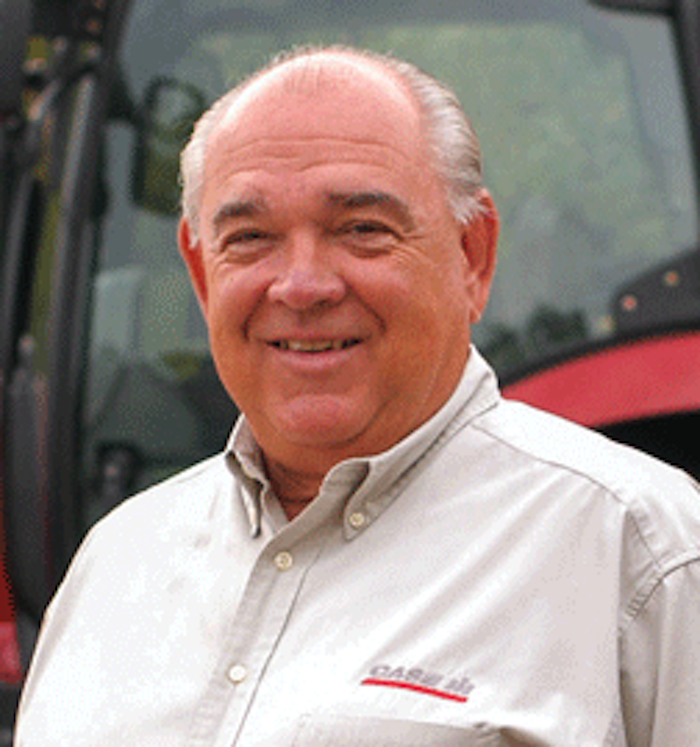
Jim Irwin, Case IH
Jim Irwin was the VP of Ag Sales for Case IH and retired in 2005 after 40 years. He had worked at an IH company store and knew the dealer’s world as a result.
“Jim was demanding, but he didn’t ask you to do anything he hadn’t already done himself,” says Green, who worked for him on 3 different occasions. “He knew the value of his dealers and earned their respect through the quality of the business teams he assembled.”
David Meyer, chairman, Titan Machinery, agrees. “He put together a great team, most having dealership and/or field experience.”
Meyer continues to offer high praise for Irwin for having made it his job to know the workings of the dealership, the products and the customers. “He personally came to us, attended dealer-sponsored open houses and field days and knew our personnel. He always had a plan, paid attention to details and executed. Jim was tough but earned the respect of his peers, employees and dealer organization. He challenged you but was always fair in his dealings and decisions.”
Meyer also recalls Irwin in his office every Saturday, calling dealers to get a pulse on the market and to see what was working and what was not. (For more on Irwin, who still answers his phone from Arizona on Saturday mornings, see the recent TO THE POINT blog here.)
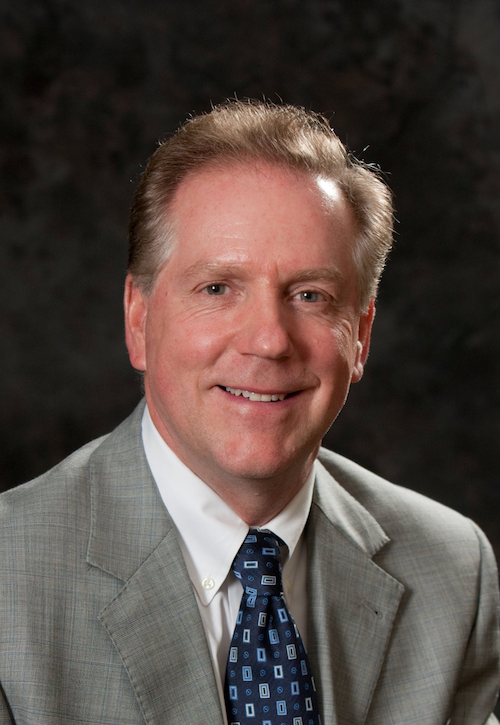
John Lagemann, John Deere
John Deere’s John Lagemann was atop the mainlines’ most notable “cast of characters” at the start of the 21st century. Lagemann was named VP of Sales U.S. and Canada in 2002 and retired in 2020. Tom Rosztoczy, president, Stotz Equipment, says Lagemann was the best mainline exec.
Lagemann brought his strategy for the Dealer of Tomorrow (DOT) program, starting in 2002, which Rosztoczy says spurred the Deere dealer network forward by leaps and bounds.
“He did a great job of seeing the future dealer organization and then communicating the DOT strategy clearly to the dealer channel. He changed incentives like volume to drive change. He pushed and prodded dealers to decide where they fit. The professionalism and capabilities of the Deere dealer channel today are light years ahead of 2002 and wouldn’t have been possible without the consolidation push.”
Rosztoczy also cited Deere’s Dealer Advisory Group, which Lagemann started. “At my first meeting, dealers were expressing frustration over something Deere was doing. The next morning John came in and told us they were changing it. That was impressive; I’ve never seen Deere leadership be so responsive to the dealers.”
Rosztoczy says Lagemann seemed to actually know all of his dealers. “He was good to work with. Sometimes, he told me things I didn’t want to hear, but it was important to know what Deere was thinking.
“An old friend once told me that it’s important to call a spade a spade, just don’t call it a $#%# shovel. John was good at that, and his straight talk helped me run a better business.”
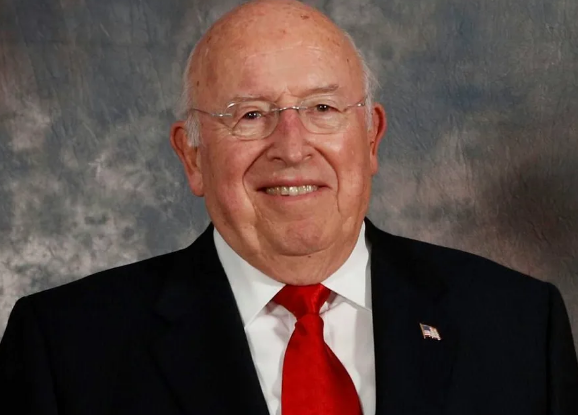
The Late Bob Ratliff
From the ashes of the devastating 1980s, Brannon recalls, came the formation of AGCO thanks to the management of Bob Ratliff, James Seaver, John Shumejda and Ed Swingle.
“They pulled a plethora of broken farm equipment businesses into the major player that exists today.” Three of the four knew nothing about the ag industry, says Brannon, but Ratliff also learned enough of “what not to do” from his time at IH’s Truck Division and a couple of other endeavors.
“They wanted to learn the business from the dealers, communicate their struggles to dealers and form a team to attack the market like no one had ever attempted before.”
Brannon cites the “Dealer Interface Meetings” in which AGCO management invited dealers in or went to them. They listened to their dealers of all different brands about how they were doing — right or wrong.
“These were ‘no-holds barred’ meetings. After a couple of years someone in Duluth, Ga., (headquarters) started calling these meetings the ‘crucifixion tour.”’Sometimes it wasn’t pretty, but afterward, each side knew where the other stood. A truce was signed and all went out of the locker room in a team effort.”
Green says Ratliff was the best business strategist he ever worked with and who’d make the decisive, high-risk moves that were needed.
“He valued his dealer relationships above all else. He was never afraid to hold dealer panels and deliver honest, sometimes difficult, news to dealers in person. While the message could be difficult, dealers valued his candid and straightforward approach.”
Brannon says Ratliff’s relationship-building exercise is what built AGCO. “Every dealer went out, bragged to farmers about shaking hands with the company leaders and told them this new company gave out their personal phone numbers to dealers to best support customers. ‘Uncle Bob’ was a term we used a lot as almost all dealers knew the new leader.”
Brannon says buyers of AGCO equipment all knew Ratliff’s name, too. “Never before had this many customers known the name of the company’s leader.”
Others Leaders Mentioned
Based on the responses from industry professionals, here is a summary of the other mainline executives (not covered elsewhere in this story) identified as among the best.
- Irv Aal (New Holland, Case IH and Steiger Tractor) was significant for keeping the International Harvester line alive at Case IH before the breakup of the brand. “He listened to us and communicated with dealers before the change, and those moves kept both IH and later Steiger parts, service and future products alive,” says retired dealer Paul Wallem.
- Bill Baker (John Deere) shared Irwin’s decision tree of moves that were good for the company, the dealer and customer.” He made decisions based on this philosophy, says Mike Laethem of Farm Depot, adding “no one at Deere since has held this philosophy.”
- John Bellis (Case IH) was praised for his insights gained from retail and company store experience. He was accessible, straightforward, listened and focused on success for both the dealer and Case IH, says Mark Foster, retired from Birkey’s. “He spent more time in the field with dealers and customers.”
- Jim Walker (Case IH) was an outstanding and consistent communicator, says Leo Johnson, retired CEO, Johnson Tractor. “He supported aggressive, growth-minded dealerships by changing the volume bonus to provide more upside for good market share.”
- Greg Embury (Kubota) focused a company that “got its product right and got out of the way so the dealers could go to market.” His approach, says one dealer, was vastly different from the heavy-handed mentality of today.
Trade Group Workings & Behind Closed Doors: Another Vantage Point on Execs
Farm Equipment connected with three veterans who worked with various mainline execs through their association work, including Paul Kindinger and John Schmeiser, both retired from the national dealer organizations and Charlie Glass of the Farm Equipment Manufacturers Assn. (FEMA)’s Dealer Relations Committee.
Kindinger’s Top 5. Paul Kindinger was at the helm of the North American Equipment Dealer Assn. (NAEDA) from 2001 through 2012, following an 8-year executive stint at the Ag Retailers Assn. Noting that the companies were at different stages of changing their networks/cultures during his tenure, he provides his top 5:
- Bob Hove, John Deere. “Bob was often in a difficult position between the company’s desire for change and what was best for the dealers. An example was the decision to sell lawn equipment at Lowe’s and Home Depot. It was a real quandary for Bob. Working together with the dealer network, we were finally able to reach an agreement that kept the full-line Deere dealers engaged in setup, delivery and repairs. It allowed full-line dealers to differentiate their offerings from the big boxes. It wasn’t easy for him, but he was focused on working out the best arrangement possible under the circumstances.”
- Jim Irwin, Case IH. “Jim was a tough business exec with a big heart. He was very focused on helping NAEDA improve the interaction with his dealers and improving our quality of leadership. Whenever I had a question about a situation involving a Case IH dealer, Jim listened and gave me honest feedback. He was fair in his assessments and willing to work out a compromise if possible.”
- Bob Crain, AGCO. “Bob was one of a few OEM execs who, before making a dramatic change that impacted their dealer network, would run it by me and the dealer execs on our Manufacturer Relations Committee. He worked hard to gain the trust of dealers and build a lasting relationship with them. His challenge was attempting to improve dealer loyalty to the AGCO brand.”
- John Lagemann, John Deere. “He had perhaps the most difficult task of any OEM at the time — to consolidate the dealer network. Not popular nor easy. While we had differing opinions on accomplishing Deere’s mission, he was available and willing to listen. I grew to respect John a great deal for his integrity with the dealer associations. He was a company man and focused on what he thought was best for the company.”
- Al Rider, New Holland. “Al was faced with the unenviable task of trying to compete with other OEMs with more extensive dealer networks trying to ‘cherry-pick’ New Holland for certain products. He was a hard worker and did all he could to improve relations with the dealer network. These were difficult conversations at times, but mutually respectful.”
Manufacturer to Manufacturer Relations. Charlie Glass spent 45 years in the equipment business and served nearly 30 years on the Farm Equipment Manufacturers Assn. (FEMA) Dealer Relations Committee, including the chairman role in 1998-2005. Representing the interests of the shortline equipment makers put him in touch with many executives from the major tractor manufacturers, and sometimes in opposition.
“I first met Jim Irwin, Case IH, at a dealer meeting in California in the early 1990s and he was excellent to deal with. Many of our products were sold through Case IH dealers at that time and Jim was well aware. Like every sales manager I ever met, he wanted all of the sales from his dealers to go through Case IH but was aware that there were products dealers required for their retail customers that were unavailable from Case IH. He was also an excellent source of practical sales management information and willingly shared that with me on several occasions.”
In-Field Leadership Makes National Leadership Work. John Schmeiser led various dealer associations for nearly 30 years, including serving on NAEDA’s Industry Relations Task Force for over 20 years. Schmeiser’s “best-ever” leader was New Holland Western Canada Territory Manager Doug Warrener, who he says is an “unsung hero” of the business.
“Even the greatest, most forward-thinking leaders need people in the field to drive that vision onto the dealer network. Those people are often the most important contact a dealer has with the company. Few individuals exemplified what a field rep should be better than Doug.”
At various companies, including Flexi-Coil and then New Holland after its acquisition in 1997, he brought dealer relationships, knowledge and credibility that few could match, says Schmeiser. “He didn’t just understand the business — he understood the people in it.”
What distinguished Warrener, Schmeiser says, was an ability to walk the line between OEM expectations and dealer needs with grace and integrity. “Dealers felt Doug understood that dealer and New Holland success were inseparable. Dealers trusted him, confided in him and respected him.”
The conviction of that request was impossible to ignore, Schmeiser says. “John Stevenson, the New Holland vice president at the time, heard it loud and clear and confirmed they were working to bring Doug back on contract. Never before had I seen dealers rally so unanimously around a TM,” he says.
He was one of those rare individuals who could have an honest, off-the-record conversation — giving a quiet heads-up when a contentious issue was on the horizon. His collaborative humility is uncommon in any industry and speaks to real character.”
“Doug Warrener, territory manager in western Canada for New Holland, is one of the unsung heroes in the industry who did his job great - without the recognition that he deserved.
In the agricultural equipment industry, territory managers come and go, but every once in a while someone comes along who truly redefines what the role can and should be. Doug Warrener was that person for New Holland in western Canada.
A 5-Point Formula
While most dealers pointed to leaders of the past, Bryan Knutson, CEO, Titan Machinery, chose to cite the leadership at CNH (Brad Crews, Scott Harris and Gerrit Marx). Among his adjectives for the group are transparency, straight-forward communicators, trusting and empathetic but not sympathetic, while holding themselves accountable.”
Nostalgia for the days when “business was fun” means a void still exists. There was a time when a “win” could be defined as success for farmer, dealer and manufacturer.
What is valued most in mainline execs:
- Respect for dealer-level economics
- Personal relationships
- Integrity & candor
- Listening to dealer input
- Leaving the ivory tower
The courage to build genuine relationships still can be “Job 1” — if dealers and manufacturers are willing to invest in the relationship.
Network Consultant: ‘OEM Logic Runs in Different Direction’
Following Farm Equipment’s coverage of longtime Case IH, Claas and Kubota dealer Ritchie Equipment adding AGCO, Graham Gleed posted an essay about the logic of the OEMs. Gleed is a dealer network consultant at abcg AB, who draws on 25 years of experience at Kubota Canada, CNH and Claas Western / Bruce Hopkins Ltd.
“In 2023, New Holland Agriculture brand president Carlo Lambro said publicly that the company’s goal was to ”clean as much as possible” from its dealer network — removing competing lines and asking dealers to decide if they wanted to be’true blue dealers, trusting the brand.’ Kubota followed in 2024 with a formal policy capping dealer locations by state, explicitly to push dealers toward deeper market penetration rather than broader brand portfolios. Industry analysts covering the announcements were direct: every major OEM is moving toward demanding more share of dealer wallet, not less.
“Neither side is wrong. Dealers add brands to protect revenue and serve customers. OEMs want focus, commitment and a larger share of the dealer's attention and capital. Both positions are rational.
“The tension is that they pull in opposite directions — and the dealer is the one making the long-term capital commitment in the middle.”
The broader question is whether the industry has an honest conversation about what it takes to make things work for all involved, he says, and “whether the OEM policy wind is making that window shorter than it looks.”
Dealer Shares What is Lacking Most Today in Dealer-Manufacturer Relations
While the best relationships were built on shared vision and respect, some dealers today feel increasingly trapped by metrics designed to serve the manufacturer's short-term interests over a true partnership, says Eric Norschow, GM of Windridge Implements.
The relationships — and the good OEM leaders who are strong, intelligent and see common sense as success drives — have been relentlessly driven out of the business, he says.
He offered a sharp criticism of how dealers are evaluated today. ”Incentives are structured for franchise outcomes, not for partnership contracts. We just sign away that option and accept the other to stay open.
He argues that the focus on ”Dealer purity is a punitive, ‘fail-fail’ environment driven by the overemphasis in brand pay plans for their OEM leadership.”
While consolidation has swept the industry, Norschow asserts it has been driven by ”cost control and balance sheet management over four decades. Not from profitability.”
The lesson here is that punitive metrics and heavy-handed compliance ultimately destroy the mutual success model.
In Their Own Words
I had the privilege of serving on NAEDA's Industry Relations Task Force (IRTF) for over 20 years, meeting with senior executives of all major manufacturers to discuss issues of mutual concern. I witnessed some great, forward-thinking leaders with a vision to grow their product offering, market share and ultimately their brand. But these leaders need people in the field to drive that vision onto the dealer network — and those people are often the most important contact a dealer has with the company. In all my years in that role, few individuals exemplified what a field representative could and should be better than Doug Warrener.
Starting at Frigstaad, moving through Flexi-coil and transitioning into New Holland when they acquired Flexi-coil in 1997, Doug brought dealer relationships, knowledge and credibility that few could match. He didn't just understand the business — he understood the people in it, and that made all the difference.
What truly distinguished Doug was his ability to walk the line between OEM expectations and dealer needs with grace and integrity. In an industry where territory managers are often perceived as the long arm of the manufacturer, Doug was something altogether different. Dealers genuinely felt he was on their side — not because he was disloyal to New Holland, but because he understood that dealer success and manufacturer success were inseparable. His reputation for fairness was legendary. Dealers trusted him, confided in him and respected him in ways that are rarely seen.
Perhaps nothing illustrates Doug's standing better than what happened when New Holland, during a round of early retirements, let him go. The dealer community was not impressed. When agenda items were gathered for the next IRTF meeting, the number one item — by a considerable margin — was a unified message from New Holland dealers: bring Doug Warrener back.
While personnel matters were outside the scope of the IRTF, the conviction of that request was impossible to ignore. When raised with John Stevenson, then vice president of sales and marketing for New Holland, he acknowledged hearing it loud and clear and confirmed they were already working to bring Doug back on contract. Never before had I seen dealers rally so unanimously around a territory manager, and it was for good reason.
On a personal level, Doug and I shared a relationship of genuine mutual respect. He was one of those rare individuals who could have an honest, off-the-record conversation — giving a quiet heads-up when a contentious issue was on the horizon and asking, "How would you suggest we handle this?" That kind of collaborative humility is uncommon in any industry and speaks to a man of real character.
The agricultural equipment industry in western Canada was better for having Doug Warrener in it, and those fortunate enough to have worked alongside him carry a lasting appreciation for the standard he set.” — John Schmeiser, Chief Operating Officer, t1 TechCorp., former dealer association executive
“I'll cite three: Jim Irwin, (1975 - 79, 1993- 95, 2001 - 2005). I worked for Jim three times, and I consider Jim a mentor. Jim was demanding, but he didn't ask you to do anything he hadn't already done himself. Jim knew the value of his dealers and earned their respect through the quality of the business teams he assembled. I can recall Jim constantly stating, "If the answer is good for the dealer, good for the customer, and good for the company, don't bring the question to me, make the decision, and I have your back."
I also recall a performance review with Jim in the late 90's when I worked more alongside an equal to Jim than for him. It was time for the annual review, and we had enjoyed a successful year, achieving or overachieving all expected KPIs. During the review, Jim cited all the extraordinary performance and the good leadership of my marketing team. Jim was typically a man of few words. At the conclusion of this discussion, Jim said, "But..." Of course, curious, I asked, but what? Jim said it just takes you too long to get to the point. I returned to my desk and wrote a short nine-word speech on the back of my business card outlining my business philosophy, which I carried on the back of my business card for the next two decades. The speech: "Lead by Example, Drive Customer Happiness, Build Trust, Listen."
Bob Ratliff (twice, 1989-90 Deutz Allis, 2013 to 2021 AGCO). Bob was possibly the best business strategist that I worked with. Bob was one of the strongest industry consolidators of this century. Bob made some high-risk yet decisive moves that brought together what is today the legacy of the AGCO Corporation. Bob valued his dealer relationships above all else. He was never afraid to hold dealer panels and deliver honest, sometimes difficult news to the dealers in person. While the message could be difficult, the dealers valued Bob's candid and straightforward approach.
I can recall giving Bob my resignation in 1990 after I decided I did not want to relocate my family from the Midwest to Atlanta during my oldest child's last years of high school in Milwaukee. It was a cordial discussion, and Bob laid out his five-year growth strategy. I didn't believe the plan was possible, so I returned to the Midwest to continue my career with another ag company. Others who trusted Bob's wisdom and concern for his dealers were rewarded with excellent career opportunities and the success recognized today.
Helmut Claas (1983 - 85, 2005 - 2012). Helmut was one of the most passionate and considerate owners of a company I have ever followed. At Claas, you did not become an employee of the company, you became a member of the family. Again, Helmut led by example. I can recall his quote, "If you want to stay in the lead, you have to keep running."
In my career, I have enjoyed good relationships with company leaders. It is easy to tell the ones who treat their dealers as customers and the ones who put the OEM's short-term interests ahead of their dealers' long-term interests. There is a difference; OEM companies "date" their end-user customers, and the dealers are married to them." — J. R. Russ Green, Mackayben
“I worked at International Harvester for 5 years before joining Birkey’s as an owner. However, a couple years after joining Birkey’s, International Harvester was finished as we knew it and became Case IH. With 33 years as part of a dealership group working in various roles, I had the opportunity to work closely with several levels of company executives. Even today I consider many of them friends, so it becomes challenging to narrow it down to the best mainline executive I worked with.
That being said, John Bellis would be at the top of my list. John came up through the Case side of the business working in a variety of positions. He had retail experience as well as company store experience, which gave him great insight as to how things worked at the dealership level. As a CaseIH Regional Manager he was responsible for overseeing some of the largest volume dealers in North America, but he was still very accessible. John was a straight shooter, and he was also a good listener that always wanted both the dealer and CaseIH to be successful. One thing that changed over time with CaseIH was how managers like John spent more time in the field with the dealers and customers, this allowed more interaction between John and myself. Just as it is very important as a dealer to have strong relationships with your customers, it is equally important for the main line executives to have strong relationships with the dealers. At the end of the day both want and need to be successful.” — Mark Foster, retired, Birkey’s Farm Store
“The executive who jumps into my head from Deere would be John Lageman. I only knew him through his role as the head of North America, so I did not have as close a relationship as some who would have met him much earlier in his career.
He stands out to me because, as far as I know, the entire Dealer of Tomorrow strategy was his, starting back in 2002. That strategy has leapt the Deere dealer network forward by leaps and bounds - I think the Farm Equipment Dealer of the Year honors would be a testament to that fact, as they have been dominated by the big Deere dealers. Lageman also started Deere's Dealer Advisory Group, which I have participated in for many years.
With respect to the Dealer of Tomorrow strategy, he did a great job of seeing the future and then communicating it clearly to the dealer channel. He changed incentives like volume to drive change and he pushed and prodded dealers to decide where they fit. The professionalism and capabilities of the Deere dealer channel today are light years ahead of 2002, and would not have been possible without the consolidation push.
With respect to the Dealer Advisory Group, I still remember the first meeting I attended. On the first day the dealers were expressing frustration over something Deere was doing, the next morning John came in and told us they were changing it. That was impressive - I had never seen Deere leadership be so responsive to the dealers.
From a personal perspective, it seemed like John actually knew all of the dealers. For a stretch of time, I would go back to Olathe once a year to meet with John and his team to discuss our mutual business. John was always good to work with. Sometimes he would tell me things I didn't want to hear, but it's important to know what Deere is thinking. As an old friend once told me, it's important to call a spade a spade, just don't call it a @#%$ shovel. John was really good at that, and his straight talk helped me run a better business.” — Tom Rosztoczy, President, Stotz Equipment
“My brother Tim and I became partners with Delbert Gardner and Gardner Sales and Service in 1978. In my 45 years of ownership and sales in our business, we had many good executives with John Deere Company to work with. However, our shortline company, Unverferth Manufacturing, had a young territory manager that I was able to work with my entire career and came to appreciate and respect the most.
Dennis Hohlbein understood that the grain markets or economy during certain years would not allow us to overstock inventory, and he respected our choice of not loading up the lots with products that may not move for a couple of years and would accumulate unwanted interest. He would, however, try extremely hard to find products at the factory or on the ground if we were able to retail a piece of equipment we did not have in inventory. I know that our mutual way of doing business added to our bottom line and I think Dennis helped Unverferth by not causing overproduction and probably some sort of rebate to move that aged inventory still sitting on lots in 2-3 years.” — John Kelly, recently retired as co-owner of Prairie State Tractor (now Heritage Tractor)
“With my more than 45 years of experience within the agricultural equipment industry in the US and internationally I have had the opportunity to meet with many of the sales executives from the major tractor manufacturers and with other sales executives from smaller manufacturers.
I first met Jim Irwin, of Case IH, at a dealers’ meeting in Calif. in the early 1990s and I found that he was an excellent individual with whom to deal. Many of our products were sold through CaseIH dealers at that time and Jim was well aware of that association. Like every sales manager I ever met, he wanted all of the sales from his dealers to go through CaseIH, but he was aware that there were products that the dealers required for their retail customers that were not available from CaseIH. He was also an excellent source of practical sales management information and willingly shared that with me on several occasions.
As shortline manufacturers, we were faced with unique problems with a dealer organization that produced their main income from their major line, so we had to find practices that would make our product line very valuable to the dealer. We worked diligently to become a valuable supplier to the dealers and to help them generate a significant profit from the equipment that we provided. The Farm Equipment Manufacturers Association (FEMA) conducted several surveys through the National Agricultural Equipment Dealers Association (NAEDA) and found that most dealers who sold shortline products generated a significantly higher percentage of profit that they did when selling the major line’s tractors and other equipment.
Through FEMA’s Dealer Relation Committee we produced a generic warranty policy that many of the shortline manufacturers adapted to their particular product line and that helped to build a strong relationship with the dealers across the country. — Charlie Glass, retired, Woods Equipment and FEMA Dealer Relations Committee
“Jim Irwin ran the North American CaseIH business very well. He knew his numbers and had great industry knowledge. Not only did he know the workings of the dealership, but he also knew the products and, most importantly, he understood the customer. Jim was ethical and did what was right. He personally came to the dealerships, knew the dealership personnel and attended dealer sponsored open houses and field days. Jim always had a plan, paid attention to details and executed. He was tough, a man’s man, and earned the respect of his peers, employees and dealer organization. He challenged you but was always fair in his dealings and decisions. Jim had a great worth ethic, he was in the office on Saturdays calling dealers to get a pulse on the market and to see what was working and what was not. Jim put together a great team, most having dealership and/or field experience, his leadership was outstanding. One evening, during a national dealer meeting, I walked back to the set-up area and there was Jim “holding court” surrounded by 20 or so CaseIH employees involved with setting up and manning the equipment display, having a beer, laughing and camaraderie all around and just glad to be part of the team. This example of leadership says it all!” — David Meyer-Chairman, Titan Machinery
“Irv Aal came to IH as head of the farm equipment division during the last years before the breakup. He came from New Holland and he worked to have Tenneco take over IH rather than file bankruptcy. That move kept the IH line alive as Case IH.
In the meantime, he asked me and other dealers before the change was made and we agreed with the direction he was going. After that, he became head of Steiger Tractor and in fact gave me that franchise and then he again arranged for Case IH to buy Steiger. Those moves kept both IH and Steigerparts, service and future products alive. He was very significant.
I was a dealer at the time and I felt that he was listening to us. He was communicating. And the end result was the fact that we kept our dealership open instead of closing it with a bankruptcy at IH.
I had two dealerships and I had a lot at stake, and Irv made a huge change in our future.” — Paul Wallem, retired, Wallem International and Central Sands International.
“My pick would be Jim Walker, retired Case IH VP. He was the best communicator and delivered consistent messages. If the dealership was aggressive and growth minded with CaseIH, he was a friend. To support that, he changed volume bonuses to have more upside if market share was good.
There may be some dealers that would disagree with me, but I believe he left the company in better shape than when he arrived. Our dealership bought into his direction and prospered as well.” — Leo Johnson, retired, Johnson Tractor, Inc.
“The previous leader at Kubota was Greg Embury who, as he departed, said this was a company who got its product right and got out of the way so the dealers could go to market. Vastly different approach than the heavy handed mentality we see today.” — name withheld by request
“Three immediately come to mind for me from CNH. Brad Crews, Scott Harris and Gerrit Marx. And then one other person that I don’t know as well but have been extremely impressed with in the interactions I have had is the current CNH leader of APAC, Luca Mainardi. Call him an honorable mention if you will.
Here are some words that come to mind on all of them: transparency, trust, straight forward communications, common sense approach, rational, understanding, empathetic but not sympathetic, and accountability.
One lesson or takeaway for me is that ironically three of these four guys are still presently working/at the helm of CNH so I think the future looks bright for CNH in that regard.” — Bryan Knutson, President & CEO, Titan Machinery
“ A lot has changed from when I started in the business. Today, the internet and social media allow instant communication. We can communicate via visual and audible means in real time to almost anybody, anywhere, anytime. Those of us who 'long for those relationships from back in the day,’ are borderline dinosaurs. We were letter writers and dial up users, and pay the long-distance fee phone callers who were tied to a cord in the wall. Warm bodies from our equipment lines actually regularly came to our dealerships or we drove to meetings and pressed the flesh, discussed rumors, started rumors, discussed business, politics and who was where now. We developed relationships. These dinosaur dealers were brontosauruses who slowly ate up sales and territory, pterodactyls who flew around all over the place and of course the tyrannosaurus rexes who put fear into all around them and were dangerous to all. Into this era came the decade of the 1980s, when things changed. Ag companies failed and relations between dealers and manufacturers suffered or went extinct. Enter one new company - AGCO. The management team consisted of Robert Ratliff, James Seaver, John Shumejda and Ed Swingle. These four pulled a plethora of broke farm equipment businesses into the major player that exists today. Three of the four knew little about the industry except for a short stay managing Deutz-Allis, but they realized from their time at the IH truck division and other endeavors that they didn't want to suffer the same fate. They wanted to learn the business from the dealers, communicate their struggles and form a team to attack the market like no one had ever attempted before. They started dealer interface meetings, this was where management either invited dealers in or went to locations to sit and listen to their dealers tell them what they were doing right and wrong. After a couple of years someone at Duluth started calling this the crucifixion tour, no holds were barred the first few years. Sometimes it wasn’t pretty, but afterward each side knew where the other stood and a truce was signed. It worked, that was the correct relationship building exercise for the time. These meetings built AGCO. Every dealer went out, bragged about shaking hands with the company leaders to the customers and told them this new company gave out their personal phone numbers to dealers to be available for support to customers of this new company. 'Uncle Bob' was a term used a lot as almost all dealers knew the new leader. Customers who signed on to be AGCO customers all knew Ratliff's name as well. Never in history had this many customers known the name of the company who built their equipment’s leader (besides maybe Lee Iacocca). So, what happened? A few dealers ruined the process with too much theatrics and detail. Management achieved success and didn't feel the need to eyeball their dealer organization and set up technology enhanced communication avenues as the once anemic numbers of management levels exploded (an organization set of levels the late Ratliff abhorred and said always leads to inefficiency - from his IH truck experience which he talked about regularly). So yes, today we always long for the past as we many times remember only the good while forgetting the bad. I have been fortunate to have been on a first name basis with the Agco founders mentioned. Ed Swingle and I were both employees of AC and through that relationship we were privy to a lot of inside going-ons in the infancy of the company - it is a shame he and Shumejda lost their lives in a plane crash. What might have been different had they lived? We will never know. I have had a lot of good relationships and am still making new ones thru the marvels of modern technology - because people are still the same - us dinosaurs are slowly fading away." — Tim Bannon, B&G Equipment
“Brad Crews or Russ Green are the ones that come to mind. We really did not get to work much with executives. They rarely make it down to the south.” — Colin Hlavinka, Hlavinka Tractor
“Vickie Rickey started with Case, and navigated the Case and IH integration as VP of Marketing. Also was in the middle of launching the Magnum tractor and the updates needed after that launch. She left Case to work for Hyster/Yale as Senior VP.” — George Russell, Machinery Advisors, Consortium
Audrey Woods, Farm Equipment Editorial Assistant, contributed to this special report.