Takeaways
- What dealers want from the mainline executives they answer to is simple and straightforward.
- A leader's performance is measured when the rough patch hits.
- The most-cited mainline leader has now been retired from the industry for 21 years, indicating a void from dealers longing for the ‘good ‘ol days.’
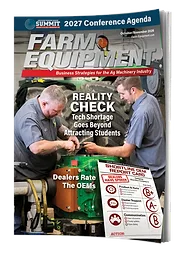
This April/May edition of Farm Equipment contains two feature stories about the dealer-supplier dynamic, including a first-ever approach to the contentious topic of mainlines. To avoid the gripe sessions, this time around, we asked dealers to cite their “all-time best” examples of mainline leadership.
One name, Jim Irwin, earned more praise than any other. Retired since 2005, the IH and Case IH exec but was well-known for holding weekend “office hours.” Every Saturday morning, he called dealers to get the lowdown on market conditions, problems and successes.
Last weekend, I tested whether that Saturday morning routine still existed 20-plus years later, and I found that the octogenarian still picks up from his Arizona home. In fact, my 32-minute call was Irwin’s second “iron business” call of the day.
Why Irwin?
Irwin was retiring as I started in the industry 22 years ago, though he remained in my contacts and I’d see him at Titan Machinery events. From what I gathered, he was an exec of “another era.” Dealers cite his commitment and work ethic, fairness and a deep understanding of retail sales and service.
He seemed like one of dealers’ own, and, in fact, cut his teeth at an IH company store in Danville, Ill., in the early 1960s. On his first day, he moved the manager’s desk out of the accounting department to be near the front door, closer to the action.
That young store manager made mistakes he never forgot. And he would not become an exec who thought he knew dealers’ business better than they did.
“People have different ideas of what dealer-manufacturer relationships should be,” he says. “My approach was to follow the money.” Awareness of the farmer, dealer and manufacturer chain kept him grounded in what mattered most.
And he was accessible. Even during his last year on the job, he logged 150 hotel nights. He believes business is personal, and it should be “more than just a job.” A lot of red dealers can be glad his pro football career (he was an All-American end) didn’t pan out.
That accessibility included monthly audio conferencing, where he reported on Case IH affairs for 1 hour and then opened the line for questions from dealers. “Everyone, including my staff, heard every question, comment and complaint.”
Active listening was not an accident. Understanding others’ situations allowed him to “mold thought processes,” he says. “We needed to think and operate in the same way to meet objectives. Everyone has an opinion of why it should be done ‘their way.’ The key is to find a route where everyone can still be satisfied with the result when you get there.”
And he was successful. Dealers knew him to ask direct questions about where their accounts receivables and used equipment levels were on any given day, and his proteges were eager to share their numbers.
A Tough Job
Leading an OEM’s dealer network ain’t easy. Anyone universally loved at all times, by all stakeholders, isn’t doing their job. They must motivate dealers to do battle while at the same time trying to keep the “Mother Ship” reasonably happy.
It wasn’t always fun, Irwin recalls. “You never know how you’re doing until you hit the rough patch. My job was to keep one hand on the throttle and one on the brake.”
But you never blame upper management nor the dealers, he says. “You can talk without sharing all the details; to know when to keep the burden on your shoulders. But don’t push it off to someone else. You can tell dealers the truth but also what they need to do.”
For more on Irwin’s career, visit www.farm-equipment.com/jim-irwin.
Leave comments and reflections in the commentary field below...