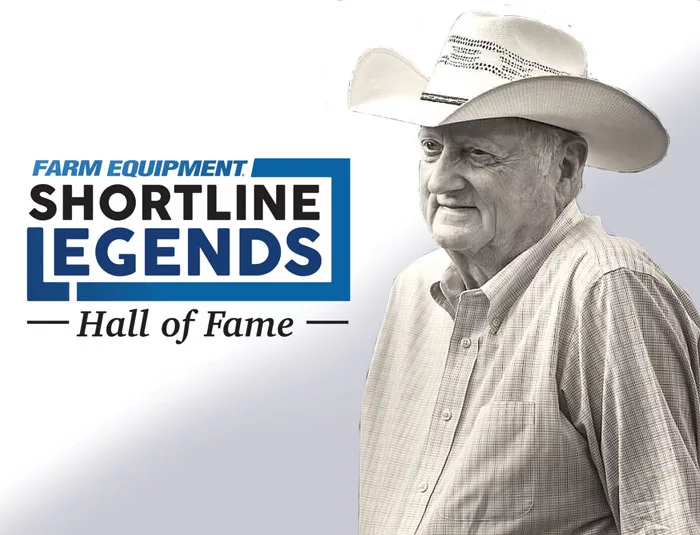
Shortline Legends Hall of Fame Recognized at FEMA's 2025 Convention
The 2025 inductees of the Shortline Legends Hall of Fame were recognized — in front of their peers — on October 30, 2025 during a presentation at the Farm Equipment Manufacturers Assn.’s Marketing & Distribution Convention in Las Vegas. Watch Tom Burenga's featured segment.
Farm Equipment‘s Shortline Legends video series is brought to you by FEMA.

For 75 years, FEMA members bring choice, value and Innovation to Agriculture. Shortline manufactures offer preferred brands at better margins, First to the market with innovation and dealers are more profitable with shortline manufacturers. For 75 years, customers prefer equipment from FEMA shortline manufacturers. Learn more at www.farmequip.org.
When Tom Burenga moved his young family from Wisconsin to Litchfield, Ill., in late 1979 to begin a new job, he didn’t expect to need to start over less than a year later. But that’s what happened, starting a history of him doing whatever it took to survive.
“I’d met Phil Sams in 1978,” Burenga tells. “He’d bought Wikomi Mfg. a few years earlier and asked if I could come down to Litchfield to help him straighten out his company.” Sams enticed Burenga with a healthy equity stake if he could save the business.
At that time, Burenga had been running Tractor Supply Co.’s manufacturing operations for 10 years after starting in the ag equipment industry with FMC Corp. in the late 1950s on its first mechanical fruit and vegetable pickers.
“I came to Wikomi in December 1979,” Burenga says, describing the job ahead of him. “The company was in very bad shape. The machinery was bad, the buildings leaked like a sieve, and quite a few of the managers and employees, well, weren’t so good. There were no safety rules and the accident rate was so bad the only insurance they could find was through the state of Illinois, which was very expensive.”
The company had been mismanaged, Burenga had a lot of rebuilding to do. Plus, the ag economy was starting its half-decade decline.
“We didn't do anything fancy, just put in common sense work and safety rules. We called a meeting and told everybody, ‘Everybody's got a clean slate, but from now on, here's what we go by.’” A common sense approach lowered the accident rate 96% that first year.
Burenga and Sams instituted key improvements, but it was “too little, too late.” The widow of the previous owner soon foreclosed on Wikomi. So the pair incorporated a new company called Worksaver in March 1980.
A New Beginning
Initially, Burenga thought things could turn around in a year or two. But the ag economy was still in the midst of a sustained downturn, and internal problems kept cropping up. “It ended up taking 4 or 5 years before we got to breakeven,” Burenga says.
“I had a wife and 3 children … When you find yourself in a corner, the way out is through hard work.”
They got there thanks to an incredible amount of perseverance and important strategic decisions.
“After spending 10 years with Tractor Supply, I had met a lot of people who went into the farm store business,” Burenga says. “That was one market opportunity I saw. So, we developed and adapted a lot of our equipment to the farm store market, which helped us stay alive.”
Burenga also became obsessed with improving Worksaver’s manufacturing capabilities. Even though Worksaver was fighting to find its footing in a challenging economic environment, Burenga’s passion and vision instilled confidence in others.
“When Tom and I first met, I could tell that we’d never have a problem,” says Tom Drake, general manager of Central Illinois Steel, who the Burengas credit with helping secure the rear-blade deal with Central Tractor. “Before long, they were not only paying their bills, but paying them on time and able to take discounts.”
Drake remains impressed by Burenga’s knowledge of engineering, and his ability to understand what customers needed and how to deliver on it. Burenga understood manufacturing and Drake recalls their firms swapping plant production machines from time to time.
Another supplier and longtime friend, Monty Waite, helped Tom on the first post-hole digger deal while at Comer Industries. They’d met at the National Farm Machinery Show in Louisville, when Worksaver was still in its infancy.
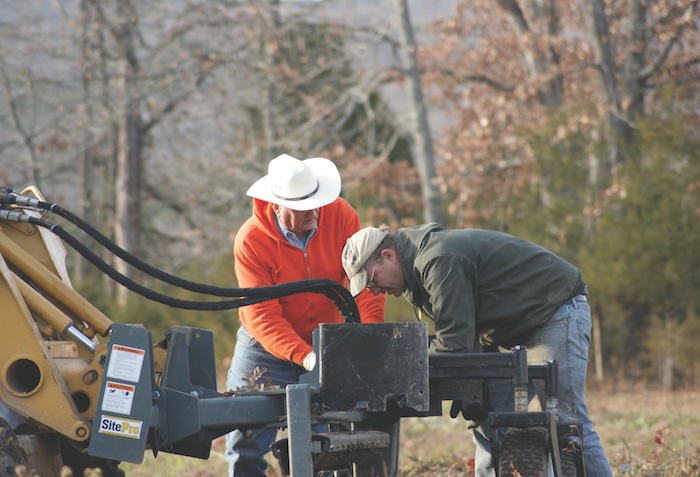
Worksaver father-son duo Tom (in signature cowboy hat) and Tim field testing thier early powered landscape rake.
Waite remembers Burgena's pride as a treasure hunter for production machinery. “It seemed every time I visited Worksaver Tom had just returned from an auction where he bought a new manufacturing machine,” tells Waite. “He was always excited to show his new ‘toy’ knowing it would help Worksaver create new products and grow the company.”
Worksaver’s investments in manufacturing equipment would also help the young company become more competitive in the farm store business. Many of Worksaver’s competitors were based in the lower-wage southern states.
“Around 1990, we focused on modernizing and adding computer-operated equipment to become more productive,” he says.
Today, the Worksaver plant includes 8 welding robots, a laser cutting machine, plasma cutting machine, CNC-operated lathes, machining centers and CNC-operated press brake. Other productivity investments have included additional storage buildings, expansions of the paint and fabrication departments, and a doubling of the shipping department to 36,000 square feet. In total, Worksaver has 220,000 square feet under foot. Worksaver also installed its own solar field to support the operation’s energy requirements and circumvent random brownouts.
Loyalty, Ingenuity & Grit
In addition to savvy engineering skills, Burenga was an amazing promoter, convincing Waite to join the Farm Equipment Manufacturers Assn. (FEMA), says Waite.
Despite a growing friendship, Waite had a hard time earning Burenga's business. "Tom finally agreed to test some samples, and eventually began buying a gearbox-driveline package for his post hole diggers.”
Steve Duncan, owner of SD Engineering, shares a similar story. He started working with Burenga in the 1980s when he was at ITG. “Tom is extremely loyal,” he says, but added that he’ll give new suppliers a shot if they promise fair pricing and top service.
As Duncan attests, Burenga is a hands-on person who isn’t content to stay in his office; he’s out there with the crew making it happen. He’s also a man of few words, says Duncan.
‘When We Almost Didn’t Make It’
Tom Burenga recalls a number of “touch and go” moments for the business. “I can tell you of a couple Saturdays that we had to go to the post office and get the mail and hope there were enough checks there to cover what we had handed out the Friday before.”
While the early years were the hardest, the Central Tractor fiasco could’ve resulted in Worksaver’s own demise. But challenges never cease for a niche equipment supplier. When the contract manufacturing business exploded in 2004, about the same time that raw material prices shot up in 3 month’s time, the company was growing too fast and faced input costs that had doubled and had nearly run out of cash through growth.
“Whenever Tom talks, people listen. And he didn’t change at all as his company grew and became the success story it is today.”
That success didn’t happen overnight. The first 5-10 years were painful.
“There isn’t a lot to lose when there’s nothing there to begin with,” Burenga says. “But I had a wife and 3 children. We just had to make it work. When you find yourself in a corner, there’s only one way out and that’s through hard work — to get it done.”
Walking Away from Half of Its Business
Part of what helped Worksaver “get it done” in its earlier years was the pivot toward farm store customers.
Earlier, Worksaver had landed an enterprise-changing deal with an Iowa farm store, Central Tractor. It bought in 10,000 blades for the fledgling manufacturer. Burenga still calls that moment the company’s greatest success. The deal was one of only razor-thin margins but allowed Worksaver to cover its overhead.
“Dad would say that he might not be right all the time, but he strived to be fair with customers, suppliers and his team…”
– Son Tom Burenga II, Operations Manager for Truland Equipment, 18-store John Deere dealer group in Ohio & Indiana
The deal required the help of his suppliers. “We had to start shipping the blades in September and didn't get paid until January. So I also had to go to our suppliers and tell them that I had this opportunity, but I needed their help. They all did. It was a tough time, but when January came, we got the check and we paid everybody.”
That rear blade business would result in more than half of Worksaver’s revenue for a decade.
Then the bomb dropped.
Central Tractor got wrapped up in a merger with Quality Farm Stores. By the middle of 2001, the new company filed bankruptcy and was liquidated. Worksaver, which had just brought son, Tim on, lost a third of its business and would recover only pennies on the dollar. At the same time, Worksaver’s labor union went on strike.
While the labor union strike was settled within weeks, it took 3 years for the “then-still teetering” Worksaver to recover from the loss of its largest customer.
With already slim margins rapidly eroding as more manufacturers crowded the farm store supply arena, Worksaver recognized the need to pivot again to stay alive — this time into more sustainable business.
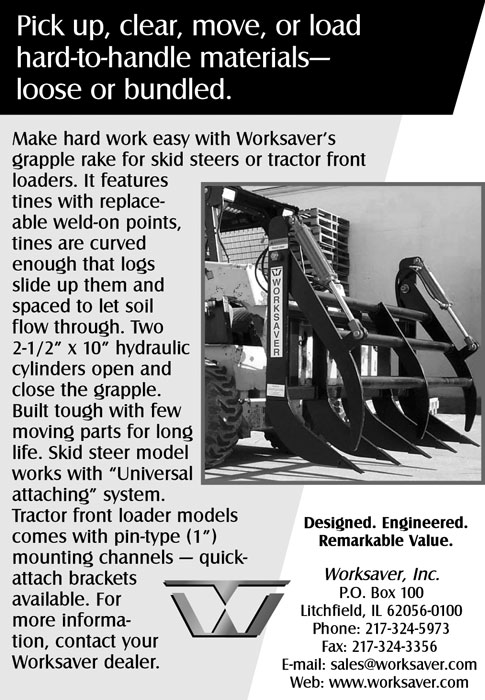
Worksaver promoted its grapple rake via a quarter-page ad in Farm Equipment in 2004 to great success.
All this coincided with the hiring of Sales Manager Mike Kloster, who brought lengthy experience from AGCO. Kloster, who is now president and a co-owner of Worksaver, helped Burenga steadily “work its way out of” the farm store business. They focused on products distributors could sell to dealers for a range of end-users including rural lifestylers, farmers and construction and landscape contractors.
The transition took 8 years, but it worked. Now, by design, Worksaver’s farm store business is just 5% of its total revenue.
Contract Manufacturing
Worksaver also helped itself by pursuing contract manufacturing for other OEMs. That business began took off in 2004, and continues to be an important piece of its sales portfolio. The entrance to the demanding contract manufacturing business, Burenga says, brought process changes and standards that helped all sides of its businesses, including its own brand reputation.
“We expanded and kept on the modernization, including the other CNC equipment. We've added onto the buildings, invested and made improvements all around,” he says, noting the company builds product for 7 major-line brands today.
Worksaver continues to expand the range of products its dealers can sell. What started as a “post hole digger and rear-blade company” blossomed into a diverse manufacturer of material handling, fencing, land management, snow removal, grading, raking and bale-handling attachments for tractors, skid steers, ATVs and more.
Burenga cites one of the company’s innovations as an example of how “customer need” has always driven new product development.
Worksaver Photos







“My son, Tim, and I were clearing land on our farm,” Burenga says. “Tim was using a front-end loader with a pallet fork to pick up larger branches. I was down on the ground picking up the small stuff. Tim got done on the loader and joined me. All of a sudden, a copperhead snake struck, though it didn’t bite. We both agreed that we didn’t like working down there with the snakes. We came back to the factory and built our first grapple rake.”
An enthusiastic salesman said he could move 80-100 units. So, Burenga and his lead engineer refined the design. And Worksaver sold 400 in the first year alone.
Burenga’s desire to get his hands dirty has been a big plus in helping develop new Worksaver products and helps build its culture.
“Having grown up in the business, I always saw Dad out in the shop,” says Tim. “Keep in mind that we historically have two types of machinery here — those being moved or those to be moved — because we’re always refining how we do production. The fact that we jump to get it done goes a long way with the employees, who see how we’re investing to make them more productive, efficient and comfortable.”
That mentality has also gone a long way with Tim, who refers to the Worksaver plant as his “babysitter” during his formative years. His first job, like his older siblings, was cleaning up trash around the property, then painting and mowing projects. Then his dad started letting him work with team leaders and shop supervisors, which is when Tim learned how to machine and weld. “It was an excellent education,” Tim relates.
Upon graduation from the Univ. of Illinois, Tim ran the shipping department before filling the shoes of a retiring plant manager. Now, as co-owner and vice president, Tim is poised to take the reins as his dad and Kloster transition into retirements. All three have served the industry as elected president of FEMA, with Tim continuing to serve as the association’s treasurer.
That long-planned succession is encouraging to dealers like Nail's Power Equip. owner Kenny Nail, “I became a Worksaver dealer almost from the very beginning. I was always impressed at the solutions they developed for the ag industry. They seemed to stay ahead of everything."
“Tom has always been fair and honest,” Nail continues. “He’d never try to con you. I was most impressed by how available he made himself, which goes for the entire Worksaver team. Some companies don’t care, but Worksaver always did, and that’s largely because of how Tom is”.
As told by those who know, Tom Burenga is full of grit, ingenuity and an unrivaled love for manufacturing and the ag equipment industry.
Learn More Online
- [Podcast] Conversations with Ag Equipment’s Entrepreneurs: Worksaver's Tom and Tim Burenga
- Worksaver Faces Challenges Head On & Embraces Change
- Worksaver’s Winding Path to Success
- How We Did It Docuseries: Worksaver (Part 1)
- How We Did It Docuseries: Worksaver (Part 2)
- How We Did It Docuseries: Worksaver (Part 3)
- Worksaver: Truly a Family Affair
- Tom Burenga II’s Observations About His Namesake