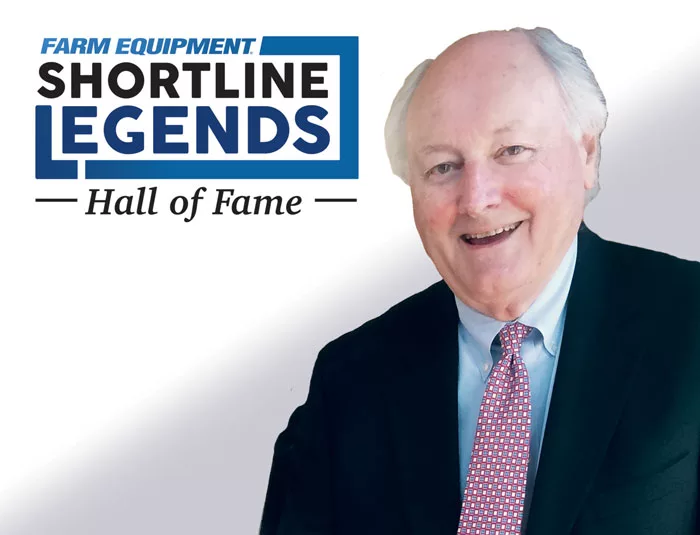
Shortline Legends Hall of Fame Recognized at FEMA's 2025 Convention
The 2025 inductees of the Shortline Legends Hall of Fame were recognized — in front of their peers — on October 30, 2025 during a presentation at the Farm Equipment Manufacturers Assn.’s Marketing & Distribution Convention in Las Vegas. Watch John M. Tye's featured segment.
Farm Equipment‘s Shortline Legends video series is brought to you by FEMA.

For 75 years, FEMA members bring choice, value and Innovation to Agriculture. Shortline manufactures offer preferred brands at better margins, First to the market with innovation and dealers are more profitable with shortline manufacturers. For 75 years, customers prefer equipment from FEMA shortline manufacturers. Learn more at www.farmequip.org.
The son of a sharecropper, 2025 Shortline Legends Hall of Fame inductee John Tye was reared in a home with no hot water nor sewer. About the time his dad, J.M., tossed him the tractor keys at age 10, Tye laughs, he’d also decided he’d pursue something other than farming.
John Tye chaired the Farm and Industrial Equipment Institute (forerunner to today’s AEM) in 1989 and was president of the Farm Equipment Manufacturers Assn. (FEMA) in 1991-92. He is one of FEMA’s most active past presidents and remains chair of the association’s Risk Management Committee via Sentry Insurance.
John M. Tye III
Formerly of Tye Co., AgEquipment Group, Lubbock, Texas
Claim to Fame: John Tye was chairman of the Farm and Industrial Equipment Institute (forerunner to today’s AEM) in 1989 and president of the Farm Equipment Manufacturers Assn. (FEMA) in 1991-92. He is one of FEMA’s most active past presidents and is chairman of the association’s Risk Management Committee via Sentry Insurance.
The ag equipment industry owes a debt to that bumpy tractor and Texas heat, which led to one of the greatest examples of farm equipment manufacturing leadership over the last half-century. His “day job” changed the day he sold his AgEquipment Group (by then consisting of Tye, Glencoe and Farmhand brands) to AGCO in 1995.
Now 80, he may be the most influential past president of the Farm Equipment Manufacturers Assn. (FEMA) ever, still serving on the association’s Risk Management Committee and attending most of the 3-times a year FEMA board meetings. He and wife, Vel, have been fixtures of the FEMA community since the mid-1970s. His work with Sentry provided a decades-long depth of risk management services to many of the small manufacturers who previously had fewer options in product liability coverage.
From Power Systems to Sporting Goods to Farm Equipment
Tye, the son of a farmer by the same name, brought two engineering degrees to Milwaukee-based Allis-Chalmers (A-C). He was brought in to work on its power-generation businesses, a diversification for the once highly respected ag OEM. One Wisconsin winter convinced him something better existed and he landed in plant operations for a sporting goods company. That initially took him to Los Angeles, and then to Arkansas and then Connecticut as he developed a reputation as a “turnaround man.”
At the same time, his farmer dad, J.M., ventured into the farm equipment dealer business by picking up the Oliver brand contract in Lockney, Texas. As furrow irrigation was embraced in dryland cotton, equipment modifications were needed to make it work.
“With nothing available, he cooked up a planter in the back room of the dealership,” recalls Tye. “One neighbor after another wanted it and Dad built them.”
Getting the Dealers Going
Shortline Legend Hall of Famer John Tye recalls taking his 3-point hitch drills to dealers in Arizona and California. The strongest dealer — at least financially — was usually a John Deere dealer. But they were “tough nuts to crack.”
“I was in Arizona and a Deere dealer said to me, ‘If God meant for there to be a 3-point hitch drill, John Deere would build one — we aren’t interested.’
“Well, we’d often go down the street to the Case or the IH dealer, or the AGCO dealer who might've been the second best. They’d find our story interesting and many would give it a shot. In many cases, it went over extremely well.”
The elder Tye began to think that manufacturing iron might be a better fit for him than peddling it. “He closed the dealership, auctioned off all the equipment and manufactured planters. He then had the idea that he could make a grain drill for those same customers to seed their cotton, grain sorghum and wheat.”
He developed a 3-point hitch drill in which the gauge wheels could be moved to plant over the bed and in the furrow. Once again, he found modest success. But unlike his son, the elder Tye realized he wanted to farm, not build iron.
He’d had only 4 employees, but they were “driving him nuts.” While John was home from Connecticut for Christmas, J.M. approached him about leaving a 300-man factory to take the wheel of his tiny manufacturing business — so he could return to farming.
Tye, who was working for a $100 million enterprise (“still a little company vs. his first gig with A-C,” he says) resigned and moved south to Texas in 1972 to take over his father’s shop.
He began seeking new opportunities and made several product line additions. “My father was happy to help if it was designing something new and happy to go take something out to the farm and try it out. But he didn't want to be involved in the actual manufacturing and particularly not the marketing and sales end of things.”
Tye found an ag equipment distributor in Amarillo to cover the local area, and then built relationships with a number of the other larger ag equipment distributors (2-step distribution was more common then) which quickly brought expansion. A mix of manufacturer reps and direct salespeople were added to gain better control in driving sales. He soon expanded nationally and then into offshore markets.
Making a Name in No-Till
The Tye company got into disc bedders, not because it needed to be in the tillage world, but because farmers needed better conditions in which to speedily plant their beds. The company’s ability to roll with the changes in farming brought new opportunities.
Agronomists were sharing that soybeans would yield better if planted on narrow rows, he recalls. “The problem was there was no way to control weeds because you couldn't cultivate it. BASF came up with Basagran, a herbicide that killed everything but the soybeans.
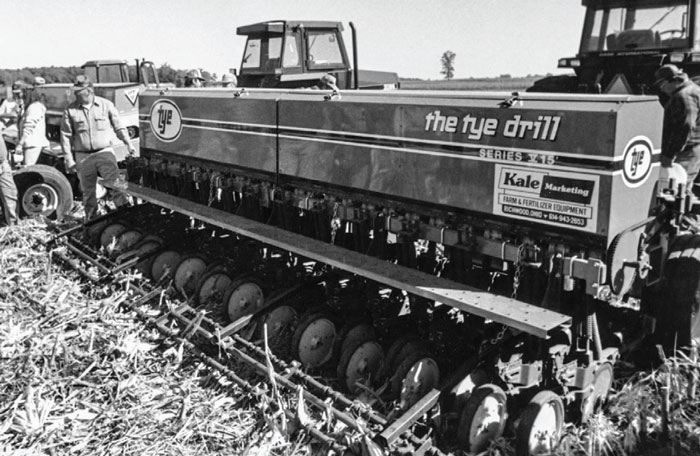
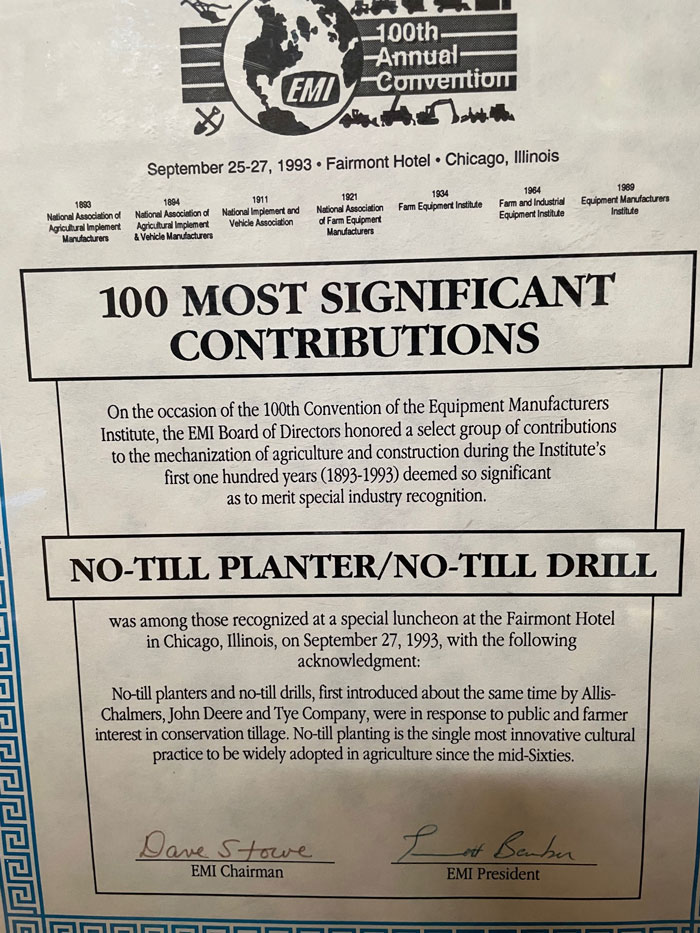
The Tye Co. became a key player in seeding and planting, and in supplying specific units for no-tillage.
“It became easy to plant narrow-row soybeans. And everywhere soybeans could be planted, we sold narrow row soybean drills,” he says, noting that BASF was very good at supporting and spreading the word.
The evolution of planting narrow row soybeans into wheat stubble and double cropping edged the company into the no-till world. “We weren’t really planning to get into it, but the ability to go right into wheat stubble was the No. 1 example for planting soybeans in the Midwest,” he says, describing his early drill designs featuring crude, homemade coulters set up for 8-inch rows.
Experimenting with coulters is what got them into the new no-till business, and it would become a major innovator in that upstart conservation practice in the 1970s and 1980s. In Frank Lessiter’s 2022 book, From Maverick to Mainstream: A History of No-Till Farming, Tye admitted he never thought no-till stood a chance. “You’ve got to plow the ground and kill the weeds or the weeds will overtake things,” he recalls of his skepticism. His concerns were allayed as BASF supported the practice and spread the word about its herbicide performance, first in conventional tillage and then into no-till.
Yet Dr. John Bradley, longtime head of the Univ. of Tennessee’s Milan Ag Experiment Station, says Tye proved very supportive of the Milan No-Till Field day from the early 1980s on, and supplied the first no-till drill to Bradley and his team. As a result, the Tye drill was recommended by Bradley to a host of other experimental stations.
Like many shortline manufacturers, the majors approached Tye to do contract manufacturing. Illinois farmer B.G. Schluetter had built a crude carrier attachment that had coulters and lift wheels that he attached to his Tye drill to make no-till work. Tye licensed his patent, and had gone to work to make it marketable and manufacturable. It caught John Deere’s attention and the OEM paid Tye to ship a few units to Iowa.
“John is reserved but very smart and always good at picking people to run things for him and giving them resources to build it. He was straight and honest with suppliers and had high expectations of them to do their part. He was interested in everything, not just his drills…”
– Morry Taylor, chair of tire & wheel supplier Titan International
“There appeared to be a big internal battle going on at Deere — the marketing folks wanted a product in the market immediately — which would’ve been before they ultimately came with the 750 drill. The engineering folks wanted to wait until they could develop their own.” Ultimately, Deere’s engineers called it quits on the project.
Even though the project died, Tye got an early view into how excited Deere’s marketing team responded to the no-till trend. “We doubled down on the promotion and the sales. There was a huge group of folks that bought before the ability to do no-till drilling. They were adding these units to their drills to be able to no-till with them.”
An Extension into Pastures
Along the way, Tye was approached with a new market opportunity. “Someone asked, ‘If you can build no-till drills, why can’t you build something to renovate my pasture?’ We said, ‘Tell us more.’”
There proved to be a large demand as well. “A lot of folks in the cattle business wanted to renovate their pasture without plowing it up. With the no-till pasture renovation machine, we had several boxes that could handle different kinds of seeds — from the little to the big to the fluffy grass seeds — depending on what you wanted to put in.”
Bradley recalls Tye’s “Pasture Pleaser” that was the first developed for the application and was a big success in the pre-Roundup days. It would have a number of variations and sizes, up to 160 inches and 4 40-inch rows, in both pull and 3-point versions.
John M. Tye III Photo Gallery

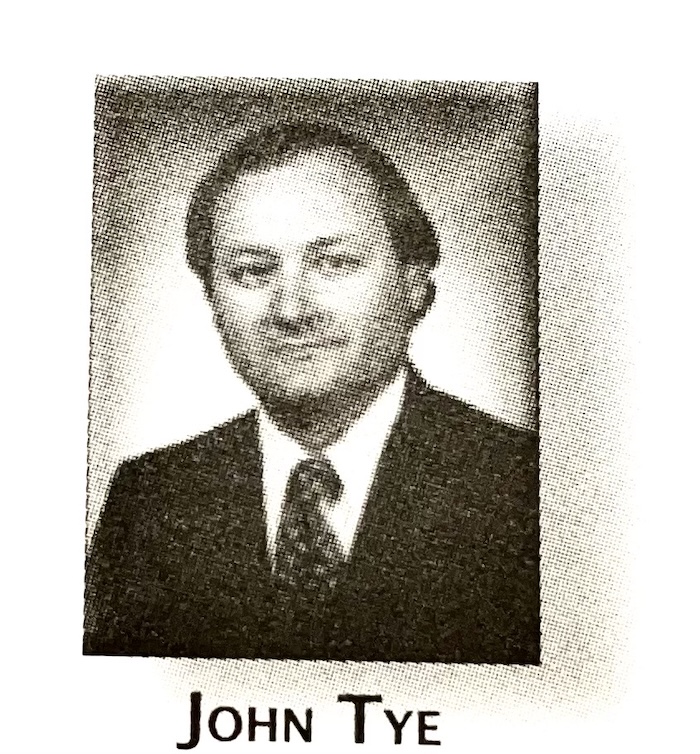
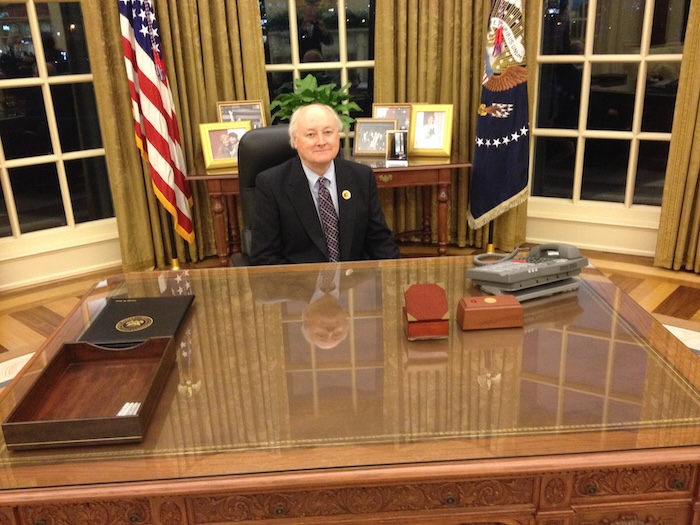

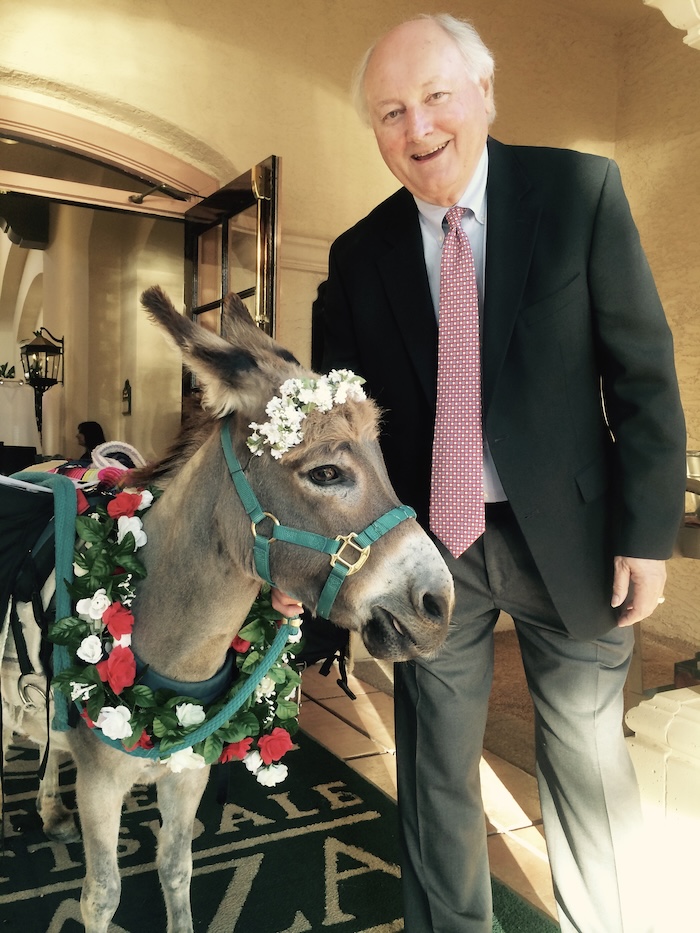
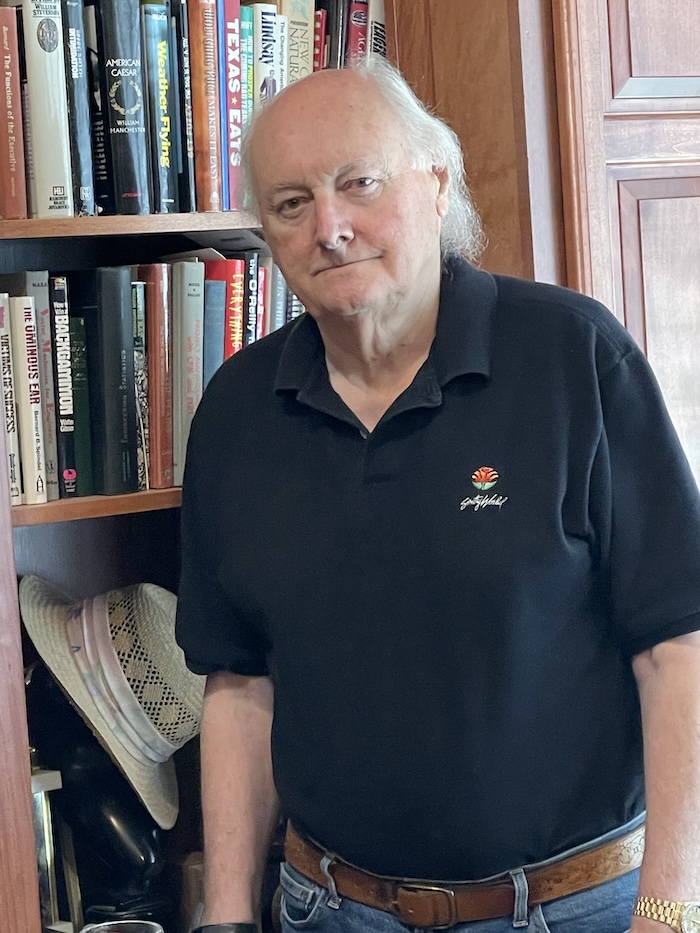
Merger with Farmhand & Glencoe. In 17 years, Tye had grown his company’s employment by 40-fold to a head count of 160 and had a half-dozen product lines. In 1990, Tye and the late Joe Lund, president/CEO of Minnesota-based implement manufacturer Farmhand, started talking about joining up. Lund’s company included Glencoe and Farmhand, which was an amalgamation of a number of companies, most of which Lund purchased merely to capture the repair parts business. “But Glencoe was different,” says Tye. “They were in the minimum tillage business like us.”
So the two execs drew up a partnership that would have the Glencoe “Soil Saver” complementing Tye’s planter — for a recognized strength in conservation tillage. Meanwhile, Farmhand featured a broad product line that included front-end loaders, farmstead equipment and grinder mixers.
Tye explains the decision to merge with Lund. “To be viable going forward, you needed to have a certain critical mass of sales. You needed to be big enough to gain attention; to afford your own sales force and get them to do what you wanted when you wanted to do it,” he says, citing what he saw Bush Hog accomplish with its critical mass and salespeople calling on dealers directly.
“John Tye was among the key people that ensured the Farm Equipment Manufacturers Association’s extremely strong financial foundation. He was one of the leaders who helped conceive and develop the Sentry Insurance Program. Thirty years later, John still chairs the oversight of the program via the Risk Management Committee. A consummate southern gentleman, John's active support of FEMA and its staff will forever leave an imprint on our organization. Most important, John and his wife, Vel, treat the staff and the Association's members like family.”
– Craig Harthoorn, FEMA President (2024-25)
“Combining with Farmhand and Glencoe we nearly tripled the sales volume and gained a company-owned sales force — and up in the Midwest where we didn’t have direct sales.”
The new company was called AgEquipment Group and shortly thereafter, Tye bought out the retiring Lund.
The Sale to AGCO
In the mid-1990s, AGCO execs, including Bob Ratliff and John Shumejda began pursuing Tye’s company to fill the voids their sales team had identified in their product lines, particularly in minimum and conservation tillage. Tye pondered it for a while and while he was paid a handsome fee, he believed it would be best for the product line.
In 1995, AGCO, bought the assets of AgEquipment Group. Interest was high at the very top, says Tye, but the attitude wasn’t shared at the bottom — the foot soldiers of sales wanted to sell the tractors and combines, not no-till drills. Eventually all production was moved to other AGCO facilities.
Developing, Selling Bigham Brothers
The sale to AGCO left Tye’s wholegoods equipment holdings with Bigham Brothers, a tillage company for cotton growers that he’d rescued from financial trouble in the mid-1980s.
Tye bailed out a former employee and the two Bigham brothers (and a brother-in-law) who were farmers/ranchers-turned-manufacturers. The agreed to an earn-out deal with one of Tye’s former employees “just in time for the farm equipment crash of 1982.” Since there weren’t any earnings to be had, the business went back to the founders.
John Tye Talks AgTech Investments, Small-Company Innovators
During his AgEquipment Group days, Shortline Legend John Tye III was a partner in InterAg Technologies, a startup focused on electronics and software. It was founded by Charlie Stamp and also backed by Tye and Kirk Pendleton.
Deere bought 50% of the company in 1996 and made known that it wanted the chance to buy the whole company 15 or 20 years down the line. But after a couple of years, Deere decided it had to buy the whole thing — now. Pendleton, Tye says, countered that it should be valued by its future value of 15 years in the future. The John Deere folks agreed — they had to have it — and asked what the partners would take to sell off the remaining 50% in 1999 — for $100 million.
“One of the partners took cash but the rest of us took John Deere stock,” says Tye. “That John Deere stock is still the single largest chunk of my net worth, in terms of value.”
A similar path followed with Fargo-based Appareo, this time with AGCO. A brilliant engineer named Barry Batcheller saw the merits of the InterAg deal and founded another electronic business in 2003. It would become known for Intelligent Ag, Galeo and Stratus brands that gained notoriety for aftermarket electronics and software for ag, aviation (a business that Tye introduced it to) and offroad segments.
Tye says it had been focused on spray nozzles and how to change things on-the-go with all kinds of inputted data on a GPS map to automatically change volumes, droplet size, boom, height, all that sort of stuff.
It was selling a lot of product to AGCO and had dozens of engineers, which AGCO valued highly. “They wanted the engineers and the technology that fit into its sprayer business. It also had very good technology for measuring grain losses.
Tye helped finance the growth of the precision ag business, which sold to AGCO in 2022 for $61.4 million.
On the future of the independent innovators, Tye says, “Both of these examples — two decades apart — are big companies writing big checks for the same thing – very innovative companies that have worked on things that have been a pain to the big companies. They came with the solution and they're going to buy it.
“Small companies, run by innovative people that solve problems that big companies are willing to write a check for, because big companies need hot and cold running engineers for any technicality that you want. They have really smart guys, yet they came and paid a huge amount of money for them. A lot of people don’t understand them, and don’t know they’re even out there, but the John Deeres and the AGCOs of the world know, because they've got problems that need to be solved. And suddenly they find some little company that has solved them.”
“Their GM, Sandy Kimball, and accountant suggested I buy it and have Kimball run it for me,” says Tye, introducing him to a longtime friend and business partner.
They expanded to a bigger facility and Tye says Kimball did a great job running it, and expanded the business throughout Texas, the Southwest and Mississippi Delta while buying an ownership interest in the company.
Tye and Kimball retained ownership until it was sold to private equity group TVV Capital in 2013.
Still Active in Ag Equipment Supply, Dealerships
While he’s been out of the wholegoods business for some time, Tye’s instincts served him well in investing in two technology businesses bought out by the majors (see sidebar).
Back in his Bigham Equipment days, a local supplier of its fasteners, nuts, bolts and screws went broke. Kimball and Tye picked up that business (Lubbock Fastener Supply), reorganized and found they could sell not only to other manufacturers but competitors, too.
That business makes the company a "Supplier Member" of FEMA.
“We’re selling nuts and bolts to, probably, two dozen customers and you have to go out and find us, but it’s an interesting business,” he says. “Since we had the building in Lubbock and Sandy always wanted to be in the farm equipment dealership business, we set up a small business to sell 40 horsepower tractors.”
Owned by Tye and Kimball, K&S Tractor LLC sells LS tractors as well as front end loaders, rotary cutters and other products along with 40 horsepower tractors. Kimball’s son and grandson are also involved in the day to day business.
He remains active with FEMA and chairs its Sentry Risk Management Committee. He also serves on a number of other boards, including the Reese Technology Center and the Plainview-Hale County Airport.
Learn More Online
- Basagran Helped Manufacturer Develop Drills for Nor Narrow-Row, No-Till Soybeans
- Video Interview with John Tye -- Coming Soon!