Farm Equipment‘s Shortline Legends video series is brought to you by FEMA.

For 75 years, FEMA members bring choice, value and Innovation to Agriculture. Shortline manufactures offer preferred brands at better margins, First to the market with innovation and dealers are more profitable with shortline manufacturers. For 75 years, customers prefer equipment from FEMA shortline manufacturers. Learn more at www.farmequip.org.
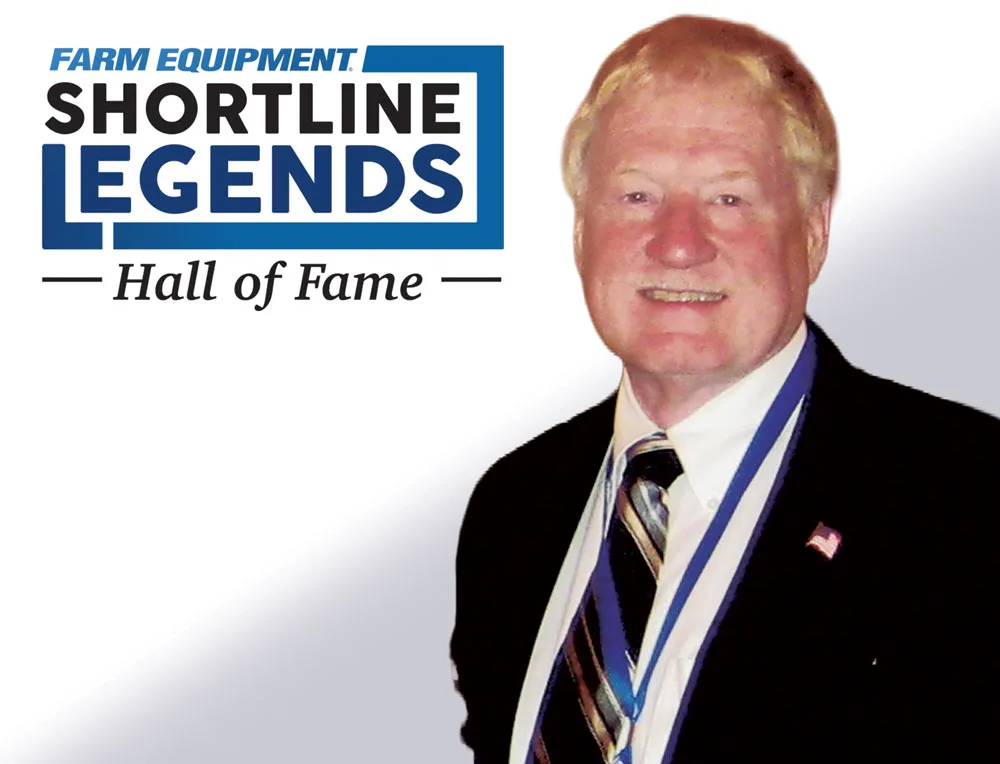
Jim Hellbusch is a self-described good ol’ Nebraska guy. As a second-generation president of Duo Lift Manufacturing, his leadership, ingenuity and innovative thinking have helped his family’s businesses thrive for nearly 60 years. He has unselfishly served the industry for nearly as long, taking on key leadership roles in the Farm Equipment Manufacturing Assn. (FEMA), including committee chair, president and serving on the board of directors.
Located in Columbus, Neb., Duo Lift was started by Jim’s father, Arthur, in the family’s dairy barn in 1943. In 1969, Jim returned to Columbus to help turn his dad’s hobby into a business after turning down a teaching job at a college in Des Moines. He told Connie, his wife-to-be, that he would give it three years and if it didn’t work out he would go back to his degree.
“I was never home. We had a family farm, and I would help farm in the morning from 6 a.m. to 8:30 a.m.,” Jim says. “Then I’d go back in the shop until 6 p.m. After that I’d come home, throw down supper and farm until dark. I did that for about 5 years. It was a struggle, but we made it through. You pinch your pennies, and you quit buying paperclips,” he says. For 8-10 months, Connie and I didn’t take one dime out of the company whatsoever.”
Today, sons Ben and David help oversee the vertically integrated and growing business that encompasses manufacturing, wholesale distribution and retail operations, while employing 90 people. Like their father, they took on important leadership roles. Ben was elected as president of the Farm Equipment Manufacturers Assn. in October 2022, just like his father was in 1990 and 1999. David is currently serving on the board of directors with ambition to serve on the executive team and ultimately serve as president.
“I joined FEMA in the early 1980s and it immediately made an impact on how I ran and grew my business,” Jim says. “It connected me to other professionals, vendors and salespeople that helped make the business what it is today. It was important to me that Ben and David continued with FEMA because I wanted them to make the same type of connections that I as able to make and use them to further enhance our success.”
The company’s equipment manufacturing divisions are best known for its branded trailers with running gears for the fertilizer industry, head hauler trailers, feed hauler trailers, and machines to roll up the spent bags in the green bagging industry. All Duo Lift branded products are Jim’s designs. “Many years ago we evolved to have a full engineering department that I have collaborated with to help create all the different models we make today,” Jim says.
“He has been particularly effective at bringing standards changes to the attention of the membership as well as being influential in advocating for changes to proposals he felt were detrimental to the shortline industry — not just to his business…” – John Tye, FEMA Past-President, Director, etc., formerly of Tye Co.
Over the years, Duo Lift has created relationships with other companies to manufacture their equipment in an OEM capacity. “Some of the products we designed for them and others we just manufacture,” says Ben.
Recently, Duo Lift acquired Linco-Precision, placing their holdings directly into the dealer landscape for the first time. Linco-Precision was renamed to DL Shortline, making it the retail center in Illinois for the company’s fertilizer and ag products, and other brands (see p. 60 for more on the dealership).
Duo Lift is nearing completion of a 10,000 square-foot corporate office to its existing 100,000 square-foot manufacturing facility in Columbus. The new space will nearly triple the size of the offices that after a heavy snowstorm collapsed its roof in January of 2024.
Quality & Safety at the CEO Level
For decades, Jim has actively advocated for safety and influenced positive changes throughout the industry. He formed and led several national committees and councils advancing key ag safety issues that included promoting anhydrous ammonia and roadway safety helping to keep farmers and workers safe. Ben says his dad had enough industry clout that OEMs including FEMA members like John Deere and Case IH wanted to be included, along with larger shortliners.
Jim first became interested in pursuing safety standards for anhydrous in the late 1980s.
“Since the beginning of our time working with anhydrous ammonia, I observed many serious injuries that came from improper handling of the chemical and the equipment used to apply it,” Jim says. “Our company is built on quality and safety, and I wanted to help the industry by making standards that would promote keeping users safe.”
Additional Comments
Jim has a story that similar to many of the other short line manufacturers I’ve met over the years. He saw what was available commercially and felt he could do a better job and approached doing so with the determination that led to his success. He was one of the few short line manufacturers who not only saw the importance of standards but also pursued the development of new standards in an area where there were no ag specific standards, safety for anhydrous ammonia applicators.
At about the same time Jim became very interested in pursuing standards for anhydrous, one of the majors purchased a quick connect technology for this dangerous fertilizer. Both Jim and the representative from the major company rolled up their sleeves and worked together with a variety of other technical experts to pursue the technical details needed to safely designken application equipment.
– Scott Cedarquist of ASABE
What has always distinguished Jim is the passion he brings to the things he believes in. He is determined, persistent, and possesses a true never-give-up mentality. Once Jim commits himself to a company, an organization, or an idea, he gives it his full effort and stays with it through every challenge.
Jim also brings a perspective to the farm equipment industry that very few people possess. He has experienced the business as a farmer, manufacturer, wholesaler, and now as a retailer. Because he has worked on nearly every side of the industry, he has an exceptional understanding of what farmers need, what manufacturers face, and what dealers must do to successfully serve their customers.
– Andrew Cummings, CEO, TG Schmeiser Co.
Jim Hellbusch of Duo Lift embodies the innovation, dedication, and practical problem-solving that define the Farm Equipment Shortline Legends Hall of Fame. Throughout his career, Jim has consistently focused on improving the efficiency and safety of equipment used by fertilizer and farming operations, making a lasting impact on the agriculture industry.
At Duo Lift, Jim has been instrumental in designing and refining trailering equipment that haul irrigation pipes, fertilizer, farm equipment and even specialized maintenance-of-way trailers for municipalities. Jim has demonstrated an innate ability to tailor his equipment to meet the real-world demands of farm-related logistics. His deep understanding of agriculture has allowed him to develop solutions that are not only durable and reliable but also highly adaptable to the unique challenges faced by rural and regional operations. This has enabled customers to move products more efficiently while maintaining high standards of safety.
What sets Jim apart is his hands-on approach and commitment to listening. He has built strong relationships with customers by engaging directly with operators, understanding their needs, and translating those insights into meaningful product improvements. His ability to turn feedback into practical innovation has helped elevate industry standards and strengthen trust across the sector.
– Craig Harthoorn, DL Shortline
He began working with the American Society of Agricultural and Biological Engineers (ASABE) in the late 1980s. “We created the X620 NH3 safety committee in 2010 which dealt with all aspects of the safety of handling and using anhydrous ammonia and equipment. There were standards on applying ammonia, but not on transporting ammonia on highways,” he says. “We did a lot of work on that. At about the same time, one of the majors purchased a quick-connect technology for this dangerous fertilizer.”
As chairman of the Towed Implement Council for FEMA Jim brought it to the attention of the committee that something needed to be done. “The council agreed and it became an agenda item and ultimately a project that we wanted to work on,” he says.
Craig Harthoorn, General Manager, DL Shortline, and FEMA President (2024-25), says Jim’s passion and dedication to the work done by FEMA’s Safety Standards Committee had a meaningful industry impact.
“When I first arrived on the scene, Duo Lift’s Jim Hellbusch was the chair,” Harthoorn recalls. “His passion spilled onto the rest of the committee, which then led to smart safety standards, and not merely standards where the shortliners would’ve been burdened to carry the onus of what was being pursued (braking, lighting, hitch pin requirements, etc.). This committee has always done a fantastic job of ensuring that shortliners have practical, common-sense safety standards that give each of us the tools to build some of the safest equipment in the world.”
ASABE's Scott Cedarquist, has presented many times with Hellbusch at FEMA and other meetings. He says Jim was one of the few short line manufacturers who not only saw the importance of standards but also pursued the development of new standards in an area where there were no ag specific standards, safety for anhydrous ammonia applicators.
Industry Commitment
Jim has experienced the ag business as a farmer, manufacturer, wholesaler and as a retailer. “Because he has worked on nearly every side of the industry, he has an exceptional understanding of what farmers need, what manufacturers face and what dealers must do to successfully serve their customers,” says Andrew Cummings, CEO, T.G. Schmeiser Co., Fresno, Calif., FEMA president 2012-13. “Jim combines innovation, practical experience, and strong business judgment. He understands farm equipment must do more than look good on paper. It must solve a real problem, perform reliably in the field, and provide lasting value to the farmer.”
When FEMA calls, Jim answers. “Whether serving on committees, as a board member, as president, or continuing to contribute as a past president, his service to FEMA has never been about recognition or a title. Jim has been genuinely committed to strengthening the association and supporting the independent manufacturers,” Cummings says.
“Jim became very interested in pursuing standards for anhydrous when one of the majors purchased a quick connect technology for this dangerous fertilizer,” he says. Both Jim and the representative from the major company rolled up their sleeves and worked together with a variety of other technical experts to pursue the technical details needed to safely design application equipment.”
Jim has been on and led several ASABE committees over the last 40 years. “You’re never done. Every time you get a standard done, there’s always a revision. When we were done, we’d always make it better,” Jim says.
That commitment to safety didn’t go unnoticed. “He was also a strong advocate for equipment safety, promoting practices and innovations that benefited not only his company but the industry as a whole,” says Cody Wray, retired executive of Fairbank Equipment, a fertilizer application parts and equipment supplier. “His leadership helped elevate the quality, safety and reputation of agricultural equipment manufacturers.”
Solving Problems
Jim’s superpower, according to his sons, is his ability to visualize complex equipment solutions. He became president of Duo Lift after his father retired in 1981. Since then, he has expanded the company into the fertilizer application industry, while leading the design and manufacture of its first anhydrous ammonia runner gear.
Early on, he identified several flaws of the low-boy anhydrous and liquid trailers used by farmers and ag retailers across the Corn Belt. It started in 1977 when a man from Wichita, Kan., stopped by to visit he told Jim, “About two or three times every year, someone is killed on the highway, because the trailer itself breaks down. It’s an ammonia tank, and it’s a bullet going 40 miles an hour and it will hit an oncoming car, and it kills people. There are so many competitors out there, and they all copied each other so much, and they made them so cheap. We need somebody that builds a high-quality product.”
Improving Efficiency to Move Duo Lift Forward
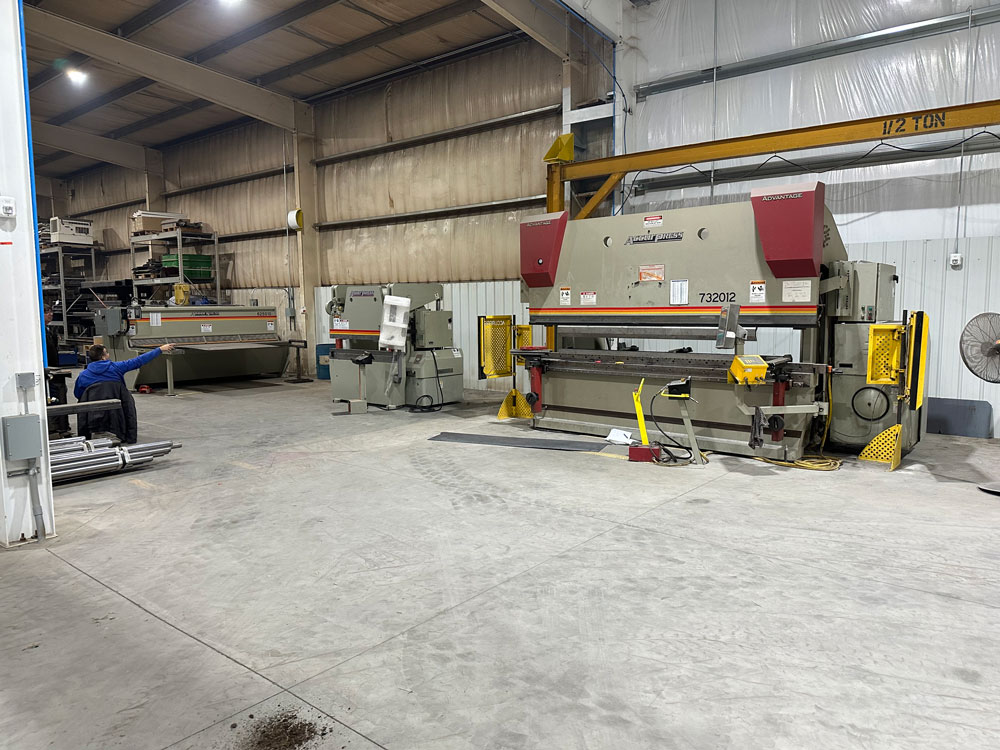
“When I started,” Jim says, “I had an old reciprocal saw and an old iron worker that that was a punch press and a hand torch.”
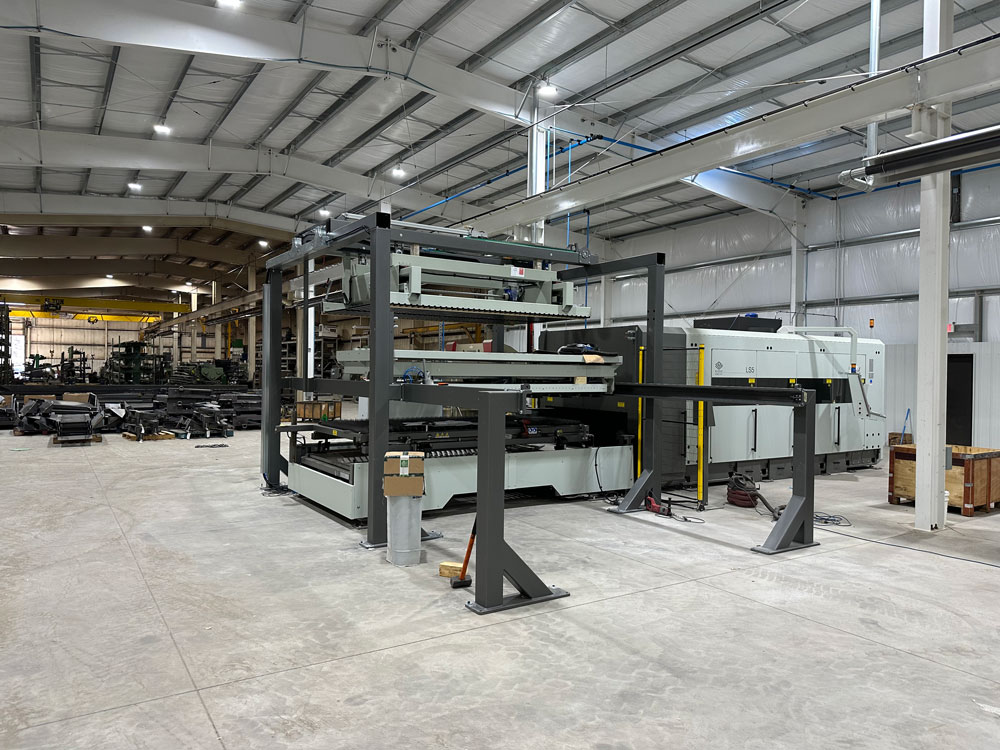
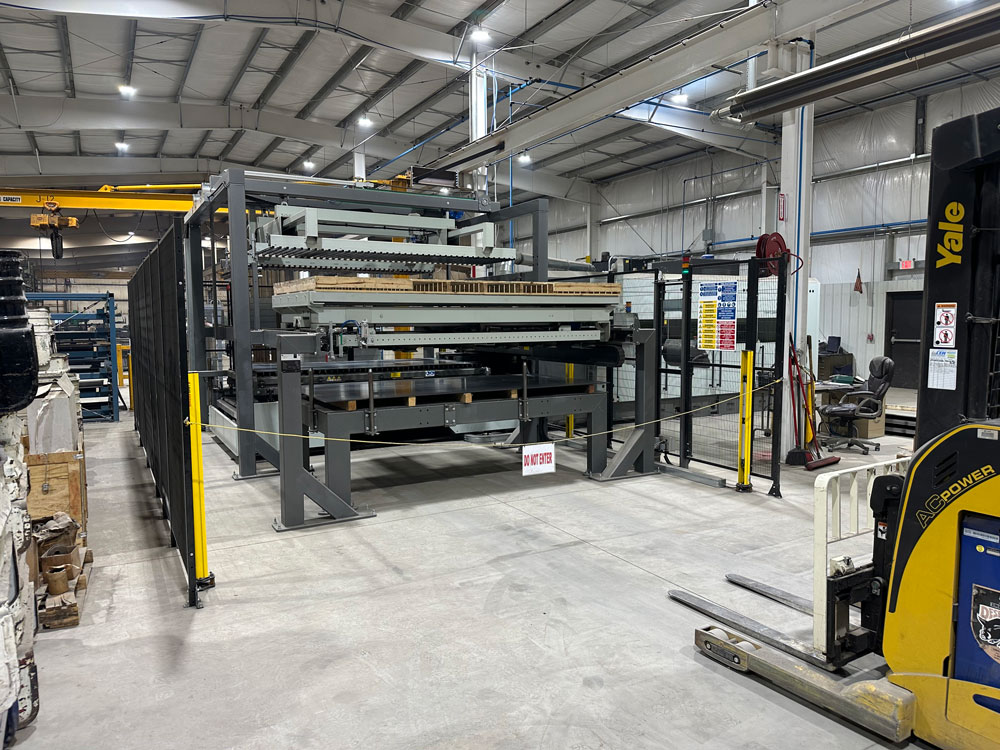
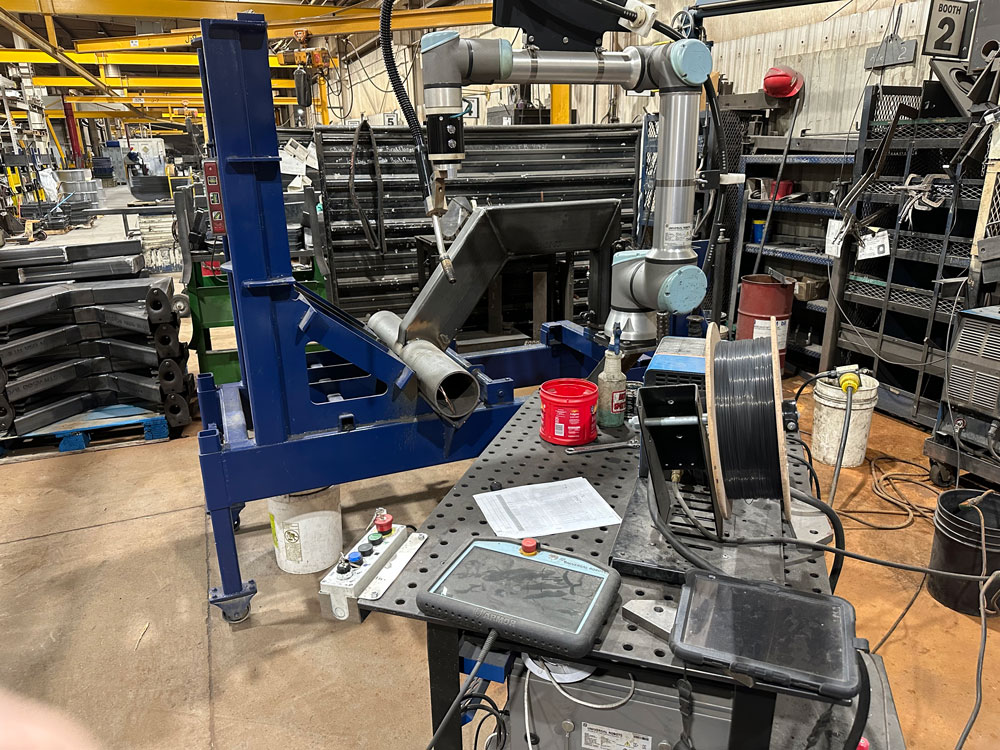
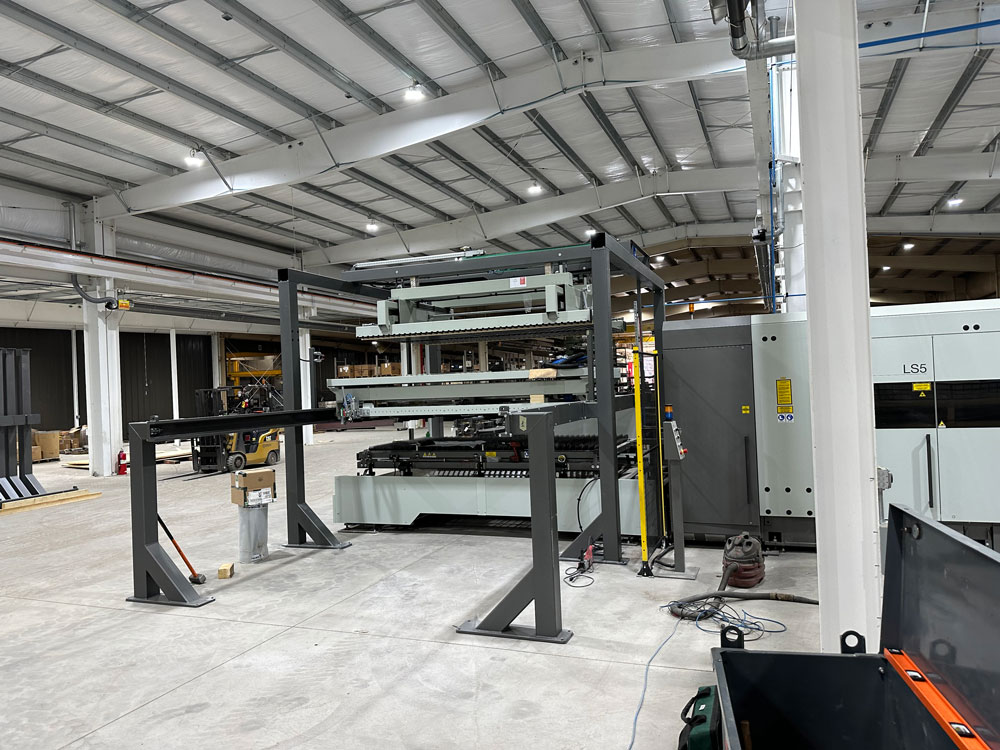
Duo Lift has expanded and upgraded its manufacturing facilities over the past few years, steadily improving operational efficiency by adding plenty of new, high-tech equipment.
“We added a laser cutting table with automation to our fabrication process during that expansion,” David says. “We moved a bunch of equipment around in our facility and then into that new expansion. We created more of a fabrication building area. We were growing enough where we needed everything in one spot. That was the purpose of the expansion, to get all our fabrication stuff in one spot. And that opened other areas for more welding and more things like that.”
They also purchased in installed Cobot robotic welding technology. It’s a high mix style of a unit that he explains offers excellent manufacturing versatility. In addition, they built new fixtures along the way, enhancing their products and improving the site’s manufacturing efficiency.
“We’re putting more computers in the plant and we’re going to track our work and process differently. We’ve also poured a bunch of money into engineering,” Ben says. Thanks to the computers on the floor, workers now all have access to exploded views and diagrams so they can look at a certain part and quickly see how it gets put together. Before, if workers had questions like that, they had to go directly to the engineering department for answers.
“Now all that information is at their fingertips,” Ben says. With all the workstations in the plant now fully linked to engineering, questions from the factory floor get are resolved more quickly, increasing productivity.
With new technology comes new opportunities for employees to develop new skills and advance their careers, says Jim. “You can reward them by paying them higher wages because now they’re not a welder, they’re a (machine) operator.”
Jim took the trailer the visitor left him and went to work on improving it. “I got rid of the bad stuff. I enhanced the good stuff, and it came out that the product was about 25% more expensive in the marketplace than what they were,” Jim explained.
His new, heavy-duty, safer trailers quickly grew in popularity from their launch in 1981. Jim was so confident in his trailers, he backed them with an industry-leading 5-year warranty. Today, the company builds about 3,500-4,000 trailers per year.
In 2018, Jim led design efforts for a specialized, combine-head hauler. Twenty years ago, the largest draper headers were 30 feet wide. Today those headers are up to 60 feet wide. To move them between fields, farmers and custom harvesters had to place them on long trailers and tow them. However, as the headers and trailers got longer, problems appeared.
“The only rear-steer trailers out there had wide fronts on them which are really hard to get in and out of fields and avoid ditches,” Ben says. Jim and Duo Lift’s engineers worked together for almost a year, building a new trailer with a narrow front and rear steering. “That was a game changer. We were the only ones that had that narrow front that could steer,” Ben says.
Jim-Hellbusch, Shortline Legends Hall of Fame 2026

The trailer he is referring to is a triple-axle beast, the AST62D — an 8-wheel, DOT compliant all-steer head hauler trailer — an innovative solution to an industry-wide problem. It was so pioneering and made such a positive impact that in 2023 the design was presented with the prestigious AE50 Award by ASABE.
Today Jim has stepped away from leading the day-to-day operations of Duo-Lift, leaving company management and innovation up to his sons. “I’m so proud of Ben and David,” Jim says. “They work together and I just could not be happier.”
Shifting to Vertical Integration
Part of Duo Lift’s longevity can be attributed to making smart business decisions. The company’s shift toward vertical integration has helped it weather the current ag economic downturn by being involved in other business sectors. David says 80% of the company’s workforce has been with Duo Lift for at least 5 years or more.
• Manufacturing
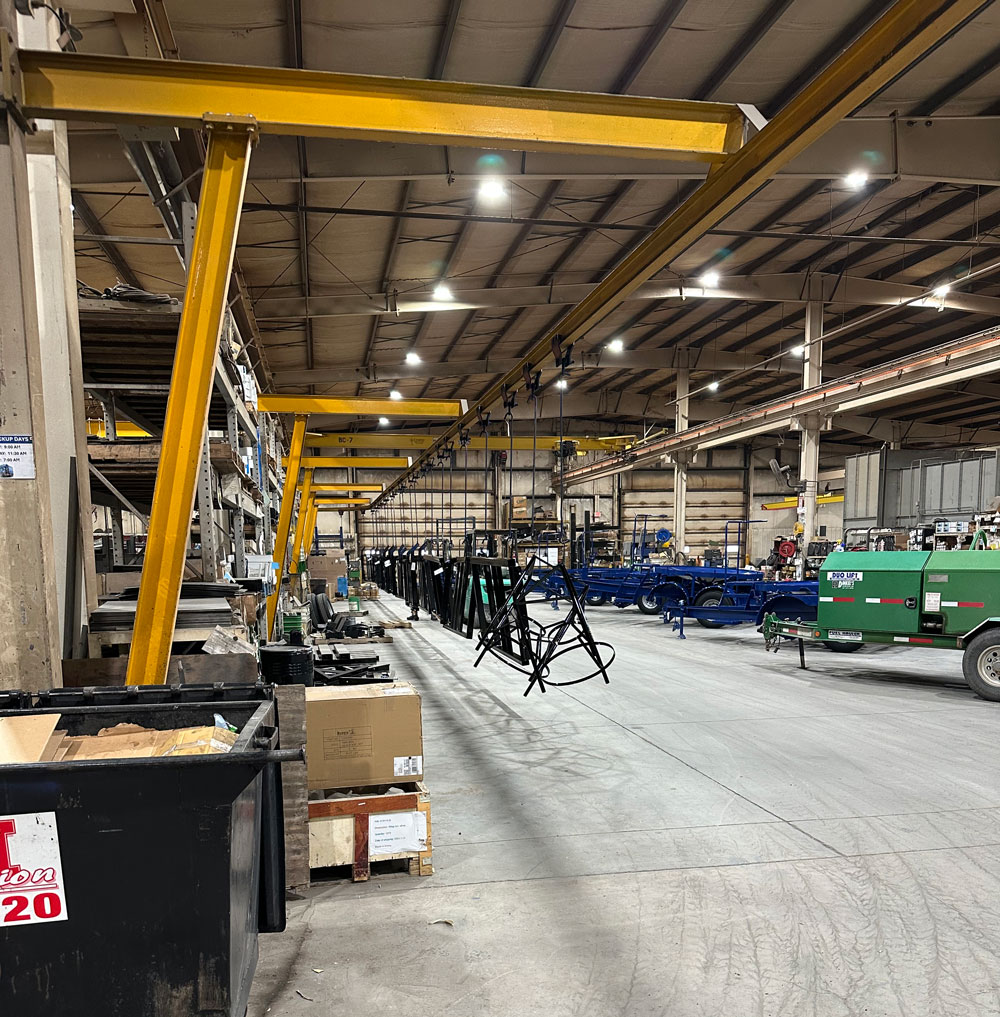
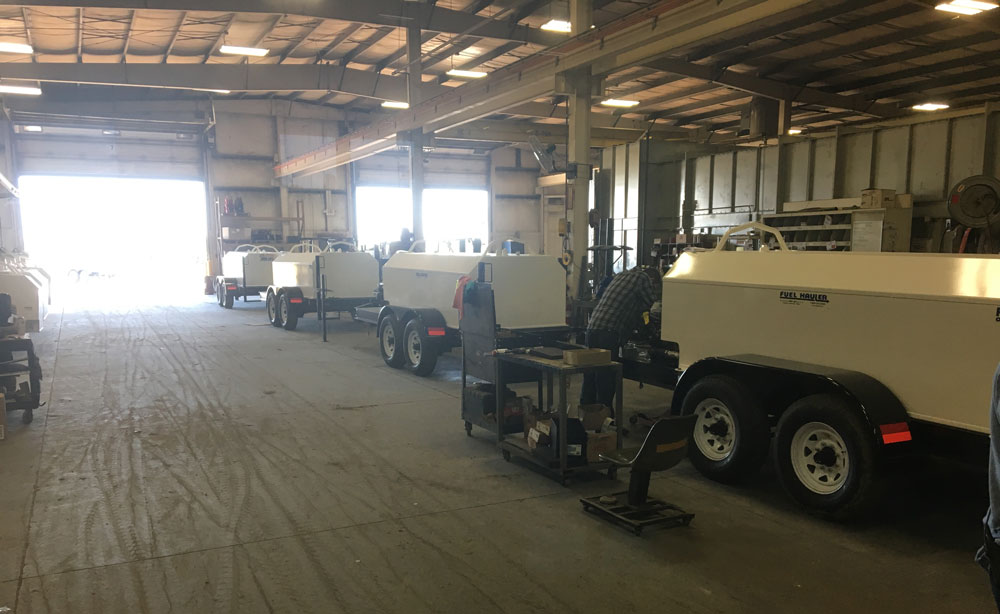
- At the Columbus facility, there are 70 manufacturing employees. The site features 4 welding robots, an automated laser cutting table and shop-floor CAD workstations.
• Wholesale Distribution
- Busch Equipment is located there too, with 5 employees handling the wholesale distribution operation and independent rep agency serving as a middleman between manufacturers and dealers. It was established by the Hellbusch family in 2007 expand the company’s product offerings. Outside brands it carries include Akron, Ashland, Conveyair, Geringhoff, Mandako, Rite Way, Roto Grind, Strobel Manufacturing, and Televeyor.
• Retail
- DL Shortline (formerly Linco Precision), completes the vertical integration, providing a 32,000-square-foot retail location in El Paso, Ill., with 16 employees. It also helps ensure other key shortlines are offered to farmers and applicators in a time when it’s harder for non-major brands to gain exposure.
Family First & Future Ready
Jim is known for treating his employees like family, and for being active in his community while balancing business growth. “The community gives you a livelihood,” Jim says. “It gives you a place to live with your family, to grow and you can’t just take, you’ve got to give back. You have to stay involved.”
Jim and his wife lead by example, participating in numerous local boards and raising funds for the construction of a new library, fire station, police station, high school and hospital.
Ben says it’s about treating people in the same way you would want to be treated. “That’s how he started and built the business,” Ben says. Jim says work expectations are high for Duo-Lift employees, but family is also a top priority. “If your son has a baseball game out of town and you got to leave at three o ‘clock, go. If you’ve got a doctor’s appointment, go,” Jim says.
What does the future look like for a group that has been unafraid of branching out to new areas that support the core – like distribution and retail sales/service?
Hall of Fame Digital Extras
“Ben and I are constantly talking about this,” David says. “We’ve got lots of plans, but we’re focused on doing it the right way. We don’t want to rush into it. We don’t want to miss an opportunity.”
Much of their success, Ben says, can be attributed to working with competent and close resellers who have remained long-time customers. There are no plans to change those relationships, but now he and David are focusing on more vertical integration to gain additional control of their sales cycle and sales process. These changes are being made without eliminating current resellers.
His family says Jim is extremely deserving of the Shortline Legends Hall of Fame recognition. It’s not his first Hall of Fame recognition, either. In 2017 Jim was inducted into the Nebraska Hall of Agricultural Achievement.
“He’s dedicated his life to ag and building the business inside ag, and it’s amazing to see what he created from basically nothing,” David says. “It’s exciting to see the fruits of the labor and see him be recognized for something this big in his career. It’s exciting for all of us.”