
This week’s DataPoint is brought to you by the Precision Farming Dealer Summit. To see the full program and to register, visit PrecisionSummit.com.
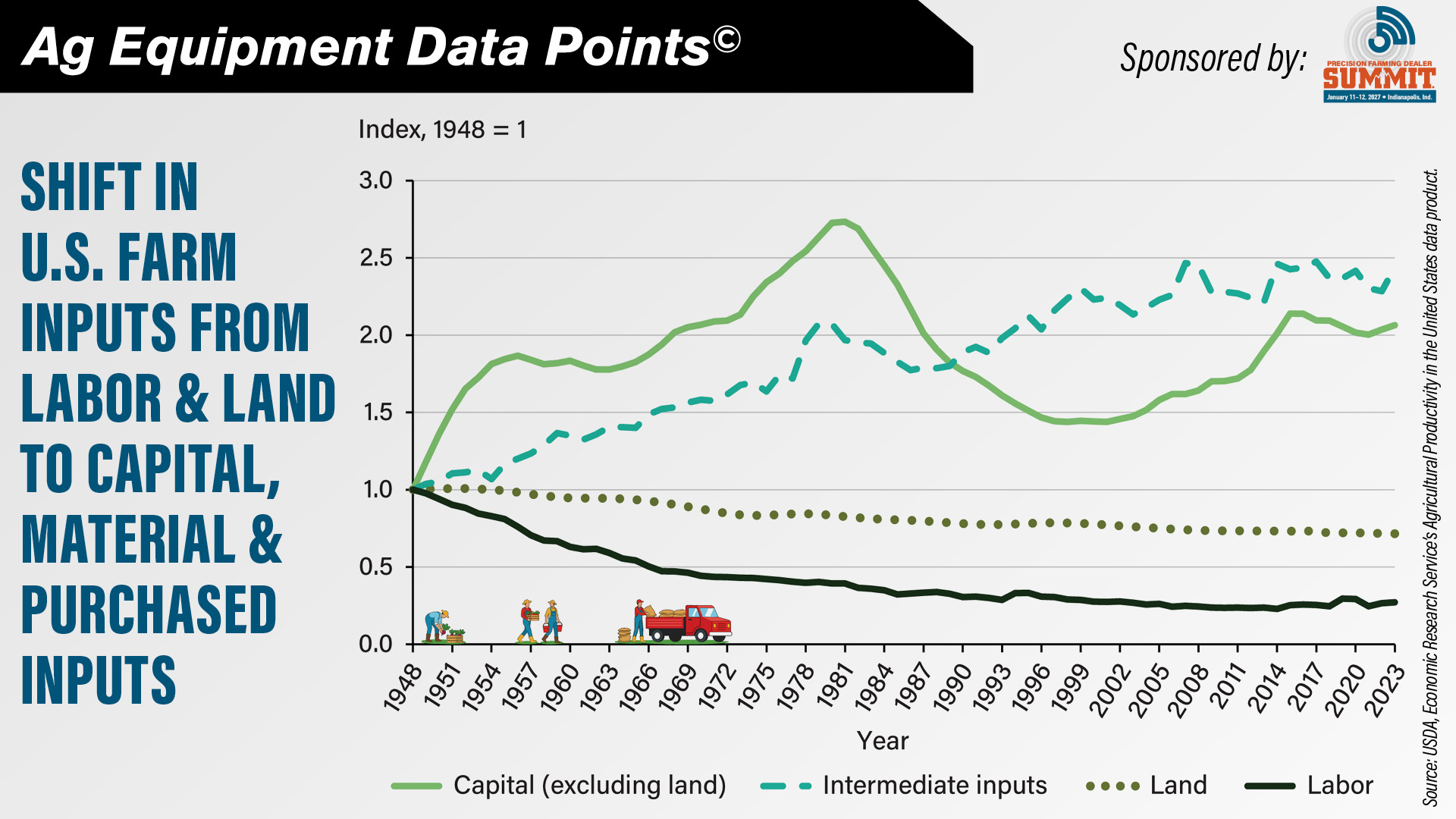
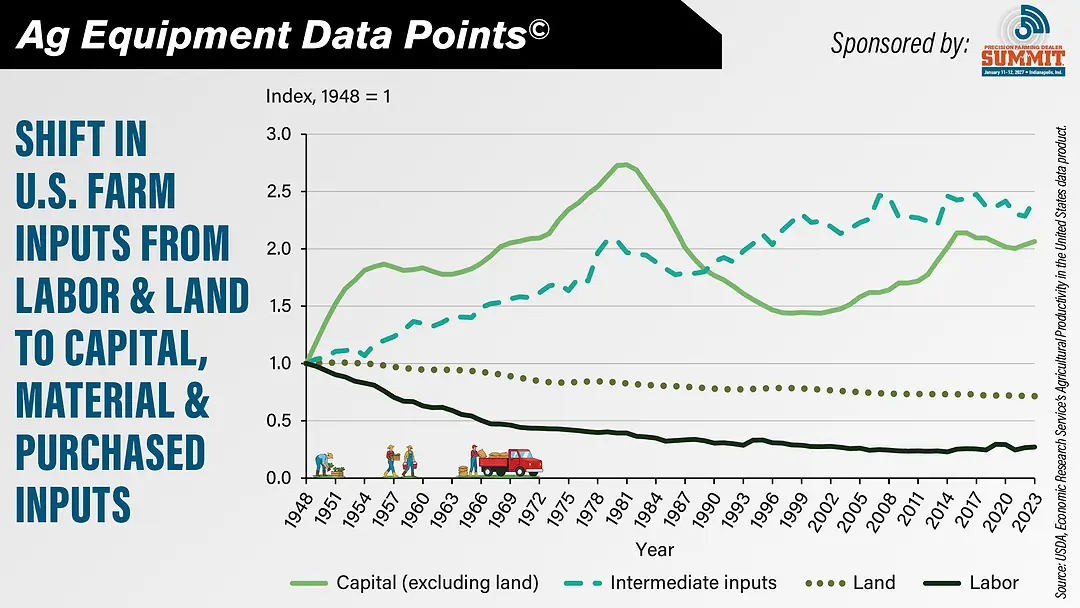
U.S. farm output — the total amount of livestock, crops and other farm-related output produced in a year — nearly tripled between 1948 and 2023, while the mix of inputs used in production has shifted.
According to data from USDA, during this 75-year period, the total amount of inputs used in U.S. farm production increased only slightly, rising at an average rate of 0.12 percent annually. This modest increase reflects a continued shift away from labor and land and toward capital and intermediate inputs.
Over the period, the amount of farm labor used in agricultural production fell by 73 percent, and land use declined by 28 percent. Meanwhile, the use of intermediate inputs—such as fertilizer, pesticides, energy, feed, and purchased services—grew by 144 percent, and the use of capital inputs, including machinery and farm structures, increased by 106 percent.
According to the USDA research agricultural economist Eric Njuki, technological advances have made machinery and agricultural chemicals more affordable and effective, enabling farmers to increase their use of these inputs while using less labor and land.
He writes, “More importantly, the net increase in the use of inputs (0.12 percentage points per year) has been greatly exceeded by the increase in agricultural output (1.52 percentage points per year). The “total factor productivity” remainder of 1.4 percentage points per year remains the primary driver of growth in U.S. agricultural output.”
Watch the full version of this episode of On The Record