A Farm Equipment Staff Report
It’s not every day that a group of equipment dealer execs — across colors — gathers for an important, open discussion on any topic, much less the specific wants and needs of the wholegoods supply base.
What’s rarer is getting them to speak openly and candidly — in front of the shortline manufacturers themselves — on what they, as dealers, expect if suppliers want to earn (or keep) their business.
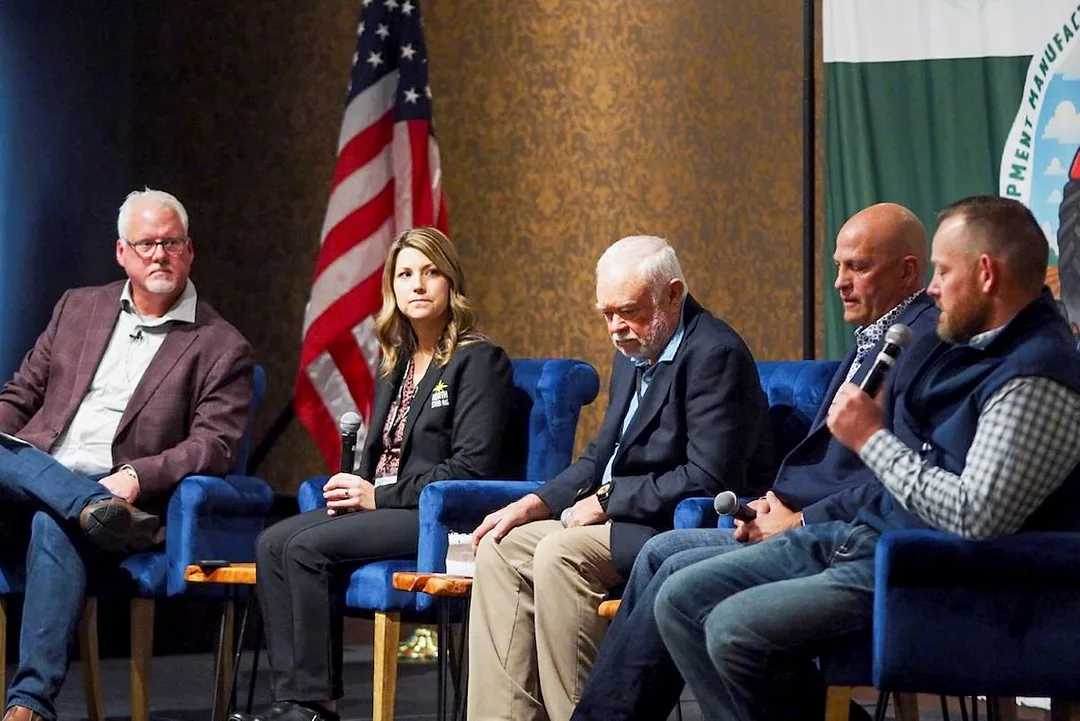
That’s what took place on October 30, 2025, at the Farm Equipment Manufacturers Assn. (FEMA) Convention in Las Vegas via a special panel assembled by the FEMA's Dealer Relations Committee. The panel was a cross section of big and small dealers of various major- and shortline brands from 4 regions, as well as a shortline-only dealership.
This article, the first in a series, chronicles what was discussed in an open forum moderated by Farm Equipment Editor/Publisher Mike Lessiter.
“Understanding dealers' challenges and realities of their business is the first step to sharpening shortline ag equipment manufacturers' approach to distribution for their dealers and the farmers' benefits,” Lessiter said in opening remarks. “This panel is intended to have candid conversations that can help manufacturers understand how and where specialized equipment can or cannot exist in the dealer’s business.”
Meet the Dealers
David Orr, General Manager, Intermountain New Holland, Twin Falls, Idaho. Originally trained as a mechanic, Orr advanced from sales director to general manager at Idaho’s 2-store New Holland agriculture and construction equipment dealership. Among the main lines for the dealership are Degelman tillage equipment, Supreme International TMR mixers and Rhino Ag for the attachment side.
“For me, shortlines are an introductory product,” says Orr. “They go on every farm for every farmer, and it doesn't matter what tractor is on the front of them. It gives you a great opportunity to step in and get the first experience with a customer, especially a new customer.”
Eric Reuterskiold, CEO, Johnson Tractor, Janesville, Wis. Eric started at the parts counter in 1993 and grew with Johnson Tractor in a now-famous succession plan executed with near-perfection. Reuterskiold oversees 200 employees across 11 Case IH, New Holland and Kubota dealerships in Wisconsin and Illinois while preparing the 3rd-generation of Johnson heirs.
Key shortlines cited by Reuterskiold include Great Plains, Kinze, Kuhn Krause, Salford, Supreme, McFarlane and a lot of rural lifestyle and lawn and garden suppliers. “Our customer base is very diverse. We have the rural lifestyle business all the way up to the large corn and soy producers and dairy -- and everything in between.”
Tim Brannon, President, B&G Equipment Inc., Tenn. After college, Brannon joined the OEM business with Allis-Chalmers Farm Equipment in 1975. Three years later, he returned home to lead a family-owned single-store operation Massey Ferguson dealership founded in 1978. Specializing in the rural lifestyle segment, Brannon cites Bush Hog as the top shortline in his single-store operation, which was rebuilt after a fire destroyed the entire operation in 2023.
Cami Erickson, Vice President, North Star Ag, Tower City, N.D. Erickson is the vice president of a first-generation-owned shortline dealership. The business started after her diesel-mechanic husband Zane switched to sales and, starting with a single seed tender line, established a successful retail business that now includes expansive shortline brands.
“We are strictly a shortline dealer, and carry more than 60 brands,” Erickson says, noting the primary ones include Brandt Manufacturing, Meridian Manufacturing, Salford and Thunder Creek. Those four suppliers, she says, represent nearly two-thirds of her operation’s business.
"But they don't want me to sell anything but New Holland or in other situations, Case or Deere. At the end of the day, we all have businesses to run and we're all making tough decisions. But it's become more and more real every year." – David Orr
Lessiter: Innovation is compulsory and, it seems, the product must be a clear winner in performance for you to consider taking it on. What characterizes the ‘best of the best’ in those other areas? What do your top performers do that you wish others would emulate?
Orr: Degelman is probably the best shortline that I work with currently. They listen to what we say and they take care of problems when we talk about them. They're super responsive when we have an issue. But, more importantly, they understand that this one piece of tillage tool and that works great in what applications. And they give us the tools and resources to change and make adaptations to what our customers are asking for.
When we have brought solutions or problems to them, they're always first to fix worry about the who pays it second. That's the biggest thing — just standing by us and the product. I understand that you all want pictures for warranty and pre-approval and authorizations and all this stuff. But when the guy is broken down and in the dirt, we need to be able to move.
Reuterskiold: You hearing a theme here that, "It may not be the best product that we sell, but our best supplier is going to be the one who's easiest company to do business with." Our Land Pride rep stands out as a champion. The products are great, but obviously there are many others that offer very similar products. But they’re easy to get ahold of, they pay our warranty as they should and pay it promptly. There's are a lot of things that are not product-related that make them a favorite shortline.
Erickson: I would say ours is the partnerships and openness to communicate just like the others have said. And the ease of doing business — whether it's an online portal, the information, the parts manuals, etc. How easy it is to get along with a business is what makes a good shortline partner — and that makes us want to do more business with them.
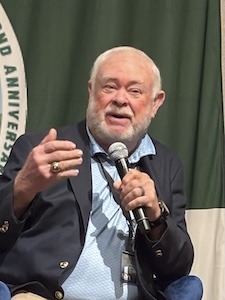
"It's the most asinine sales-building plan I can imagine ... Anything that adds to the bottom line as far as a product should be welcomed onto a dealer's lot because it gets more customers in to look at the machinery of the big three or four.” – Tim Brannon
Lessiter: As mergers and acquisitions come, there are line rationalization decisions that will be made. What are those hidden areas that might impact the fate of the shortlines? Who tends to be the champion of the product in your store?
Erickson: Our salesmen are number one. They get all of the product knowledge, they go to the training and they review the videos or whatever comes from the manufacturers. Our salesmen are our champions on that side of it. Next is our service department. They need to know how it works, how it runs and how to fix it. When a customer is down, they're the first ones to get the call looking for help. So again, the ease of warranty, service documentation, etc., is all vital to get the farmer up and running as fast as possible. So it’s two-fold — our salesman on one side and the service department on the other.
Brannon: Shortline success, in our dealership, starts out with the salesman. He takes the price versus performance and value, and then it's usually a product that he pushes us to stock on the lot. And then it's backed up by the parts department — how easy it is to get along with the parts, if it is a machine then consumes parts, and then, of course, the service.
It doesn’t matter how good of a salesman they are though. If the parts department asks me not to sell it or the service guy reminds me what they did to us on warranty, well, it could be the greatest product and the best price, but it's not going to make a home on our lot. All those things must go together. The backup is just as important as the shortliner’s engineers, your sales force, the features and the benefits versus the price.
My accountant has come to me and shown that, yes, we sold this or that but didn’t make any money on it. The determining factor may be accounting. Does that product add to my bottom line? What are we accomplishing by selling this product? The whole idea is to have your bottom line show a profit with a particular product. But many times, our ego gets in the way. We want to push it out to get the sale because we want the market share. But the bottom line doesn't back that up. And I've had it happen several times. We don’t cut many products, but we have cut a few.
Reuterskiold: If it were up to our salespeople, we'd have every one of your signs inside of our building because they think they can sell everything — and they probably could. But it's up to me and others in our organization to ask, "What's the carrying cost? What's the expense? Are we going to make any money? Are we going to be in business with that company 10 years from now when a customer comes back and needs a replacement part?"
I don't want to have to say we aren’t going to deal with a line anymore. We sold it, we've got to stand behind it, and we want to be in a relationship for a long time. Those relationships grow through the after-sales department and through the accounting department. Are we paid on time? Are we making any money? How much training is required? Is training available? What are the parts requirements? What's the warranty turnaround time? What's the parts turnaround time? The training usually starts in our sales department. They'll go to a sales training session or are educated by the manufacturer and then it trickles down from there.
Orr: The after-sales, the ease of doing business with flooring terms, parts requirements, trading requirements and so on all play a heavy role in making those decisions. At least at Intermountain right now, it's not just a “me” decision or the owner's decision — it's more of a team decision. We might find out that a brand is great for the salesman, but difficult for everyone else in those things like accounting or warranty. It takes a holistic start to finish approach for us.
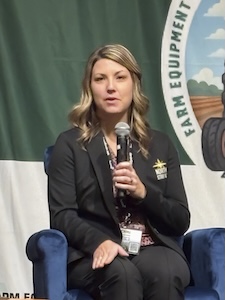
"Just make it black and white, very simplified — that would definitely ease the shortline side of it." – Cami Erickson
Lessiter: What might manufacturers fail to realize about the real-world challenges with shortline companies with things like the overall investment, floor plans, sales, servicing?
Orr: To truly know the real cost. It costs money for it to sit on the lot or shelves. Everybody wants us to demo, demo, demo, but demos are extremely expensive and time-consuming. You guys are all in-tune with what our struggles are that we go through on a daily basis.
If I can encourage you anywhere, it would be to put more parts on your shelves to encourage us to have more parts on our shelves. Because all of your stuff breaks — nobody says it doesn’t. So the quicker turnaround, wear parts and common parts availability -- we need to have an answer quickly or a part in hand. On the big stuff, the frames, the weird stuff that happens most guys are understanding.
Reuterskiold: A lot of it comes from good reps and companies that can help us decide what parts we should have on hand, based upon history. It isn't just a guessing game. If we can have the right part on hand at the right time, that's key. You folks have a lot of history with your pieces and if you can give us a heads-up, that certainly helps us.
Brannon: The three hardest things you ever have to do: try to climb a fence leaning toward you, try to kiss a pretty girl leaning away from you, and get us dealers to stock some of your equipment on our lots.
But another factor is that customers come to us today with a lot of knowledge and many probably already made up their mind on what they want. They're looking for justification that we can provide for this product — or a better one. But they've done the research. As manufacturers, the emphasis is on pre-selling this stuff and providing the information to the customer because they're going to be out there on social media looking at all this stuff. They know what they want to do and they're looking for a product that fulfills that need. As far as getting us to be able to guide the customer in this personal decision, if you can pre-sell it — and the ones who do the best job of pre-selling your product on social media — that will go a long way to closing the sale.
Erickson: On floor planning, I’d say to offer as many internal options and terms as is possible. We build a relationship; we're working hard with manufacturers to make sure that we have that open communication. Sometimes it's less paperwork and internal vs. external floor plans. You have all these special floor planning opportunities, but the more you can keep that within the manufacturer the better. Whether it is 12 or 24 months or incremental terms, these help us dealers sell the equipment and to stock the equipment. Because if you don't have it on the lot, it's hard to sell it. A lot of shortlines are impulse buys. But when they decide they need it, they need it now. They're not going to wait 3-5 months.
And then my other thing would be accounting/sales and the discount structures. Make them simple and uncomplicated, not where we've got to add all these different discounts and then hear we didn't do this right. Just make it black and white, very simplified — that would definitely ease the shortline side of it.
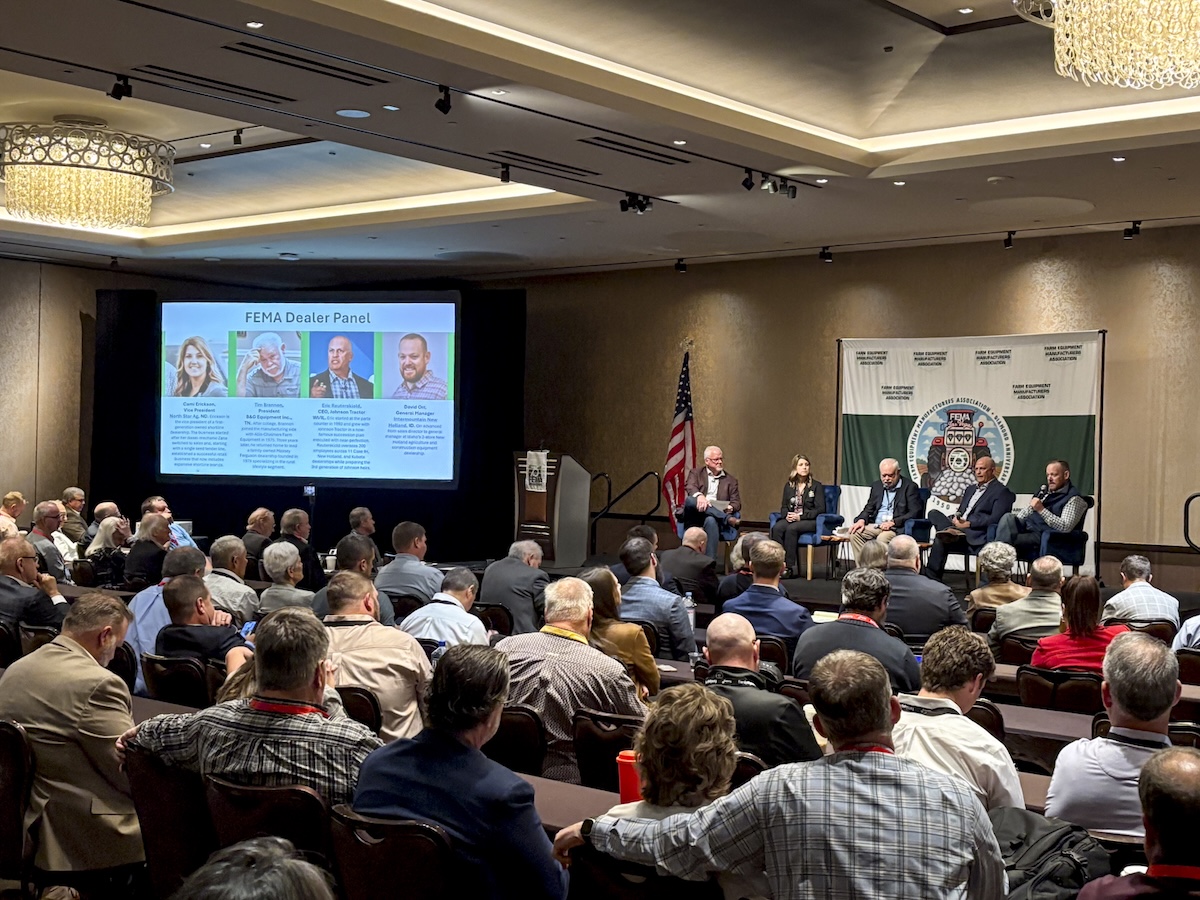
The Farm Equipment Manufacturer’s Assn.’s Dealer Relations Committee assembled a panel of dealer execs that drew a full house in Las Vegas as they shared their expectations of the independent manufacturers in the audience.
Lessiter: What's the reality you face with your major lines -- when they see you investing your time, talent and dollars in shortlines?
Reuterskiold: That's becoming a very big issue. Our majors have stated to us that they're only going to grow with dealers that don't have competing lines. They want exclusive rights to our lots, to our stores. While we can choose to sign up for anything and become a dealer for anybody, they're saying that if I want to buy another location today, they're not going to let me do it or sign me up if I have a competing line. It’s huge. And it isn’t just one manufacturer. We have a couple of different majors and they're each saying that.
Orr: For us, taking a shortline, we are always very cognitive of what our major line offers to make sure that we're not putting ourselves in a competitive position. And we get blasted because New Holland sells manure spreaders, but that spreader was huge 30 years ago. So we make sure that we weren't picking those things that intrude on their offerings.
But they don't want me to sell anything but New Holland, or in other cases, Case or John Deere or whatever. At the end of the day, we all have businesses to run and we're all making tough decisions. But it's become more and more real every year.
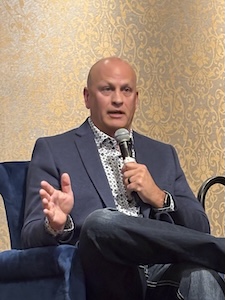
"Our majors have stated to us that they're only going to grow with dealers that don't have competing lines. They want exclusive rights to our lots, to our stores." – Eric Reuterskiold
Brannon: I’m going to get in trouble here. The big 3-4 out there behave similar to what we might call in the South, "educated doofuses." It's the most asinine sales-building plan that I could imagine. Remember when pantyhose came out and it was “one size fits all?” Equipment dealers are not like that. Every dealer and every location has its own special needs. You've got areas where certain products are hot and other areas where they just won't sell. And this, again, adds to the bottom line. Anything that adds to the bottom line as far as a product should be welcomed onto a dealer's lot because it gets more customers in to look at the machinery of the big three or four. Why would they want to take these guys off the lot and alienate those customers and send them to somebody else? It makes no sense.
I've been there for a bunch of years. I was calling on dealers. And I saw a dealer that started selling my brand new tractor and losing out because he had a shortline. And people would come in buying his shortline and, all of a sudden, they started buying his tractors.
The execs all have their MBA degrees of course. An MBA teaches you how to drive on the interstate at 90 mph by looking in the rear-view mirror. You can tell me everything you've done right, everything you've done wrong, how much money you made and how much money you lost, but you don’t have a clue where you're going without the experience.
Now we've had this discussion before. Without 10 years of practical experience, an MBA degree is dangerous. Take a look at the top people. The head of Kubota came from AGCO. The top four people in AGCO came from John Deere. The previous president of Case came from AGCO. It's musical chairs at the top. They’ve got their resumes, and they hop from one place to the other. And we, as the dealer, suffer because sometimes they can't see the big picture. They've never been there or done it.
It used to be that the leader once stood in the manufacturing position. The guy might have started out as a floor sweeper and then he became a clerk, a machinery clerk, and then he was a salesman, a sales manager, a VP, then he got to become president of the company. He was loyal and identified with brand and who it was. Now they just want a golden parachute because they're going somewhere else in a few years.
We understand if the major builds something and a competitor comes along looking for our business. But the insistence on carrying the whole brand's equipment makes no sense.
Coming Next: Dealer - Shortline Manufacturer Series, Part 2 ... including audience questions.