On November 24, 2025, the editors of Farm Equipment published “Dealers Address Shortline Executives on Their Shortfalls, Opportunities,” the first article in a series on the dealer executive panel held at the Farm Equipment Manufacturers Assn. (FEMA) Convention in Las Vegas.
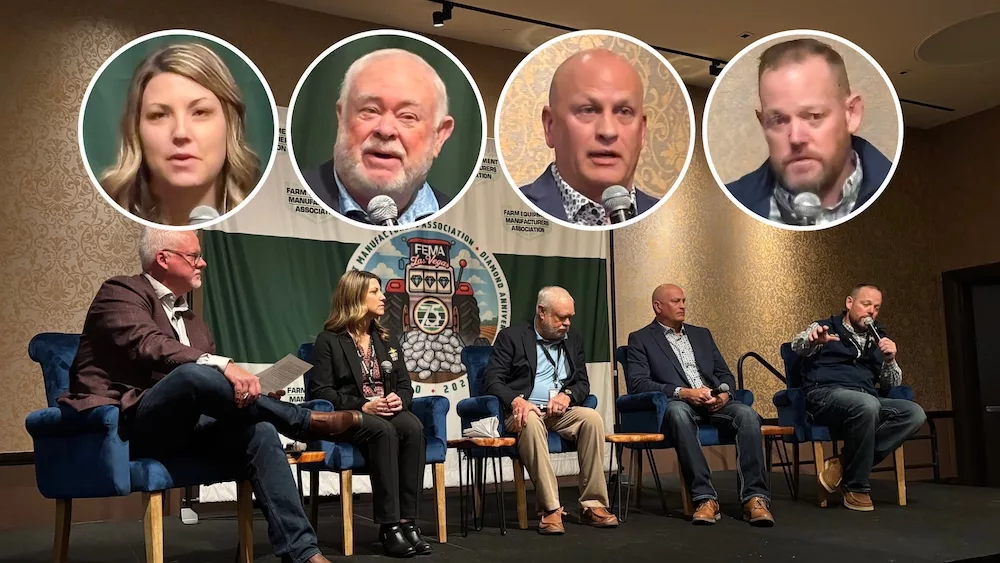
Hosted by the Dealer Relations Committee of FEMA, and association of independent manufacturers, the panel featured both large and small dealers of various major- and shortline brands and a shortline-only dealership. The open-format discussion was moderated by Mike Lessiter, editor/publisher of Farm Equipment.
Meet the Dealers
David Orr, General Manager, Intermountain New Holland, Twin Falls, Idaho. Originally trained as a mechanic, Orr advanced from sales director to general manager at Idaho’s 2-store New Holland agriculture and construction equipment dealership. Among the main lines for the dealership are Degelman tillage equipment, Supreme International TMR mixers and Rhino Ag for the attachment side.
“For me, shortlines are an introductory product,” says Orr. “They go on every farm for every farmer, and it doesn't matter what tractor is on the front of them. It gives you a great opportunity to step in and get the first experience with a customer, especially a new customer.”
Eric Reuterskiold, CEO, Johnson Tractor, Janesville, Wis. Eric started at the parts counter in 1993 and grew with Johnson Tractor in a now-famous succession plan executed with near-perfection. Reuterskiold oversees 200 employees across 11 Case IH, New Holland and Kubota dealerships in Wisconsin and Illinois while preparing the 3rd-generation of Johnson heirs.
Key shortlines cited by Reuterskiold include Great Plains, Kinze, Kuhn Krause, Salford, Supreme, McFarlane and a lot of rural lifestyle and lawn and garden suppliers. “Our customer base is very diverse. We have the rural lifestyle business all the way up to the large corn and soy producers and dairy — and everything in between.”
Tim Brannon, President, B&G Equipment Inc., Tenn. After college, Brannon joined the OEM business with Allis-Chalmers Farm Equipment in 1975. Three years later, he returned home to lead a family-owned single-store operation Massey Ferguson dealership founded in 1978. Specializing in the rural lifestyle segment, Brannon cites Bush Hog as the top shortline in his single-store operation, which was rebuilt after a fire destroyed the entire operation in 2023.
Cami Erickson, Vice President, North Star Ag, Tower City, N.D. Erickson is the vice president of a first-generation-owned shortline dealership. The business started after her diesel-mechanic husband Zane switched to sales and, starting with a single seed tender line, established a successful retail business that now includes expansive shortline brands.
“We are strictly a shortline dealer, and carry more than 60 brands,” Erickson says, noting the primary ones include Brandt Manufacturing, Meridian Manufacturing, Salford and Thunder Creek. Those four suppliers, she says, represent nearly two-thirds of her operation’s business.
Audience Question: You talked about purity pressures by the majors (see Part 1). What does that conversation look like and how is it defended? What can we do to aid in the conversation about our solutions that may be parallel and differentiated from what your major-line provides?
Reuterskiold: We can explain to the majors when something is different than theirs and something they don't offer and is not competitive. That is key. And that stuff is A-OK with them. It's when they have a light product where they are directly competing. For instance, we’ll explain to our major line why we take on something like a triple mower line — because they don’t make one and we need to help our customer. They might offer all the other hay equipment, but we’ll still need to take on this other product. It must be different and the majors are generally OK with that.
Orr: We sell combines and we also sell a dry edible bean harvester, and that was a big contention point a couple years ago when we picked those guys up. It was a differentiation of the product that their combine could not cut beans in the same way as this one could and in our conditions. We try to do a good job of showing the difference in products. For instance, there are 25 different variations of a disk, and not all work from my 12 soil types in Idaho.
And at the end of the day, if my OEM or major lines are making a superior product, then that is a reality check on my end. But if we have a shortline that is far superior or completely different than what they're offering from the major, then it’s just a part of life.
Reuterskiold: When we take on a shortline because we have a different product and we're able to sell that decision to OEMs, we need a shortline that will work with us. To get access to those products and not have you trying to get us to carry the full line. That’s when we get into trouble.
So if you have 1-2 products that we want to sell, then just allow us to have those few pieces. Don’t insist on us taking it all on to become a dealer, because in this case, we probably won’t.
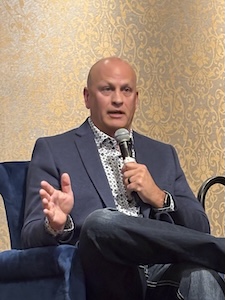
"What will sink a shortline for us is the lack after-sales support. Our sales guys will keep selling your products, but our company will put a stop to it if the rest of the departments are unhappy with your line ... You need to get your head wrapped around how you’re performing in the service and parts worlds, and how you’re doing business with our accounting departments instead of vs. them." – Eric Reuterskiold
Orr: Nothing turns me away more than the comment of “you have to carry one of everything.” You need to prove to us that your product is good. Let's start with the things we know are good. Challenge us to bring in something that's new and different. But if you show up and say, "You have to carry one of everything and stock it,” then right away, I'm out.
Brannon: I have seen this in dealerships all my life. We see a line of equipment and know that say, 4 units, will sell great but we’re told we have to stock them all. And then the other ones not right for our customers don’t sell. What happens is we sell those right for our market and make money. But then we end up either giving the other ones away or paying so much interest that it makes the whole line unprofitable.
The manufacturer can help us move the unsold inventory. If the dealer is a good stocking dealer, why not work with them? Move their inventory that isn’t moving to someplace else where it will sell. That is one of the biggest strengths any manufacturer can bring to the dealer — to keep us from getting caught in a situation where we need to go to the bank to floorplan equipment we can’t sell.
Farm Equipment’s 2026 Outlook & Trends shows that 75% of dealers view their shortlines as an advantage in gaining crossover customers. What role can shortlines play for your business in converting a customer from a different brand?
Reuterskiold: That is key. A lot of times, we have a hard time getting on certain farms with our major brand. So we can start with something smaller that meets a customer need. Especially in the niche areas that we serve, like feeding equipment. What happens is you can prove yourself on service. When all of a sudden that piece that you sold them goes down, you get the opportunity to show that you’ll be a “Johnny-on-the-spot,” that get them back up and running or will provide them a loaner. It’s a chance to prove yourself and deliver.
That one thing leads to another. The next thing the tractor needs replacing, you might have earned a spot at the table. So those sales give you a chance to show you’re better than whatever service they might’ve experienced in the past.
Brannon: We had a customer who was running a Deere cutter and they were having big problems on a particular model. We converted a customer to Bush Hog and he also had some issues with that, but we fixed it promptly. And he said, “What do you for a tractor to pull it." So, as a result of the Bush Hog, we sold him half a dozen tractors.
Erickson: As a shortline-only dealer, I don't have majors, but I have a variety of shortline colors. It works in the shortline dealer space too. The better the service, the better the product. They may want to start with one product. If they have issues, it's how you service and take care of them. Maybe then they come back to you for a different product. We have competing shortlines in our facility for different reasons, and if service them and help that customer, another color or brand is where they go next.
They're still going to come back to us, so it’s comes down to our performance, our relationship with the manufacturers and how well customers are treated after the sale and when issues arrive.
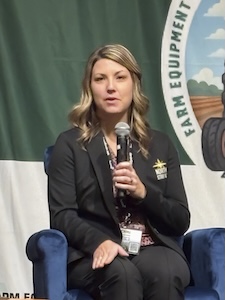
"We need someone to call. It isn’t having to go to a call center, it isn’t putting a ticket in and isn’t the promise that maybe someone will call back in 2 weeks. Have someone accessible to us who knows what they're talking about, that knows the equipment that you’re manufacturing, how it runs and should run and how to fix it." – Cami Erickson
Audience Question: As a shortline manufacturer, what is the best way for us to communicate with your people with the knowledge they need for parts, service, sales and product changes?
David Orr: It depends on volume. If you're going to run up volume with a specific dealer, you need to have people in the stores. Everything I talk about goes back and forth to relationship. If we’ve got a relationship with a shortline, we better have a guy in our building. It's that simple. Our shortline guys seem like they handle the whole business of parts and service — all of it. Obviously, in person relationships are always the best. But good emails sent to the right people are — we all get overloaded with emails — are always a good idea.
Nothing substitutes for people inside the dealership, going out and visiting customers with boots on the ground; showing them how to set equipment up, and showing how to work it. Especially with early introduction to new products or a changing product, you must have people in the store. And then any kind of social media presence you can do — keep it short, brief and to the point and from setup to operation to those simple maintenance items.
Eric Reuterskiold: I agree 100%. You’ve got to have people in the dealership, and you’ve got to have people willing to go out on customer visits with our sales and service people after the sale. Those are key components. Again, it's volume based. I have a rep from a shortline we sell very few of and he’s in the store every other week. I’ve told him, "You could have sent an email on that and taken less time for both of us."
Tim Brannon: Send us emails, but not just because you do it every week or every so often. We get tired of reading those. Make sure it's valuable. And it might be good to compartmentalize the emails to sales, parts and service. And boots on the ground. We have a manufacturer facing very difficult times this year and there have been issues. Our rep said, "Look, I know there's been some issues. I want to be your go-to person."
She said, "I want to be your neutral person. Go through your own channels. If you have an issue with something, call me. I'll do my dead-level best to fix it. I know I'm not supposed to get into these details like this, but to get us through this short time in struggling with this, put it on my back. Let me do it.” That means a lot back when you don't have to do it all yourself.
Keep making dealer calls but give the responsibility to somebody that's confident that they can shovel the load for you. That was important to us. And it strengthened our bond with the company, even though they were going through some tough things.
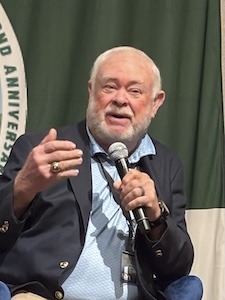
"You shortline manufacturers are going to be facing very difficult challenges ahead, particularly in row-crop areas. But remember the Zig Ziglar story about the two shoe salesmen who are sent to Africa. One calls back and he says, ‘Send me a ticket home. Nobody over here wears shoes.’ And the other salesman says, ‘We’re going to sell boatloads of shoes over here — nobody wears shoes!” – Tim Brannon
Erickson: We want the ease of online access portals. Everybody has a computer and a web browser, so make the dealer portals very easy to access, and find things so we can have the information at their fingertips. And the people there are important, too. Not just being there just to say, "How can I sell you something more?"
We’d like one of your parts guys to show up once a year and explain your program, and here's what you should be stocking and what you need to know. If it's difficult to know how to pay an invoice because of all the discount structures, so have someone our people can have a relationship with. It isn’t always about the sales rep or the person coming out to sell you the equipment.
Build those relationships with each department, have them accessible and not just sending us gear or parts. We’re interested in what we should order, stock and have on hand for service, and understand how your warranty process works. If we want to get to that next level we both want, it’s a whole business approach, not just a sales-driven business.
Lessiter: What is the Achilles’ heel is of shortlines in your business, those obstacles that must be overcome? If you fix anything that would make things easier for these manufacturers here today to earn more of your business, what would you fix and why?
Orr: For me, we put a lot of conversation on floor plan and the months allowed in your programs. I would challenge you to take that money and putting it toward interest rates and low finance options. It’s a challenge for us. I have this argument every month at sales meetings. I don't need 12-month terms on tractors. If I need 12 months’ terms on tractors and combines and balers and everything else, then we aren’t doing our job. We aren’t getting the product when we need it. We're overordering to meet an objective. That’s what we’re doing wrong.
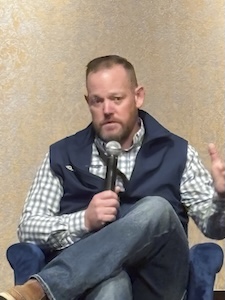
"Nothing turns me away more than the demand that we have to carry one of everything ... If you show up and say, ‘You have to carry one of everything and stock it,’ then right away, I'm out." – David Orr
We're focused, at my business right now, on terms. Terms make money. And we can take that same money and use it in other ways. It isn’t free, we're not naïve. But we’d like to take that same money and offer the customer 60 months at 3.99%, or even 5.99% right now.
Obviously, we can talk quality, warranty and ease of business, but the challenges of life and reality are that it's never going to be easy. What helps us move iron is attractive rates and offerings.
Reuterskiold: Free money is good, but as you said, it's not free. Attractive terms are great. But for us, what will sink a shortline is the lack after-sales support. You can conduct business with portals, warranties, paperwork, finance and programming. And our sales guys will keep selling your products, but our company will put a stop to it if the rest of the departments are unhappy with your line.
You’ve got to think about more than just the sale. You need to get your head wrapped around how you’re performing in the service and parts worlds, and how you’re doing business with our accounting departments instead of vs. them. That'll make things great for our businesses.
Brannon: You trust us on floor plan — that’s all about trust. Trust is with a warranty.
If we tell you that something took “this much time” to fix something, just pay it. If it happens over again, you guys need to fix it so it doesn't happen again. Things are going to happen. That's the thing that really irritates us dealers is to have it coming back and to have to learn that we invested $1,100 to get something fixed and you only paid us $600.
You trust us on some things, so trust us on the warranty — and a more liberal warranty without needing to jump through so many hoops. So many times and with so many programs, you make it so difficult that one day we give up and don’t have time for it anymore.
On the high dollar stuff, financing is important. Most of what you guys make is slow-moving. Give us the assurance that if we stock this slow-moving unit and can’t move it, that you’ll let us keep it for 12-18 months without having to make $200-500 in payments each month.
Erickson: At the core for us is the ease of access for information; not having to go to 5 different places to find things. If you have it all available, we shouldn’t need to log into 5 different sites to get a parts manual, or to call in to get a parts manual, or for them to send it through an email. Deliver high quality support staff to us. As a dealership, we train our staff. We try to get through levels 1-3. When we get to level 4-5 on a service problem, we need the manufacturer to be accessible to us.
We need someone to call. It isn’t having to go to a call center, it isn’t putting a ticket in and isn’t the promise that maybe someone will call back in 2 weeks. Have someone accessible to us who knows what they're talking about, that knows the equipment that you’re manufacturing, how it runs and should run and how to fix. That’s huge for us and what we’d want to wave a magic wand and receive.
And with better forwarding, terms and discount structures, you’ll find people like us willing and wanting to stock more. Have a discount structure set up where you make it work for the dealers that are willing to put in the time and effort in your product to sell it and service it.
Lessiter: The reoccurring theme here is for shortline manufacturers to find and market that “easy button.” Make yourselves easy to do business with as much attention as you put into the product innovation itself.
Shortline Dealer Asked About How Dealer Purity Helps Shortliners with a Different Model of Dealership
During the dealer panel at the 2025 Farm Equipment Manufacturers Assn. (FEMA) in Las Vegas, a shortline manufacturer asked Cami Erickson, vice president of shortline-only dealer North Star Ag how purity demands of the mainlines could benefit shortline manufacturers with the shortline dealer model.
“How we started over the last 16 years, and ran our business, was our ability to service that equipment,” says Erickson. “Some products can go through a mainline dealer but the farmers don't get the same service and after-sale support.”
She says that the mainline dealers may not provide the service or warranty the farmer wants, or that dealer only stocks a portion of the shortline’s products.
“We want your full line of shortlines if it’s right for our customers,” she says. “We have certain manufacturers that won't allow us to stock a brand, but then some customers want to do business with us vs. their mainline dealer. I understand some mainline dealers only wanting to provide one product, but it's the opposite for a shortline-only business like ours.”
David Orr, Intermountain New Holland weighed in on the question as well. “Shortlines are a major part of our business. Obviously, the majors can try and twist our arms. We can sign up who we want to sign up and sell what we want to sell. There are some caveats or cares that they start banging on to make you try to get that exclusiveness.
“But in my business, I don't think you'll ever see us turn away a shortline if it's delivering business for us,” says Orr. “But there is pushback, there is hesitation. At the end of the day, if you guys make a good product that works good in our area for our specific needs, it's going to be a no-brainer to carry it. John Deere, Case IH, New Holland and AGCO don't pay our bills. We still need to run a business and be successful. I don't think you'll ever going to have a strong successful dealership without shortlines.”