North Star Ag
Location: Tower City, N.D., Kenmare, N.D., Lignite, N.D., Dalton, Minn.
Owners: Zane & Cami Erickson
Lines: Ace Roto-Mold, Alloway, Amazone, Batco, BTI. BD Manufacturing, Blu-Jet by Unverferth, Brandt, Burchland, Convey-All, Crary, Dalton Ag, Demco, Duo Lift, Enduraplas, Fair Mfg., Fantini, FAST, Force (Unverferth), Great Plains, Haul All, Harvest by Meridian, J&M, Johnson Mfg., Kaufman, Kuhn, Loftness, Lynx, MacDon, Meridian, Meyer Equipment, Praxidyne, Mobility, Montag, Nardi, Neeralta, Orthman, Premiere Ag, REM, Redekop, Reliabelt, S3 Air Systems (S3 Group), Salford/Valmar, Sheyenne Toolings, Sitrex, Soil-Max, Soaring Eagle, Summers, Thundercreek, Timpte, Top Air, Universal/Unit-Tube, Unverfeth, Walinga, Westfield, Woods, Yetter, Zaffrani
Customers arrive at North Star Ag looking for a replacement part, new conveyor or other piece of shortline equipment. Little do they know, however, that owner Zane Erickson wants them to leave with something more: the feeling that they came to the right place.
His vision of a “destination” dealership in Tower City, N.D., remains at the heart of every decision North Star Ag makes. Erickson sees the business as a place farmers intentionally seek out. They know they’ll find a wide selection of quality equipment, a knowledgeable team, dependable parts and service, but most importantly, an organization with values that are non-negotiable:
- Do the Right Thing
- Work Hard
- Be Innovative
- Have Passion
“People might not remember the exact deal, but they remember how you made them feel,” Erickson says. “We focus heavily on the culture. Our goal is to make customers feel like they’re the only ones in the store and the only ones who matter.”
Tending To An Opportunity
Erickson graduated from college as a diesel mechanic and initially planned to work for a John Deere dealership. But during the recession of 2008-09, jobs were scarce, and he began reconsidering whether the traditional dealership path was right for him.
He eventually found a position with a seed company, where he became, as he describes it, “the guy who did everything the rep didn’t want to do.” That experience introduced him to the sales business and, 6 months later, opened the door for him to become an independent seed dealer.
It also marked the beginning of North Star Ag.
As Erickson delivered seed to customers, he noticed many dealers also sold seed tenders. A machinery person by default, he saw an opportunity to purchase a tender for his own farm’s use and perhaps sell a few more to his seed customers.
His original goal was modest: Sell 3-5 seed tenders a year and earn an additional $10,000 of income.
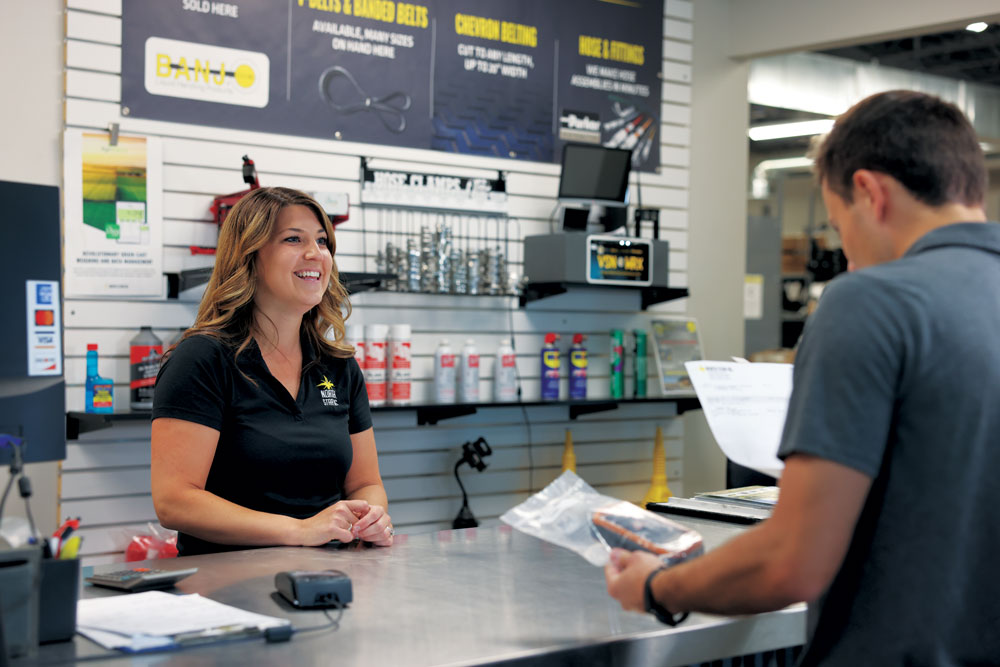
Cami Erickson knows an important part of North Star Ag’s vision is its commitment to personal service. Her husband, Zane, says he wants customers to leave feeling they came to the right place. North Star Ag
First, however, he had to convince a manufacturer to give him a chance.
“When you’re 20 years old, look like you’re 12 and don’t have a pot to piss in, nobody really wants to talk to you,” Erickson says with a laugh.
After nearly 6 months of trying to secure a meeting, Meridian Manufacturing signed North Star Ag as a seed tender dealer. Erickson sold 3 units during the first season, followed by 20 the next year and approximately 60 the year after that. Within several years, the dealership was selling more than 100 seed tenders annually.
By 2013-14, North Star Ag shifted its attention away from seed and toward shortline equipment.
The timing proved ideal. Mainline dealer consolidation was gaining momentum in North Dakota (and across the U.S.) leaving some manufacturers searching for new shortline representation. North Star Ag was young and relatively unknown, but Erickson was willing to take on products that needed a home.
“I may not have been their first pick,” he says, “but at times, I was their only pick.”
And, as they say, the rest is history.
Becoming the Shortline Destination
During North Star Ag’s early years, Erickson added products largely in response to needs he encountered on his family farm. If the farm needed a piece of equipment that was not being sold or serviced in the region, he looked into becoming a dealer.
The approach helped North Star Ag grow organically, but as sales increased, Erickson recognized that the company needed more structure. The operation could no longer function as “Zane slinging equipment on the side.”
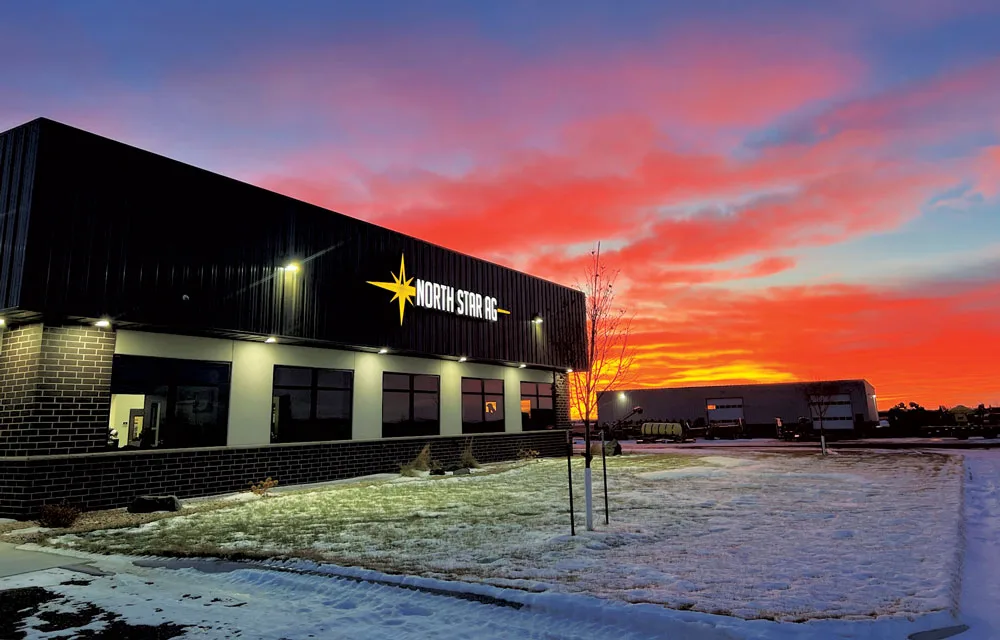
North Star Ag began construction on a new facility in Tower City, N.D., in 2019 and moved into it in 2020. This allowed the company to expand its staff, inventory and services while establishing a more professional presence.
Today, Zane and his wife, Cami, lead the growing dealership. While Zane focuses heavily on growth, product strategy and sales, Cami puts her energy into the operational and people/culture side of the business.
North Star Ag works with about 60 wholegoods vendors. When parts suppliers are counted in that number, it exceeds 100. About 7-10 manufacturers comprise the dealership’s core product offering.
When North Star Ag was preparing to move into its new facility, Erickson initially believed he needed to add more shortlines to generate enough revenue to support the investment.
“Aged inventory is a regional problem, not a you-or-me problem. It’s a ‘we’ problem…”
“I failed really fast,” he says. “It taught me a lot of lessons.”
Erickson realized that more does not necessarily equal better, and he’s now far more intentional when evaluating potential product lines.
New potential lines are considered according to three primary pillars:
- Does the product address a meaningful market opportunity?
- Do the manufacturer and product fit North Star Ag’s business model and core values?
- Is the product unique within the dealership’s market?
A new line generally must meet at least 2 of the 3 pillars, and must also serve North Star Ag’s established customer base.
Erickson also looks closely at whether North Star Ag can sell enough units to truly be proficient in that specific product’s knowledge. For equipment priced below $100,000, his general benchmark is at least 12 units per year in order for the team to confidently sell and understand the product.
That is a selling point in itself. Cami adds that North Star Ag’s size allows the team to offer comprehensive support without losing its ability to respond quickly.
“We can take care of things in a timely manner,” she says. “It doesn’t have to go through 15 people — a boss, and then another boss. We’re not a corporation on that level, but we can also take care of the parts, service the equipment and sell the equipment.”
That responsiveness also depends on having commonly needed parts available when customers need them.
“We really pride ourselves on stocking parts for all of our equipment,” she adds. “Obviously, we can’t stock everything, but we stock the majority of the repair parts customers need.”
Redefining the Competition
North Star Ag is doing something unusual: meeting with neighboring mainline dealers, comparing shortline operations and coordinating inventory decisions for the good of the entire market.
The conversations began after North Star Ag’s growth and move to Tower City established the company as a serious regional dealership. Rather than continuing to view one another strictly as competitors, the Ericksons and leaders from several mainline groups began exploring where their businesses could work together.
In one instance, North Star Ag and another dealer opened their books and compared their shortline operations.
“It was almost like a peer group meeting with a competing dealer,” Erickson says. “We could ask, ‘Why are you doing this?’ or ‘Why are you doing that?’ The conversations that came out of it were crazy.”
Those discussions now include regional inventory levels. Before placing some orders, Zane talks with mainline dealers about what they already have available. Adding more equipment to an oversupplied market only increases the likelihood that aged units will eventually be sold at a loss, weakening prices for everyone.
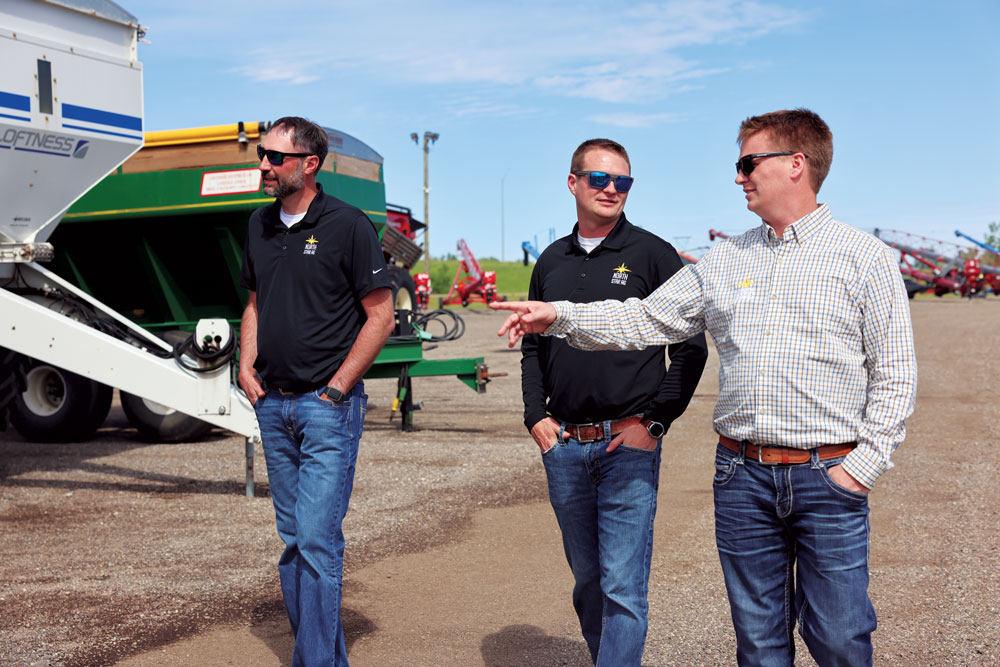
Zane Erickson (right) discusses equipment with colleagues on North Star Ag’s lot in Tower City, N.D. He wants the business to be a place farmers intentionally seek out, and then return to. North Star Ag
“Aged inventory is a regional problem, not a you-or-me problem,” he explains. “It’s a ‘we’ problem.”
The dealers look for ways to complement one another. Some mainline groups carry shortlines to serve their customers but do not want to dedicate the people, inventory and training required to specialize in them. North Star Ag, meanwhile, intentionally avoids tractors, combines and other categories central to the mainline manufacturers’ market share.
“I learned quickly not to do the exact same things they were doing,” Zane notes. “We’ll do the things they don’t want to do.”
That approach allows North Star Ag to provide specialized support without directly threatening a mainline dealer’s core business. During one meeting about North Star Ag’s future growth, Erickson turned the conversation around and asked the mainline executive, “Where could we be of service to you?”
The question shifted the focus from where North Star Ag might create more competition to where its shortline expertise could fill gaps in the market.
The dealerships will continue to compete. But by communicating about inventory, sharing insight and recognizing where each business is strongest, they are finding that competition and collaboration do not have to be mutually exclusive.
Using Data More Effectively
North Star Ag is also looking at innovation in terms of artificial intelligence, exploring how it can help its relatively lean team turn business data into useful information.
Zane believes agriculture has collected significant amounts of data through tools such as field mapping, yield monitoring and variable-rate technology, but the industry uses only a fraction of it.
The next opportunity, he adds, may be less about collecting additional information and more about asking the right questions of the information already available.
North Star Ag is investigating ways to connect data from different systems and provide employees with concise, actionable updates. A service manager, for example, might save time by receiving one daily summary identifying completed work orders and the next required steps instead of sorting through dozens of emails.
“People don’t forget bad moments, so make sure you’re taking care of the customer to the utmost…”
The dealership also sees opportunities through AI in parts inventory, customer service and annual planning. AI could eventually help customers find answers outside regular business hours, and also allow employees to retrieve information more quickly.
Cami sees particular value in using technology to make information more accessible to both employees and customers.
“Everybody wants something at their fingertips at all hours of the day or night,” she says.
For a shortline dealer without the extensive development resources available from a major manufacturer, that efficiency could be particularly valuable. This husband/wife team knows they’ve had to think ahead and be a little scrappy in creating opportunities rather than waiting for someone to bring one to them.
“We have to seek those resources out and implement them internally,” Zane says. “We only have so much time and so many people to work on it. Can AI make the process faster because we don’t have as many back-end people finding the same answer?”
Building the Next Destination
Uncompromisable values, strong partnerships and using tech to work smarter truly has positioned North Star Ag to be a destination dealership. Its growth has also had to follow the changes in North Dakota agriculture through the years.
When Erickson worked as a seed representative in 2009, his territory began where corn and soybean production largely ended. Today, those crops extend much farther west.
“I drove across the whole state, and I swear I didn’t pass 10 wheat fields,” he says. “It was corn and soybeans all the way out. That brought planters, seed tenders and all the row-crop equipment that comes with that change.”
North Star Ag grew alongside that transition, but Erickson knows the next stage will require the company to reach customers across an increasingly large geography. The dealership considers a 150-mile radius its primary market, although customers to the west routinely travel much farther.
“We always say we can’t get a guy east of Fargo to drive an hour, but we can get a guy from Montana to drive 10,” he says.
The company is now testing how to extend its reach through outside salespeople and equipment lots in two additional markets. Erickson describes the model as a discovery process: Can North Star Ag serve an area effectively with a salesperson and inventory lot, or does delivering its full experience ultimately require another brick-and-mortar dealership?
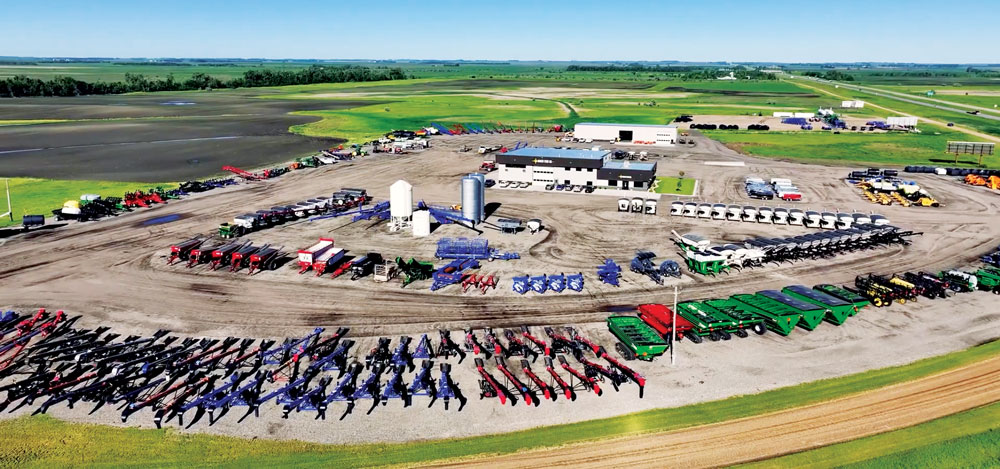
North Star Ag began as a one-person operation at Zane Erickson’s family farm, but now has a modern, full-service facility built in 2020 as well as 3 satellite locations. North Star Ag
“The quick answer is, you need the brick-and-mortar store if you’re going to do a really high-level job,” he says. “But we’re trying to figure out what works and what doesn’t.”
Whatever form that growth takes, Erickson believes North Star Ag’s ability to replicate its culture will be as important as choosing the right location.
The company has grown from 5 employees when it moved into its Tower City facility in 2020 to 22 full-time and 3 part-timers today. About half of the team members were the first people hired for their respective positions, giving North Star Ag the strong sense of community Erickson values.
He wants farmers to recognize the person behind the counter, trust that employee’s knowledge and know the relationship would still be there on their next visit.
“We focus heavily on building the highest-quality team we can within our region,” Erickson says. “That’s the difference between walking into a corporate store and having that family feel.”
For North Star Ag, preserving that culture means hiring people who take ownership of customer problems and follow through on their commitments.
“If you say you’re going to do something or take care of something for someone, stick to your word,” Cami says. “People don’t forget the bad moments, so make sure you’re taking care of the customer to the utmost.”
She acknowledges that resolving a problem may not always produce the outcome the dealership hoped for, but protecting the customer relationship remains the priority.
“You win some and you lose some, but if the customer is taken care of, that’s our approach,” she says. “They’ll keep coming back as long as you handle it in a good manner.”
As North Star Ag considers new markets, locations and opportunities, its success will depend on carrying that same sense of responsibility beyond Tower City. Erickson says that growth will not simply be measured by how many lots or stores the company opens, but by whether each one becomes a destination farmers intentionally seek out, trust to take care of them and choose to visit again.