Takeaways
Peer discussions with neighboring dealers can uncover efficiencies and improve strategic decision-making.
Communication about regional stock prevents market oversupply and protects resale value for all regional dealers.
Focusing on specialized offerings that larger competitors prefer not to manage can turn potential friction into a collaborative partnership.
In an industry where equipment dealerships typically view one another as competitors, North Star Ag is taking a different approach. By meeting with neighboring mainline dealers, comparing shortline operations and coordinator inventory decisions, the dealership is proving that collaboration can benefit the entire regional market.
Opening the Books & Learning Together
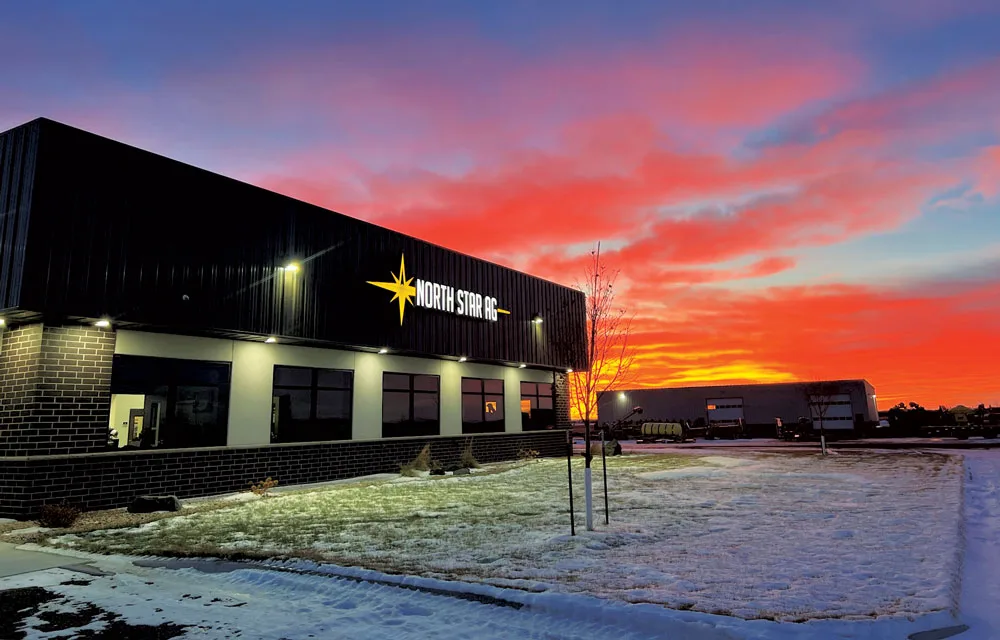
Following North Star Ag’s growth and move to Tower City, N.D., the company established itself as a serious regional dealership. This led to the idea of further discussion with several mainline groups to explore where their businesses could work together, rather than just against each other.
“It was almost like a peer group meeting with a competing dealer,” says Zane Erickson, owner of North Star Ag. “We could ask, ‘What are you doing with this?’ or “Why are you doing that?’ The conversations that came out of it were crazy.”
Treating Inventory as a Shared Market Responsibility
Before placing equipment orders, Erickson now regularly talks to mainline dealers to assess availability. Adding extra units to an oversupplied market can only increase the likelihood that the aged inventory will be sold at a loss, weakening the market prices for everyone.
“Aged inventory is a regional problem, not a you-or-me problem,” he says. “It’s a ‘we’ problem.”
Complement, Don’t Duplicate
Instead of going head-to-head with tractors or combines, North Star Ag focusses on shortlines that mainline dealers do not want to dedicate the people, inventory and training on. They also intentionally avoid the tractor and combine market because these are central to the mainline manufacturers’ market share.
“I learned quickly not to do the exact same things they were doing,” Erickson says. “We’ll do the things they don’t want to do.”
During a meeting about North Star Ag’s future growth, Erickson reframed the conversation by asking the mainline executives: “Where could we be of service to you?”
The dealerships will still continue to compete. But with open communication that includes sharing insights and finding strengths and weaknesses, North Star Ag and neighboring mainline dealers are finding that competition and collaboration do not have to be mutually exclusive.
To learn more about North Star Ag, read Jen Bradley’s “North Star Ag Charts a Destination for Shortline Equipment” featured in the September Issue of Farm Equipment.