

Brought to you by:
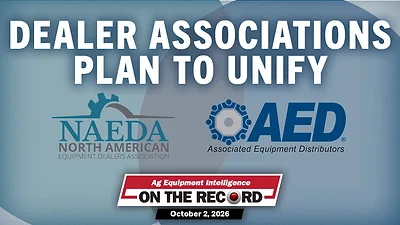
In this episode of the Farm Equipment podcast is brought to you by Machinery Scope, we sat down with Kim Rominger, who recently retired as CEO of the North American Equipment Dealers Association.
Having spent 40 years serving dealerships through various rolls at dealer associations on both the regional and national level, Rominger reflects on how the industry has changed and the challenges dealers faced back when he started and what they are dealing with today.




|
|
|
|
This episode of Farm Equipment Podcast is brought to you by Machinery Scope.
At Machinery Scope, we’re more than a warranty provider—we’re your partner in closing deals, protecting margins, and building long-term customer relationships. Our flexible programs are designed to work with your sales process, whether you're selling new or used equipment, on the lot or online.
We help you stand behind what you sell with fast quotes, prompt claims, and insured coverage that builds buyer confidence. Plus, we pay fairly—retail labor rates, travel time, and MSRP on parts—so you and your customers stay protected without the hassle.
When you work with Machinery Scope, you’re backed by a team that’s been in your shoes—and works like you do.
Full Transcript
Kim Schmidt:Hi, I am Kim Schmidt, Executive Editor of Farm Equipment. Welcome to Farm Equipment's Podcast. In this episode I sat down with Kim Rominger, who recently retired from the North American Equipment Dealers Association after four decades serving the dealer industry. He shares his reflection on how the industry's evolved during that time. This episode of the Farm Equipment Podcast is brought to you by Machinery Scope. Let's jump into the conversation now as Kim talks about how he got his start in the business. When did you first start getting involved in one of the regional associations?
Kim Rominger:November of 1983.
Kim Schmidt:All right. You know very specifically.
Kim Rominger:Yeah. I can remember it like it was yesterday. No, seriously. I started out of college with Federated Insurance. I'll get past that real quick. Spent some 79 to 83 with Federated and in one of the capacities I worked in, while at Federated was what they called in account exec where I was calling on associations, trying to get them with group health insurance, get their recommendations. Federated was big on association recommendations and their major businesses, which are farm equipment, automobiles, propane gas, petroleum marketers, and the major categories, hardware stores at the time was one of them. So anyway, that's what I was doing and I ended up in Michigan and Ohio. I was doing that, calling on those associations, but our headquarter office was Indianapolis.
Kim Schmidt:Okay.
Kim Rominger:So long story short, 1983 I left Federated and Indiana Implement Dealers was looking for a field person to call on dealers. Dave Lucy needed an extra set of hands and they were very big in the health insurance market at that time. The thing is, in Indiana we had 500 members.
Kim Schmidt:Oh, wow.
Kim Rominger:Just Indiana, 500 dealers. Almost all the counties except two had six dealers in this county seat and there's 92 counties in Indiana. So you can do the math there a little bit. I think I'm right. But we had 500 members and only two of those members had multiple stores and those two members were both John Deere dealers and they were the Reynolds Group and Stevens Group down in Evansville, Mount Vernon. So we had lots of people to talk to, lots of people to call on, lots of opportunity for small groups of health insurance. And so with my background in the insurance market, that was primarily my thing, is to help with the health insurance and grow it and then also try to get those that weren't members, in members and as members. And so that was where I got into the association world.
Kim Schmidt:Okay.
Kim Rominger:That's why I can remember well, so I worked with Dave Lucy a lot. He was a character. I don't know if you ever met Dave, but he was well-known in the industry, so and he was a very smart, intelligent man, but eccentric, let's put it that way.
Kim Schmidt:All right. So getting started in the dealer world or even the ag world in 1983 that's coming in right on the verge of some pretty challenging times. What was your early years with the association like and what-
Kim Rominger:Yeah.
Kim Schmidt:Dealers through it?
Kim Rominger:Yeah, it was tough. They were very tough years. The first three years I was there, the president of the association went bankrupt in the, each president. It was like a curse. If you're going to be president, you're going to go out of business. So three presidents in a row went out of business either during their term or right after they finished the term as president. So it was pretty tough. And the thing there is each one of them, back then they'd have to take a combine back. The farmers couldn't make the payments or what. They would have to take the combine and that was on them, on their business and that's what put them out. Not the repossession, but their responsibility on the finance combine to go get it and take the hit from the finance company. So that was tough on those guys. They were not like the dealers today in any stretch as far as size for the most part, size. Like I said, there were only two with multiple stores.
Kim Schmidt:Right.
Kim Rominger:So it was a lot largely family owned businesses and fairly small.
Kim Schmidt:Any idea of how many? So if there were roughly 500 when you started in the early 80s, what that number looked like coming out of the 80s?
Kim Rominger:We'd lost some. And you have to understand too, in that period, somewhere in there International Harvester and Case got together and a lot of stores, a lot of those stores closed, a lot of dealers were being closed out. That was really what precipitated the dealer protection laws across the country, was that IH going out of business and Case taking it over and the closing of so many dealerships, just closing them out. So that was really tough time. That was a big one there. So I would say we might've lost maybe 10%-
Kim Schmidt:Okay.
Kim Rominger:Membership of dealers in Indiana. I'm just going to talk about Indiana and, but that was probably across the country because it was the same thing everywhere.
Kim Schmidt:Yeah. Yeah. The total number per state might've been different per state, but the general impact is probably similar.
Kim Rominger:Right. Correct.
Kim Schmidt:So over those 42 years, so in that time, what are some of the kind of key things you kind of witnessed change in the dealer landscape or in what was kind of impacting how dealers were doing business?
Kim Rominger:Well, probably John Deere spurred most of that with the consolidation. They probably started the consolidation effort. The one major change I would say in the time I've been going is the consolidation of dealerships. All right, spurred on by the consolidation of farms, obviously. Fewer farmers, fewer customers. You have to have more ground, more territory, the same number of customers to move the same amount of equipment and that's really, and looking down the road there, that's what's caused the consolidation of associations as well. No different. You got bigger, but fewer people writing checks to you for membership. That consolidation transfer to the associations too. But that's probably the big major change-
Kim Schmidt:Okay.
Kim Rominger:During my time is just the, and like I said, John Deere probably started it but all lines are doing it now.
Kim Schmidt:Right.
Kim Rominger:Even Kubota to some degree is trying to consolidate some of their historical dealerships and trying to consolidate some of those. The guys that they started with, Kubota always were a Kubota dealer and now some of those aren't going to make it.
Kim Schmidt:Yeah. Yeah, that was an interesting one to see in the last couple of years, kind of pushed that way.
Kim Rominger:Yeah. And it was inevitable as Kubota transcended from small tractors, lawn equipment and things like that in the industrial skid steer loaders, many excavators and all of that industrial equipment and farm equipment to some degree, there are still some pretty, they've got a big tractor. I'm hoping they don't build a combine because we're over capacity on combines now. Just add to the fuel to the fire. But I'm hoping they don't do that, but they're the up and comer. So I'd say in the manufacturing capacity is going to be one of the issues the manufacturers are going to have to work out because the worldwide market isn't what it used to be just because of wars and tariffs or whatever you want to call it. So that's going to change dramatically, the way the manufacturers go to market I think.
Kim Schmidt:Yeah, yeah, definitely. That's going to be interesting to watch. I mean, even now watching how they're responding just to current downturns and other external factors kind of impacting things and getting a handle on trade, that seems to change with the wind.
Kim Rominger:Yeah, the great thing is going to be a big issue I think in a short period of time. They'll figure all that out and they'll have new avenues or new trading partners or they're going to fix what they've got, but that'll settle out pretty quick.
Kim Schmidt:What's something that, and whether it was well working with the regional associations or then with the National Association, that working with the association on that changed something for dealers or improved something for dealers that you are especially proud of that you got done?
Kim Rominger:Well, I think the legislation started while I was a field person so, but I worked with Dave Lucy on that in Indiana and that's probably one of the biggest things for farm equipment dealers and outdoor, most states have outdoor power in it or construction, not all, but that was a big thing for dealers so that they knew if they did go out of business, they weren't going to get hung with a bunch of used stuff or new equipment that had to be paid for.
Kim Schmidt:That's the dealer protection legislation.
Kim Rominger:Yes.
Kim Schmidt:Okay.
Kim Rominger:Also came into play when the mergers and acquisitions in that the manufacturers wouldn't just consider that stuff sold and they had to work that part into the deal to put it in the new dealership.
Kim Schmidt:Okay.
Kim Rominger:Because it paid for it one way or the other. So that expedited, I think that one thing once they figured it out, expedited the consolidations for the manufacturer. So that was a big thing. Over the years there's been a lot of different things. We've worked on financing with manufacturers. The manufacturer relations part when there was an issue and when it wasn't AEM, it was FIEI and there was a warning issue and so a group of association executives got together with the management of FIEI and worked on a work comp situation that needed to be resolved for both dealers and manufacturers and that's what started the industry relations part of now NAEDA.
But that's how that started. The group of managers just formed their own committee, the state and regional guys and brought NAEDA in at the time and that's still a constant of what NAEDA does and that manufacturer relations piece is very, very important from reviewing contracts and discussing that before the manufacturers release them, getting the manufacturers to, or not all of them, obviously not all of them agree with it, but getting them to allow us to do that sure, definitely ease the way when they introduce a contract, if we've looked at it, made changes or made necessary changes or what we think are necessary changes. Sometimes it's simply in language. In fact, we could work together helped the relationship between the dealer and the manufacturer to some degree. Nothing is perfect.
We don't fix all issues. Sometimes we don't come to an agreement with the manufacturers, but the mere fact that the dealers don't have to do that, they have somebody they can rely on. I'm going to call us being the bad guy where we can go talk to the manufacturer. We don't have anything at risk.
Kim Schmidt:Right.
Kim Rominger:The livelihood is based on that manufacturer and you don't want to cross the person that's putting food on your table so to speak.
Kim Schmidt:Right.
Kim Rominger:That allows us to help them in that way and that's probably the most important thing I think that came along during my term there. I didn't start it but that was a big part of it ongoing, a major, major thing that NAEDA does now for the associations. It all started at state level.
Kim Schmidt:What's the, outrageous might be too extreme of a word, but kind of the most surprising thing in working on some of those manufacturer relations type issues that you saw a manufacturer try to put in place on their dealers?
Kim Rominger:I don't think they really try too hard to inject themselves heavily into the dealership because they don't want to run the dealership, with very few exceptions, they've never been successful. Almost all of them have tried company-owned stores and stuff like that. It just doesn't work out and so they don't really want to run a dealership. Our industry is traditionally 10 years behind the auto industry. So you can take everything in the auto industry and you can transfer that to the farm equipment industry or you will transfer to the farm equipment industry. And one of the things most recently and it's debatable, it's really debatable, is first right of refusal on a sale. A dealer wants to sell his business, he's got somebody interested in it, so you have to get permission from the manufacturer. That's part of the contract. And the first right of refusal is that if the manufacturer doesn't agree to it, they make their buyer whole and the manufacturer gets to pick who is going to buy the dealership or buy the corporation or whatever that deal is.
And we haven't had that in our industry yet because some say it tamps down the opportunity for the dealer to have multiple buyers at the table or other people being interested in it. Nobody would do it if they knew the manufacturer got to pick who would go through that process of valuations and organization and do all that and then come to find out the manufacturer wouldn't approve them. So I think that may be coming. I think it's in the auto industry now and I think it's going to be part of our industry one of these days. It's just not made it into ours yet, so that may be coming.
Kim Schmidt:Okay. It seems like there may be leaning that way or we've identified these companies that might, maybe are the right fit type of, from some of the OEMs but not fully yet.
Kim Rominger:Yeah. The other issues traditionally have always been market share numbers and how it's calculated. Huge issue still. It would be an issue until there's an agreement where everybody's doing it on the same level, everybody's participating, and you can have a true market share. You got some manufacturers don't participate in it at all and so how can it be a true market share if not everybody's in the calculation. And that's our argument. That's been my argument forever. It's not a market share, it's not anywhere close to market share. You don't have total industry participation in the numbers, but they would argue that it is a market share, so that's going to be an issue. Dealer territories are always concerned when, and the construction industry is fairly well protected territories for construction dealers. The manufacturer grants them a territory and keeps the other dealers of the same line out of there as much as possible on new equipment, not used equipment
Kim Schmidt:Okay. On the market share side of things, it also seems like, I've heard it from Deere dealers specifically, but I imagine it's similar across the board, that what the expectation is and how they're measuring it, it's not the same year to year. So you might've known your target was this in 2024, but it's wildly different in 2025.
Kim Rominger:Correct. And the addition of one of the transition our industry going in is manufacturers are growing their line of equipment, they're adding not traditional farm equipment, but now skid steer loaders, mini excavators, gators or the utility vehicles. All that's being added and all that's now being in the market share. Well, you've got all kinds of people in some of those industries that aren't necessarily traditional farm equipment people, especially in the utility vehicles and things like that. And yet again, I got to go back to the fact who's being figured into the market share because you have players in that world and so it's hard to fix a true number to that. Now you can tell a guy in his territory, he needs such and such amount of participation in that area, but you're not counting all the numbers there. So who knows what the real number is.
Kim Schmidt:Yeah.
Kim Rominger:During my time argument has been, yeah, you can use market share for like grading a dealer per se, but when you type performance and money to it, now it's become a different problem, a different issue totally. If you're taking money out of somebody's pocket based on a calculation that is not 100% provable and there's too much gray area in there as to did he make his share or not make his share.
Kim Schmidt:Right.
Kim Rominger:If your universe is simply all the people that are participating, then you've got to make accomodation for all those people that aren't participating in the numbers you're talking about. That's my point, but it'll be argued well after I'm gone.
Kim Schmidt:We'll get back to my conversation with Kim Rominger in a moment, but first I wanted to thank our sponsor Machinery Scope. At Machinery Scope, they believe equipment owners and dealers deserve better, better protection, better support, better value. They're a family-owned team that's farmed the land, turned the wrenches and sold iron so they get it. Machinery Scope's extended warranty solutions are flexible, valuable, and fast with insured coverage you can count on and service that keeps deals moving. Whether you're protecting margins or equipment, they've got your back. Machinery Scope, raising the bar for people who keep the industry running. All right, let's get back to my conversation now with Kim discussing why the industry hasn't had success with getting farm equipment registered, like what happens with cars in the auto industry and the challenges facing dealers today. We'll be talking about market share equations or however you want to phrase it til the end of time.
Kim Rominger:Yeah, that's what I said. I think the auto industry has it because it's fairly provable because you got to register vehicles. New car, they registered, so counting the ones that are sold is fairly simple. Now I was on a committee with NAEDA when Paul Kindinger was there. We met with some banks and Farm Bureau and others talking about registration of equipment because that would help in insurance coverages, recouping stolen equipment, financing where you have to have a number on a title to a piece of equipment and so that all this multiple financing on multiple units can get eliminated real quick. There's a quick check where everything's registered. We never got too far because the Farm Bureau was concerned about taxes and figured if it's registered it'd be easier to tax and they'll start taxing it. The bankers would've liked it, but they do blanket lanes a lot of times and that would've limited their ability for blanket lanes because now they have specific things, specific equipment that's titled so it's identifiable.
Kim Schmidt:Yeah.
Kim Rominger:And so the blanket lane becomes a question and so we didn't get it done, let's put it that way. One of the things we tackled, tried and didn't get it done and still isn't done.
Kim Schmidt:Yeah, and that's something that I feel like I've heard about over the last decade. It still comes up as would this help with whatever the issue is, particularly though market share would make a difference. What are you looking kind of ahead now, what do you think the biggest challenges facing dealers right now is and as the industry continues to evolve?
Kim Rominger:Well, it's pretty much the same as it's always been. With all of the, couple of things. Number one, talent. Dealers are so big now and the management of a dealership is much different than what it used to be. More corporate, okay, than the traditional family-owned business. And so the talent needed, you've got with technology, that type of talent is needed in a dealership for drones and all the stuff that goes with that. You always need technicians, but that changes a little bit with the technology too, with the training and everything that the technician needs to know to fix this equipment.
Remote diagnostics and all that without a solid and defined internet connection capability out in the rural areas, you can't do remote diagnostics, but that would, we talk right to repair all day, but if you got diagnostics and you're monitoring it properly, you'll know the machine's about to break or going down and you know what's breaking and you can have somebody on the road to fix it before it ever breaks and that would take care of all the concerns of the right to repair people of delays and all this other stuff.
And some of the stuff, if it's a matter of connecting with the computer, could be done remotely too to resolve some software issues and things like that. So those are all going to be challenges ongoing. The management, this is a challenge for the associations and the companies as well. As the dealers themselves become more corporate, who do you talk to when you have an issue or you need to talk to somebody? Used to, when I started, I knew all the owners and probably their sons or daughters who are working in the business.
Kim Schmidt:Yeah.
Kim Rominger:Now there's layers. Just like in a corporation, there's layers of management, somebody over different parts. When you try to communicate with them or from an association standpoint, try to get a bulletin out to the person that might be responsible for that, if you don't have that contact, you're not getting it to the right people and a lot of our communication gets lost. And the manufacturers face the same thing. When they have things they're trying to get to the dealership, whether it's training, alerts, legislation, you got to find the right people and as dealers get bigger, that's going to continue to be an issue and communication is critical. It's always been critical. It will be critical long past Kim Rominger, so it's going to be still a challenge within this new world of equipment dealerships.
Kim Schmidt:Yeah. Do you think that there's a point where we get to how big a dealer can be in terms of, we'll say in terms of stores, not necessarily revenue because they kind of grow hand in hand, where it's too big? Is there a top point where a dealer's not going to be able to function the way we know it today with whatever that number might be stores?
Kim Rominger:The manufacturer would tell you that no, there's no number there. It's the ability of the dealer to manage and hire the right people.
Kim Schmidt:Okay.
Kim Rominger:And I kind of agree with that. I mean, the problem will be if there's only a handful of dealers, let's say, look I'm just, for an example's sake, Caterpillar's got worldwide, 30 or less dealership people now, corporate, people that operate the dealerships. Okay.
Kim Schmidt:Right.
Kim Rominger:The manufacturers are going to find when they get to a fewer, those guys are going to carry a lot of weight and they're going to make manufacture policy as opposed to the manufacturers making manufacture police. They're going to be able to dictate that because there's going to be a few of them who can work together, whether it's [inaudible 00:25:43] trust or anything like that, it's just going to be a natural thing. And the manufacturers like inline competition. They think they sell more equipment with John Deere dealer versus John Deere dealer, John Deere dealer versus Case dealer. They don't want, my opinion, they don't want a one dealer to control of too much of an area. I think you see now in John Deere's consolidation plans and I'm talking about John Deere, the others will follow. This is how this is going to work.
Kim Schmidt:Yeah.
Kim Rominger:John Deere just happens to lead the pack, but now they're having dealers, I'll pick Sydenstricker Nobbe. They grew so much in the area they're in Illinois and Missouri and I think they're even in Nebraska a little bit now, that in order for them, they didn't want them to get more stores in that area.
Kim Schmidt:Right.
Kim Rominger:They allowed them to go to New York.
Kim Schmidt:Right. Similar with Hudson jumping.
Kim Rominger:You can find those examples all around. Now, I don't know what they think is going to happen when... The natural progression will be consolidate those two areas together.
Kim Schmidt:Right.
Kim Rominger:Maybe that's the plan. I don't know. Maybe John Deere is picking who they want as their final.
Kim Schmidt:Their 30 dealers or whatever number it is.
Kim Rominger:Correct. But even within that, you can pick all you want to, but you're going to change people eventually and-
Kim Schmidt:Right.
Kim Rominger:It may not be the same. And that's a big hold to fill.
Kim Schmidt:Yeah.
Kim Rominger:One of those fail, that's big and so we'll just have to see. I don't know.
Kim Schmidt:Yeah.
Kim Rominger:I understand both sides. I just think when you get too few people in the industry we're in, this is worldwide industry. We've got guys exporting equipment in countries, used equipment especially and things like that. You don't want too few people in control of all that.
Kim Schmidt:And you touched on right to repair. Do you think that becomes a, it's just going to always be their topic? Similar to, we're always going to be talking about market share and how market share, that change is always kind of ruling the day. Is right to repair a topic that, will it go away ever or do you think it's here to stay?
Kim Rominger:Probably here to stay. It's a consumer driven case issue and it's an emotional issue, but it comes down to whether patents and technological rights and all that are covered and restricted or not.
Kim Schmidt:Right.
Kim Rominger:You can't give away somebody's patent. You can't give that away. You can't give away technology. Yes, you may want to fix it, but our argument to the legislature has been, especially when you put language in there where you allow parts at costs and things like that. What these people don't understand, especially first of all legislators anymore. We don't have enough people from our world, the agricultural world in leadership positions anymore. And so we've kind of been dismissed. Used to, when I started in Indiana agriculture was huge. Right. So you didn't have to worry about legislation very much because they weren't going to do anything to mess up agriculture.
Kim Schmidt:Right.
Kim Rominger:That was too big of, bringing in too much money and everything and too many people were involved. As fewer people get involved and as fewer people own dealerships and all of that, they seem to miss the fact of how many people they employ and things like that. But having said that, my point was going to be that if you give parts at cost, dealers will not inventory parts. So if you're concerned about the time of repair and access to parts, you're cutting your own throat because they're not going to be in the stores. You're going to have to go somewhere else to get them, which is going to be longer and farther away. It's going to take more time than having a dealership right there with the parts and inventory because if a dealership, private business can't make money on what they're selling, they're not going to sell it.
Kim Schmidt:Not going to sell it. Yeah.
Kim Rominger:And so then what are the customers that want this stuff to happen, what are they thinking? And you can't give away intellectual property. All right. That's somebody's property. That's the way our system works, so. Now you can rewrite the laws where that's not the case. Maybe that's what they want, but then there's a lot of things that, again, if you can make money at it, you're going to keep doing it. If intellectually, if you're going to make something here and you can't sell it, you have to give it away. You're not going to do it. So I don't know. I don't know what the answer there is.
Kim Schmidt:Yeah. Okay. Any last things we might've missed to talk about and just kind of observations on how the dealership world has evolved over the last few decades?
Kim Rominger:The only thing I would say, the one thing we haven't touched on, we touched on a little bit, but private equity coming into ownership of dealerships, relatively new. Matter of fact, most of the manufacturers we talked to were against that for a long time, and now I think some are seeking that, and I think that's a double-edged sword. The thing about our traditional dealerships were they were community oriented. They built up their communities. They were big players in the communities, major employers in the rural communities and all of that.
And so they were invested in the communities, wherever they were in communities. When private equity comes in, if you look at our cost of doing business study and all that, you realize dealerships operate at a pretty low margin, pretty thin margin and private equity people want to return. And so what's going to happen if we have another thing when I started in the 80s, early 80s, mid 80s, when there's such a big downturn, what's going to happen to the money then or the people that own and operate those dealerships? Are they going to take that money out and go put it someplace else that they can earn return? What are you going to do with the dealerships then? That's my concern on that part of it.
But again, you're not going to stop the change that's coming. That's just what my continued concern is for down the road for our industry. I also, I tell the guys all the time, I'm glad I wasn't an equipment dealer. It was bad enough being in an association world, but being an equipment dealer, I don't know how they sleep at night sometimes with all the things that they have to juggle in the management of the dealership today with the amount of legislation. When I started, we didn't face a lot of legislation and our dealers weren't politically active for the most part. You had one or two here and there, somebody that was in state politics predominantly, and now it's critical that our members are politically active, both state level and federal level because our industry is being, well, for the most part, many states, there's no sales tax on equipment. When you sell equipment, there's no sales tax in many, many states.
And I have seen over the last few years, probably the last five years, more and more states at least put it up for consideration to start taxing this farm equipment sale. If it is, it's going to cost the customer. The dealer will eat that. But man, talk about something when you're having trouble in the industry and it's a constricting or consolidating industry, when you start pulling that stuff, that's going to be big. I don't know how that's going to change things. That's one thing that I worry about, is when we don't have enough people that have been in our agricultural world, when you go lobby, when you talk to people and they don't know what a combine is or what a tractor is, I mean even in right to repair hearings, I know of a legislator that simply said, "You keep saying combine. What is a combine." And that you could tell them it's something that wouldn't fit in this room. They don't believe you. They don't understand that. They've never been there.
Those things concern me for what's coming in for our industry and for our dealers in the future. And long story short is they've got to be in tune with politics of the world, especially today, because it's going to be knocking on their door, and that's just another role they have to take on that many businesses have done over the course of time. But that's a different world, the politics. The political world is a different world, so.
Kim Schmidt:Yeah. Thanks to Kim Rominger for taking the time to sit down and reflect with us on the changes he's seen over the last 40 years. And thanks to all of you for joining us for this episode of the Farm Equipment Podcast. Until next time, I'm Kim Schmidt. Thanks for joining us.