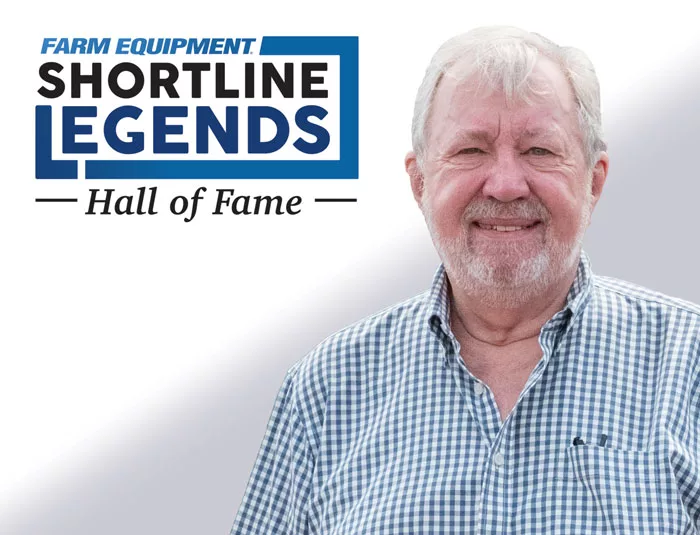
Shortline Legends Hall of Fame Recognized at FEMA's 2025 Convention
The 2025 inductees of the Shortline Legends Hall of Fame were recognized — in front of their peers — on October 30, 2025 during a presentation at the Farm Equipment Manufacturers Assn.’s Marketing & Distribution Convention in Las Vegas. Watch Stan McFarlane's featured segment.
Farm Equipment‘s Shortline Legends video series is brought to you by FEMA.

For 75 years, FEMA members bring choice, value and Innovation to Agriculture. Shortline manufactures offer preferred brands at better margins, First to the market with innovation and dealers are more profitable with shortline manufacturers. For 75 years, customers prefer equipment from FEMA shortline manufacturers. Learn more at www.farmequip.org.
Stan McFarlane, a 2025 Shortline Legends inductee, has made an impact on modern farming that extends well beyond just product innovations. His leadership has helped thousands of farmers transition to more efficient, sustainable tillage practices. His tools have been widely adopted across North America, proving their effectiveness in improving soil health, residue management and overall farm productivity.
McFarlane started college studying architecture at the Univ. of Wisconsin-Madison. He always had a knack for design and business, but knowing he'd likely joining his dad, Jim, in the family business he switched his focus to business management, accounting and engineering.
While he would eventually influence the company’s product development, McFarlane’s start in the family business was on the manufacturing floor, whether it was helping in the paint shop or driving the forklift to move parts to the welders and machine operators. When he started full-time, the company was switching from building wooden harrows to steel bar harrows.
He worked his way through the company, moving from painter to machine operator to machine set up, eventually into the office.
“My dad was at his limit,” McFarlane says. “He did a great job, had a heck of a mind, but he was at his capacity for running the business. We made the harrows all winter for spring. Then in the summertime, he would do grain bins and prefab buildings. Between all of that, he was just at his limit.”
One day, Stan McFarlane came into the office and said, “We need some help here. There’s no organization at all.” He says at the time, the cutting lists were just pieces of paper.
“They’d give it to the shear guy, ‘Here cut 100 of this, cut 200 of that.’ There were no records of anything.”
With no system in place, McFarlane started one. “I started taking orders and putting the systems together so they could keep track of parts, keep track of time for the parts — how long to produce them so we could cost them properly.”
Before he started the system, parts were being priced by the pound, he says. “When pricing our products we would multiply the cost of the steel by 3, which would cover labor and profit. I said, ‘You can’t do that. You have to figure out what you got in it.’” From there, McFarlane Mfg. became a much more organized operation.
Minimum Tillage Business
McFarlane’s impact on tillage technology began in 1995, when the company started developing the first vertical tillage equipment, says Todd Lassanske, former general manager at McFarlane Mfg.
As noted in the 2017 Farm Equipment article, “What is Vertical Tillage Anyway,” the original definition of vertical tillage in the mid 1990s involved tillage ahead of the planting equipment under the planter opener that did not create stratification — or a horizontal density layer. A stratification layer was described as a “scoured” layer of soil underneath the planter opener that has high density soil particles that interfere with early root growth. Soil density layers can be created when a typical tillage tool is pulled through the ground.
“Stan McFarlane embodies the spirit of Shortline Legends — visionary leadership, groundbreaking innovation and lasting impact on agriculture. His contributions to vertical tillage have revolutionized soil management, helping farmers achieve higher efficiency and better yields. His dedication to continuous improvement and farmer-driven solutions makes him a true legend in agricultural equipment…” – Todd Lassanske, former McFarlane Mfg. General Manager
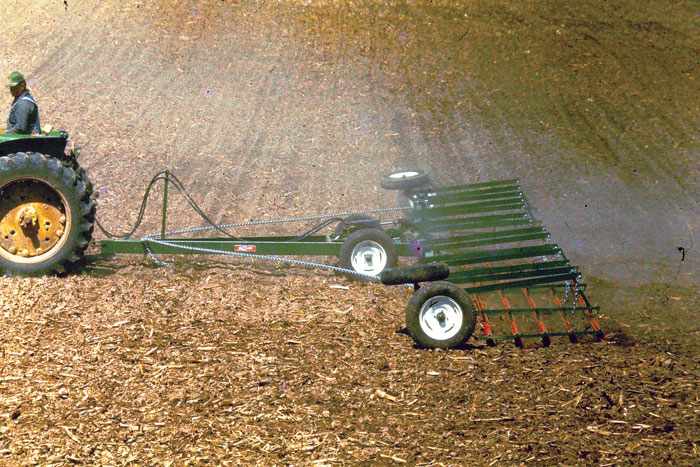
The created soil density layer is equal to the contact area at the bottom of the tool. To farm in a vertical format in which water and nutrients move up and down in the soil profile, it is essential to first remove all existing horizontal stratification layers and not create new changes in soil density concerns. The McFarlane SPR1000 Seedbed Conditioner was the first tool used to accomplish this job and was deemed the first vertical tillage tool.
McFarlane’s entrance into the min-till implement business came at the request of Frank Chvatal with Beaver Valley Supply out of Kansas. Having been dropped by another manufacturer, McFarlane recalls that Chvatal came to him looking for a ridge-till tool. After 2 years of asking, McFarlane agreed to start building the tool.
McFarlane first brought the tool to the National Farm Machinery Show (NFMS) in Louisville when they needed to fill space in the booth. The initial reception left a lot to be desired.
“For 3 days, people were laughing at it and saying, ‘Oh, it’s a heck of a lawn mower.’ Illinois crop consultant Ken Ferrie came into our booth on the last day and he was staring at it and I could see he was thinking and thinking. When I asked if I could help him, he said, ‘Will that work in no-till?’ I said, ‘I have no idea, but let’s try it.’”
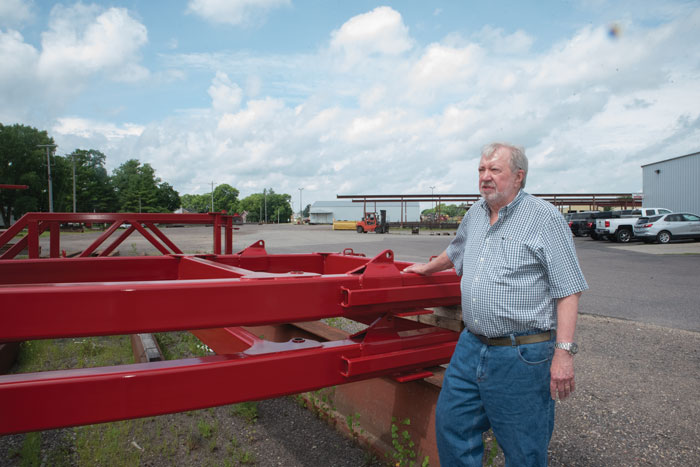
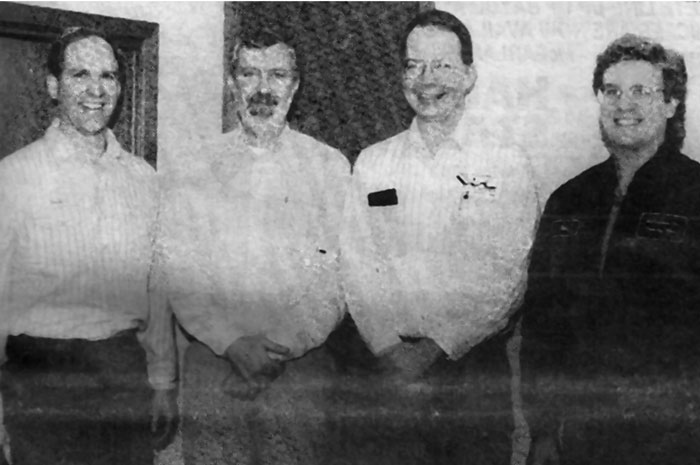
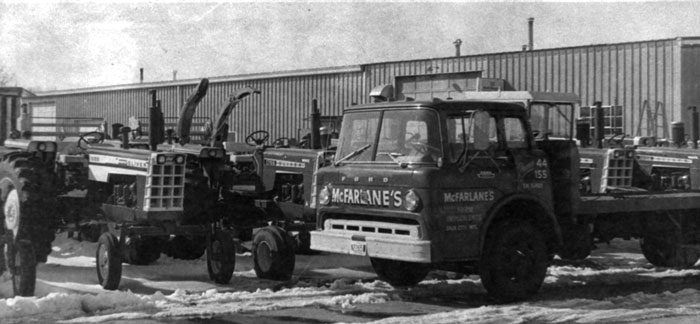
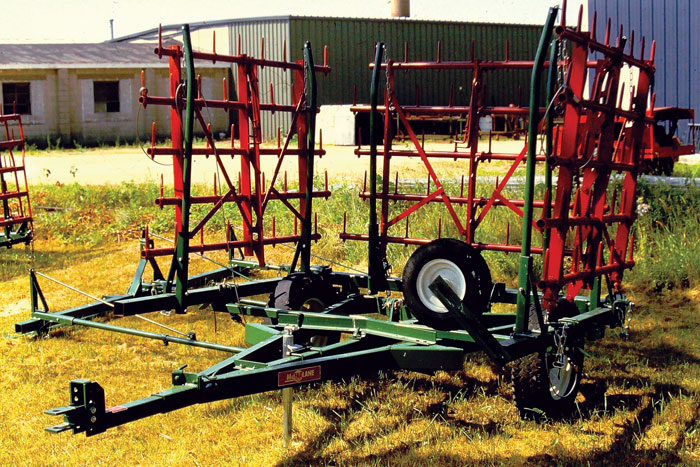
Stan McFarlane Image Gallery

.jpg)
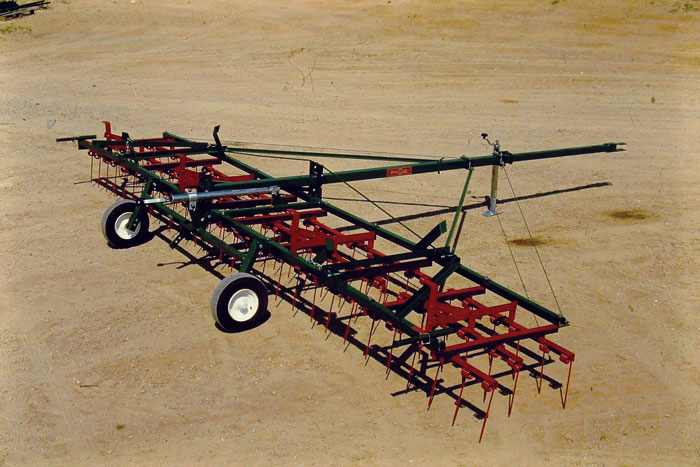
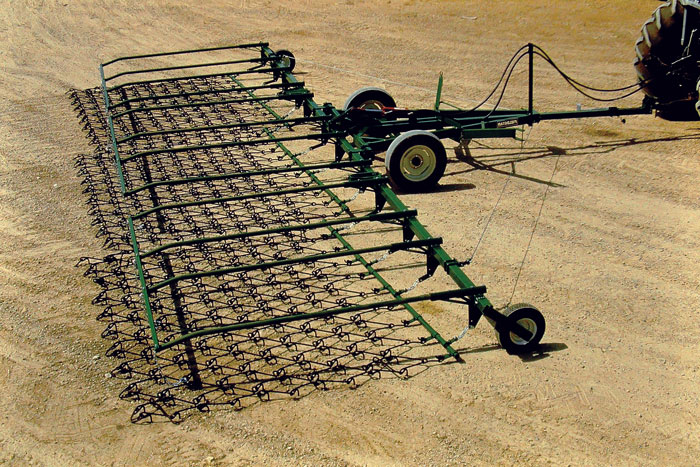
McFarlane shipped one of the units to Ferrie, and while it worked, it didn’t have enough weight. McFarlane got to work modifying it and built a tool with straight discs on the front. “That’s how we got into shallow tillage; just go deep enough to make a seedbed,” he says.
The straight discs on the front of the tool worked because they dug into the compaction layer — or horizontal tillage layer that was left by a field cultivator or disc. “We put straight coulters on thinking that would be the ticket and it worked pretty good, except it only worked in certain conditions. It wouldn’t work if it was wet, it wouldn’t work if it was too dry,” McFarlane says. “If the ground was good, man, it was beautiful.”
Trying to find customers for the tool proved to be a challenge, and the company only sold about 20 units over 2 years.
Back at another NFMS in Louisville, McFarlane recalls talking to Fred Gilman, one of his sales reps in Illinois who put on thousands of miles pulling the demo unit around. McFarlane told Gilman he was going to put a shallow disc blade on the front of the unit to work up a little dirt to make the reel disc work and everything go through it. “And that’s when it took off and it was fun,” he says. “When we first saw it, we decided to do it, which was probably our first test unit and I said, ‘Wow, this is it.’ We built 20 units and scattered them — a few in Indiana, most in Illinois, maybe one or two in Iowa.”
Those 20 units were sold to dealers, then to farmers who hadn’t seen them in the ground yet, McFarlane recounts. “I was thinking, ‘Whoa, what’s going on here?’ We took one to the Farm Science Review in Ohio, and farmers would look at it and nod their head. They’d say, ‘That’s really going to work, isn’t it?’ I said, ‘Yeah it does.’ And that was my sales pitch.”
On the drive back to Wisconsin, he called Gilman to ask if anyone had put them in the ground yet — still no. McFarlane remembers telling him, “When they do, this is going to be big, really big.”
By the time McFarlane got home to Sauk City, Gilman called him back “I just got the first one in the ground, and the dealer wants to know how many he can get and how fast can he get them?’’And I said, ‘He’s got what he’s got. We can’t make anymore. We only made 20, but we’ll take orders for spring.’”
Balancing the Business: Structural Steel
In the 1980s when Stan McFarlane took over running the firm following his dad’s retirement, the company was presented with an opportunity to add structural steel work.
“We had nothing to do in the shop and I heard someone come in the office and asked to see if we made anchor bolts. Since we had a threader and a press brake, I said, ‘Yes, yes, we can make anchor bolts. How many do you need and when do you want them?’ and he said, ‘Well, we're putting a plant up in Prairie du Sac. It's Milwaukee Valve and we need ... I said, ‘Certainly, we'll make them for you.’"
McFarlane followed up that request by asking if there was anything else they needed — any kind of weldments that might be needed? He had a skilled workforce and not much work. “I was honest with him and he started bringing me plans. ‘Well, could you fabricate this?’ "Oh, yeah. Yeah, we can do that.’”
Most of what the man showed McFarlane was work they had never done, but they’d figure it out. He knew enough from his engineering and architecture background to make sense of it.
“He brought this plan in, it was just a gridlock of beams, the whole floor was beams, he said, ‘Would you like to do this?’ Sure. I'd never done it before in my life. I took the plans home at night and I would draw the individual pieces on a drawing board. I would take them into work the next morning and show the guys, ‘OK put a pole here, cut the beam this way, do this, just cut this.’ I explained how to make it until they got used to it. Halfway through the project, I told my uncles and dad that if we just could buy a hydraulic beam punch, we wouldn't have to drill all these holes by hand."
McFarlane learned that Kupfer Iron Works in Madison, Wis., was going out of business and was planning an auction. “I called up Henry Pauls, who was their general manager and didn't know me from Adam, I didn't know him and I said, ‘I understand you're going to have an auction. Could I come down and maybe buy a few pieces of equipment before the auction, probably get you a better price?’ He said, ‘Yeah, come on down.’ He had me confused with somebody else, which was fine. So I went down one afternoon, dressed in blue jeans and a T-shirt and we talked for 3 hours."
About half way through the tour, Pauls turned and suggested McFarlane buy the whole place. While McFarlane was interested in the business, what he didn’t any have interest in was owning a business in downtown Madison.
After conferring with his dad and uncles, McFarlane Manufacturing got into the structural steel business. They partnered with some of the Kupfer’s former employees who had been thinking about starting a business. The partnership allowed the former employees to take on the business with no risk, and the McFarlanes immediately had experienced people to run that side of the business.
“It’s been a great marriage” because the 2 business segments balance each other out,” McFarlane says. For instance, right now the ag market is soft, but the structural steel business is doing well. “We can’t get enough people,” he says. “It works really well to switch our workforces back and forth.”
“Everybody says I was lucky, I said, ‘No, recognizing an opportunity and taking advantage of it is your luck.’"
McFarlane then called the foreman and said, “Get ready. This thing is going to take off.”
“His vision led to the introduction of the McFarlane Reel Disk in 2007, a groundbreaking tool that improved residue management and seedbed preparation” says Lassanske. “This innovation allowed farmers to efficiently break down crop residue while maintaining soil structure, leading to better yields and reduced soil compaction.”
“That tool put us on the map,” McFarlane says. From there the innovations kept coming, eventually leading to the Quadra-Till and the Incite units.
In 2015, McFarlane Mfg. launched the Incite 5000 Series, the first Universal Tillage machine. This tool combined multiple tillage functions into one, offering farmers the flexibility to adjust settings based on soil conditions and seasonal needs. “The ability to switch between vertical, high-speed, primary and secondary tillage made it a game-changer in the industry,” Lassanske says.
Taking Over the Business
McFarlane’s movement into leadership of the business was gradual. “I kind of took over and my dad didn’t know it,” he says. “I just kept doing things and when my dad retired he and said, ‘OK, I’m leaving next Tuesday,’ and that was it. He didn’t come back for 2 or 3 months.”
McFarlane took over the business in the early 1980s. “The big ag depression was going on and he couldn’t sell anything. I remember we couldn’t give it away, and that was what I was given.”
The two sometimes butted heads in those early years, McFarlane recalls. When the younger McFarlane took over, the common work week was 9-hour weekdays and Saturdays for 5 hours. “No matter if you had work or not,” he says. “If you had orders or not, that’s what we did.”
McFarlane called the team together and said, “You can’t afford to do this.” He switched the work week to 8 hour days, 5 days a week. “If we had work, we put in overtime,” he says. “My dad got mad at me and came down and said ‘What in the hell are you doing?’ There were a few certain words in there. I looked at him, I said, ‘I’m just trying to make some money,’ and that was the end of the conversation.”
Learn More Online
- Video Interview with Stan McFarlane— Coming Soon!
- Insights from Those Who Worked with McFarlane — Coming Soon!
- FarmEquipment.com/ShortlineHOF25
If you ask McFarlane the main difference between how his father, Jim, and he ran the business, his answer is simple. “I was nicer.”
He shares how a foremen told him, “You’ve got to be meaner. You’ve got to be mean,” McFarlane says. “No you don’t; you’ve got to explain to them what you expect. That was the main difference. You still get it done, but you get it done a lot better.
“I always told people when I hired them, ‘You're going to spend most of your life working, let's just get along and be nice. You’ve got to get things done, but we can be friendly to each other and be pleasant and just do it.”
Under McFarlane's leadership, the company grew what he describes as “possibly the largest harrow manufacturer in the world, building the oldest vertical tillage tool used in field preparation that is still extremely useful in farming operations throughout the U.S., Canada and eastern Europe.”
His dedication to engineering excellence and farmer-focused solutions has earned McFarlane respect among industry professionals. He served as the president of the Farm Equipment Manufacturers Assn. in 2018 and is also still a member of ASABE. He retired in 2024, but still walks the shop about once a week to share an idea or to just simply check in with the team.