
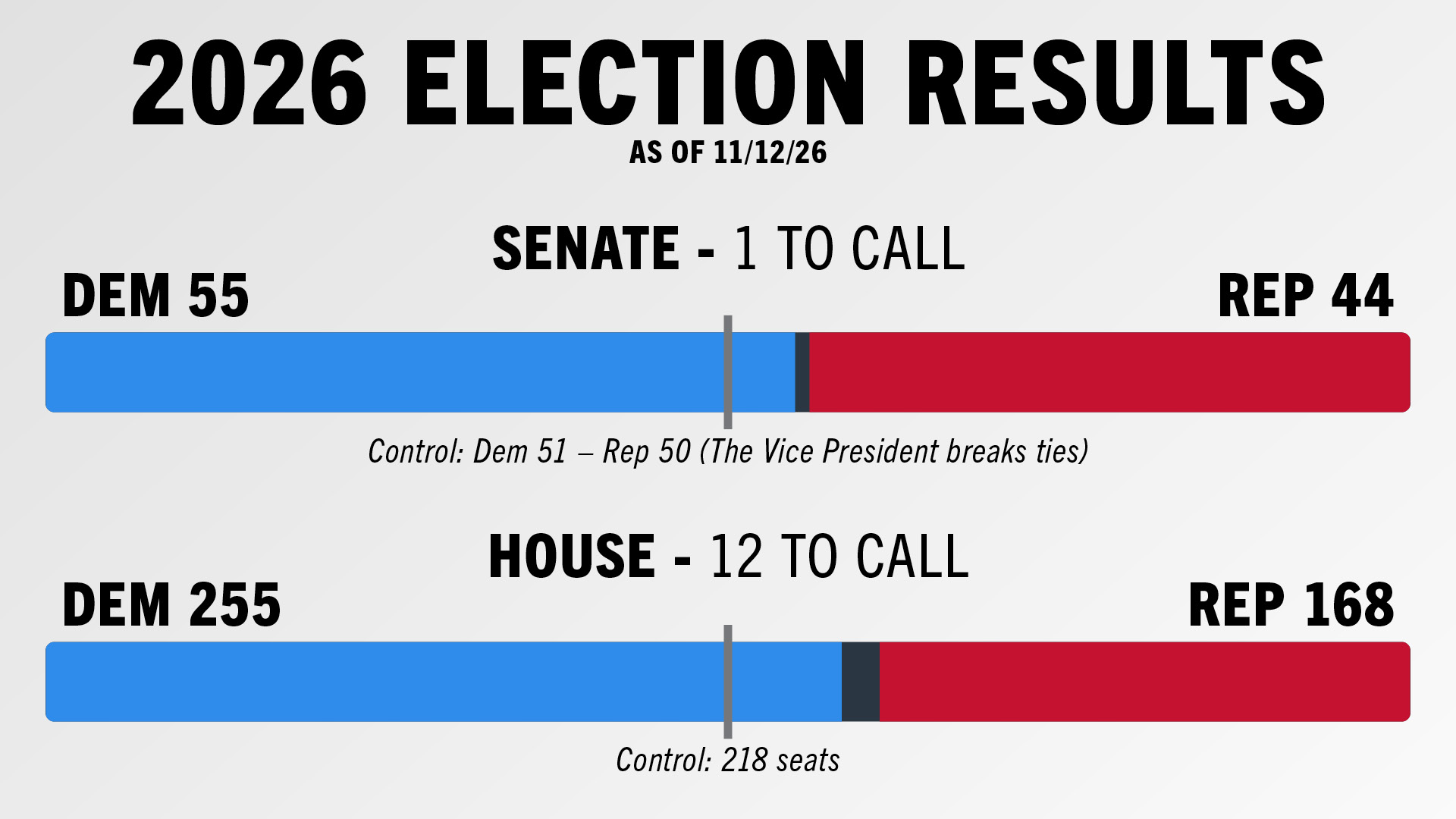
The results of the mid-term elections leaves the U.S. with a divided government.
Democrats holding the majority in Congress and a Republican in the White House, will make legislating harder, said Katherine Grady, director of Federal Affairs at the Association of Equipment Manufacturers. “The question now is where Democrats and President Trump might find common ground.
Farm Journal reported there were 139 Ag Voices in Congress before Nov. 3, 2026. As of Nov. 9, 2026, 31 of those are leaving, 99 are staying, and 9 are involved in races too close to call.
At least 119 ag voices have secured seats in the incoming Congress, according to Farm Journal. The tentative roster includes 84 house members and 35 senators with direct ties to ag.
U.S. farm equipment industry now faces a revamped legislative landscape with immediate consequences for commodity cashflow, the stalled Farm Bill, and trade and tariff pressures.
How do these changes impact the passing of the U.S. Farm Bill? One industry executive we spoke with said it’s not likely the Farm Bill makes it through the lame-duck session unless Republicans decide to rewrite it and make concessions on SNAP and conservation.
He noted that Congress has ceded power to the executive branch over the past 30 years, particularly on trade and tariffs. That means there’s a lot the President can do unilaterally.
The NAEDA executive recalled the impact Trump’s tariffs had on ag during his first term. “Tariffs decimate farmers’ markets. Back in 2018-2020, Trump’s tariffs with China dropped soybean purchases from about $26 billion a year to like $4 billion. Tariffs and trade wars only hurt farmers.”
Tariffs, trade and the Farm Bill are all important issues that need to be addressed.
Watch the full version of this episode of On The Record