Takeaways
- Be intentional with customer clinics and tie them to seasons, not calendars. Measure success by fewer in-field problems and higher adoption, not by attendance.
- Virtual clinics are an effective way for large dealerships to reach more people and cut down on the costs of hosting several in-person clinics per year.
- Social media and phone calls are the best ways to promote clinics. Free meals get more people in the door, and many of them often go home with something they weren’t expecting.
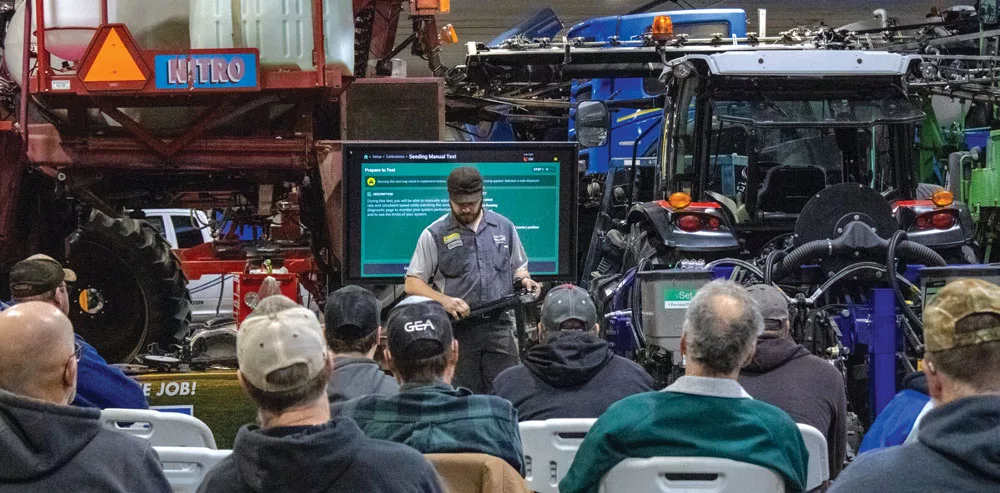
Customer clinics can yield multiple benefits for dealers, from building credibility with farmers to proactively cutting down on service stress during busy season. But every dealer has its own formula for getting the most out of these customer-focused events.
“Clinics and demos are not just marketing events for us,” says Mason Gukenberger, precision solutions data specialist for Swiderski Equipment, a 5-store New Holland dealer in Wisconsin. “They’re also not just sales events.”
Swiderski Equipment does however make sure its sales team is fully engaged during clinics to help improve alignment between sales and the service and precision departments.
Educational Events
Gukenberger and his team view customer clinics primarily as educational events that help reduce risk both internally and externally.
“By reducing risk, we’re reducing downtime in the field, whether it’s by having the customer know how to calibrate section control or making sure their GPS is driving straight,” Gukenberger says. “We can prevent burnout by making sure their equipment is set up right and they know how to use it. Emphasizing the importance of updating software also reduces the number of in-season calls we get.”
Additionally, clinics are great ways to showcase the confidence your team has in its product knowledge and ability to deliver top-notch service, Gukenberger says.
“Having 150 people at a clinic & having only 1 walk away with something significant isn’t as powerful as having 5 people at a clinic & having all 5 walk away with something…”
“We make every clinic and demo intentional. It’s seasonal, product-driven and tied to the customer’s needs,” he says. “If you’re focused on setting up what can go wrong with equipment and showing them how to navigate through that challenge, that really allows your dealership to take that product support to the next level.
“The customer can also see the confidence your team has with new products,” Gukenberger adds. “When you showcase that in a controlled environment, you can take it to the next level vs. when you try to do that out in the field where it’s an uncontrolled environment.”
Customers compare experiences, not just iron. And positive experiences — like a successful clinic that’s not the same every year — keep customers coming back for more, Gukenberger says.
Clinic Impacts
What’s the true ROI of a well-executed customer clinic? Mason Gukenberger from Swiderski Equipment lists the following tangible impacts he’s seen with customers and co-workers:
- Faster adoption of precision technology and machine features
- Fewer in-season panic calls and improved machine uptime
- More productive conversations when issues do occur
- Reduced reactive service and precision workload
- Better quality of support tickets and calls
- Improved alignment between sales promises and service reality
- Increased confidence across all internal teams
“Measure success by fewer problems in the field and more technology adoption, not necessarily by attendance,” he adds. “Having 150 people at a clinic and having only one walk away with something significant isn’t as powerful as having 5 people at a clinic and having all 5 walk away with something.
“If you demo every single feature on a product in the same clinic, you’re probably going to be adding more work for your precision team later because the customer didn’t walk away with anything other than, ‘Hey, I can do this,’ instead of ‘this is how I do it.’”
Going Virtual
Meanwhile in Batavia, N.Y., LandPro Equipment integrated solutions manager Ben Flansburg started wondering several months ago if it’s time for a shift in his dealership’s approach to customer clinics.
“During a meeting last summer with some fellow Deere dealers, we started talking about online clinics and it got me thinking, ‘Why are we putting so much time, money and effort into in-person clinics nowadays?’”
Flansburg thinks online clinics might be the way to go to offset the challenges of declining attendance and rising expenses. He’s looking at online clinics as an upgrade, not a complete replacement of in-person clinics.
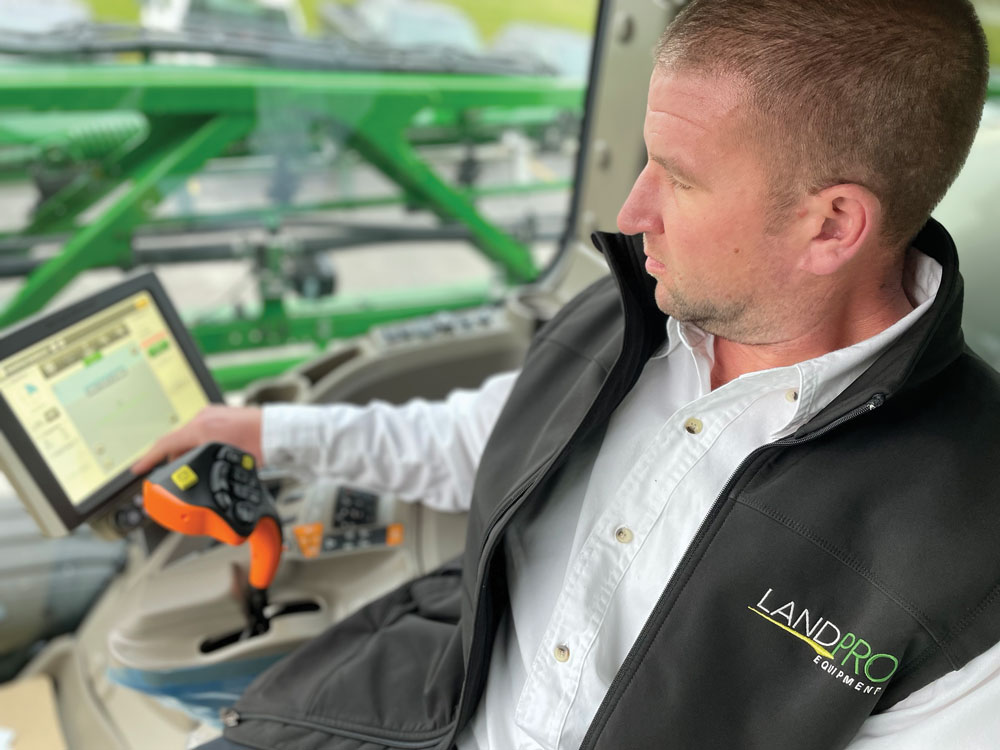
Ben Flansburg is rethinking the customer clinic model at LandPro Equipment with the rollout of a virtual program to make it more convenient for farmers across the dealership’s 20-store footprint. Noah Newman
“We sat down as a management team and came up with a roadmap to this new approach,” Flansburg says. “The first thing we did was a customer poll. Do you enjoy coming to our in-person clinics? What if we did something more like an online format that you could watch at your own pace and go back and review the material when needed? We had really positive feedback from the small group we polled.”
One of the biggest positives expressed in the initial feedback is the ability to watch training videos anywhere and anytime. Customers also voiced the desire for shorter content. Anything longer than 5-7 minutes might be pushing it.
“Rather than sitting through our clinic, falling asleep after lunch and forgetting what was covered, they can go back and review videos anytime they want,” Flansburg says. “They know where to access them and can watch in the springtime while sitting in the cab. That’s more valuable to them than the free hat and hot dog we gave them back in January that they forgot all about.”
LandPro Equipment has 20 stores spread across New York, Pennsylvania and Ohio. Online clinics help expand their footprint and solve the challenges of covering such a large customer base with different farming practices and crops.
“In the past, we’d typically host 3 different customer clinics to cover our whole region,” Flansburg says. “Then when you talk about different operational clinics for planters, sprayers, combines, you end up having up to 18 in any given year just to cover your region. The expense, time, travel and effort that goes into that becomes overwhelming. It could be one person’s full-time job just planning and executing these in-person clinics. I don’t think we’ll ever get away from doing in-person clinics, but this is just a way to reach more people, more effectively while lowering internal costs.”
Implementing Online Clinics
Ben Flansburg and the management team at LandPro Equipment came up with the following roadmap for launching virtual programs.
- Audit existing training materials.
- Redesign those materials for online delivery (videos, slides, quizzes).
- Pilot with small customer group.
- Roll out broadly, gather feedback, refine.
- Maintain continuous improvement cycle.
Flansburg says some dealers might fear losing customers if they don’t engage with them in person. But from the customers he’s talked to, that’s not necessarily the case.
“They want information and they want to feel like a valued partner,” Flansburg says. “Sometimes they feel like it’s more of an inconvenience if they have to come to our dealership for a clinic or maybe they feel if they don’t come that we’re not going to put them higher on the totem pole of service.”
Flansburg’s team has only been producing online clinic videos for less than a year, so he admits this approach is a work in progress. He still wants customers to feel the personal connection and doesn’t want the videos to become part of a generic, endless feed on a YouTube channel. He’s relying on key customers to help guide them in the right direction.
“Everybody knows the 80/20 rule. Eighty percent of your business comes from 20% of your customers. We’re starting by focusing on that 20% for email lists, polls, engagement and feedback. They’ll help build the program. We piloted this with a small group. If you work with 500 customers, by all means, do not try to just roll this out to all 500 customers. Pick a key group of people, they’ll give you good feedback on how to improve.”
Deliver What’s Promised
Pete Youngblut, owner of independent dealership Youngblut Ag, identifies 3 different types of customer events — in-field demos, educational clinics and general open houses.
“Everyone is going to react differently to these,” Youngblut says. “Some of my customers are very educated and can work through problems themselves. They don’t want to show up for training events, they’d rather just call us when needed. And then we have other customers who will absolutely show up for training events and want to be shown a step-by-step process.”
An effective marketing plan is crucial to executing a successful clinic, Youngblut says. Social media is a great way to get butts in seats.
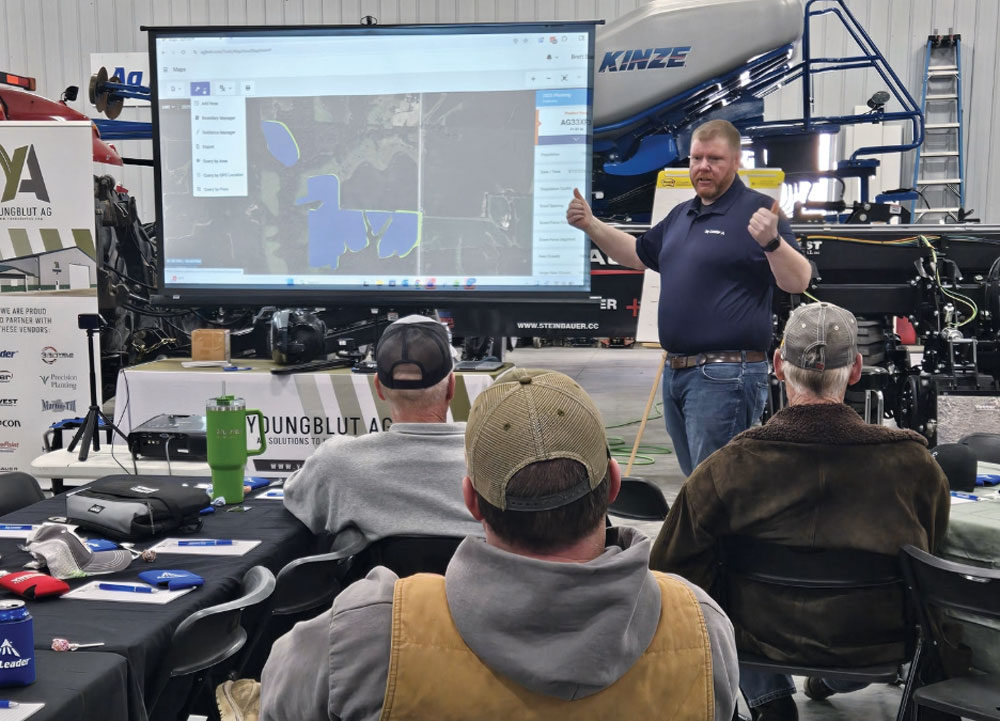
Pete Youngblut invites product experts from manufacturing companies to speak at his customer clinics. He says customers appreciate their presence and knowledge about the latest and greatest equipment. Youngblut Ag
“Everybody’s always on their phone, right? And it’s easy to repeat,” he says. “It’s not like we’ve got to buy postcards 3 times over 2 months and keep sending them out. It’s quick, easy and cost-effective. You can also advertise on radio. There are a lot of the older guys who aren’t on social media, they’re listening to AM radio. But the most effective thing I’ve seen to get people to show up is just call them.”
He recommends having salespeople and technicians reach out to customers to inform them of upcoming clinics. That’s proven to be an effective way of recruiting attendees, Youngblut says, and at the very least shows that you’re thinking of them. Naturally, they’ll also help spread the word.
“They’ll go to the local coffee shop and say, ‘Hey, you guys going to this deal over at Youngblut’s? They’re going to teach me about this, and talk about that, and there’s this new piece of equipment that’s going to be there. You guys should come check it out with me.’”
When you get people to a clinic, it’s critical to actually deliver on what’s marketed. Give attendees something that packs a punch and equipment they can get their hands on.
“Why are we putting so much time, money & effort into in-person clinics nowadays…”
“Give them something to be excited about,” Youngblut says. “Yes, there’s standard stuff guys want to see repeated. We’ll talk about disc openers, closing wheels and simple things on a planter every year because it’s a good refresher. It gets them engaged, then you can continue into explaining what’s new. And don’t drag this thing out. If you have a long, boring presentation, shorten it up and get to the point.”
Youngblut likes getting his manufacturers involved, too. He’ll often invite Kinze, Yetter, Ag Leader and other companies to set up booths like they would at a conference or show. They’re the ones who are most up to date on the latest and greatest equipment and technology, and customers value the opportunity to talk with them.
Don’t underestimate the power of a free meal either. Food shouldn’t be the main takeaway or highlight of a clinic, but it’s a good way to get people to show up.
“What if they get something out of the clinic they didn’t even know they were going to get? That’s what we want,” Youngblut says. “What we’re doing with these in-house clinics is building relationships. And let’s be honest, cheesy potatoes never hurt anybody, right?
5 Marketing Musts
Pete Youngblut says there are many ways to drive attendance. Here are his top 5 marketing musts for customer clinics.
- Simple messaging that solves a problem and is repeated often.
- Utilize social media platforms.
- Don’t forget about radio and mail.
- Use your team to help spread the word.
- Personal invites are the absolute best marketing tools. Make a phone call and say, “You should come.”
“But all joking aside, anytime you have a meal, you’re chit-chatting with people and that’s how in-depth conversations start. That’s when questions come up because you’ve got that one-on-one interaction.”
At the end of the day, Youngblut has found that customer clinics are a great way to strengthen relationships and build long-term trust, which ultimately translates to more business.
“It also leads to the customer bringing more people,” Youngblut says. “And soon, instead of having 10 guys show up when we invited 100, we get 50 out of 100. We’re creating that customer connection. If we can bring people in, give them that handshake and something to take home, that’s really the goal of the meeting. It’s not just to sell something or teach them something so they don’t have to call later. We can make it more than that.”