This article originally appeared in the October 2004 issues of Farm Equipment.
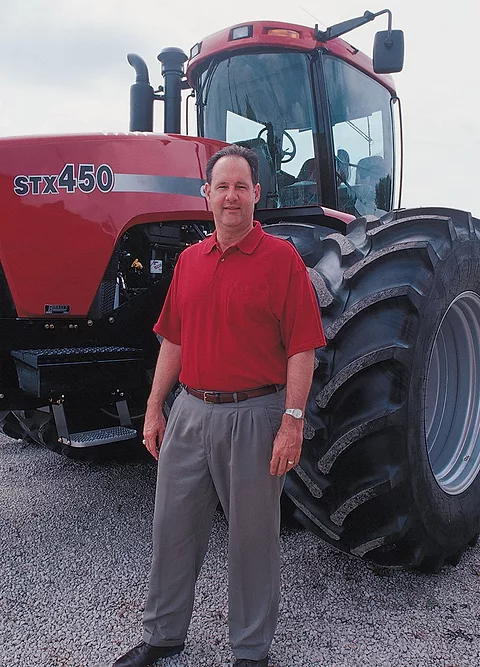
By Ron Birkey, Retired President and CEO, Birkey's, Rantoul, Ill.
You can tell a lot about the potential viability of a dealership by looking at a few key numbers from the past, present and future.
For example, the numbers show that the demise of the family farm has been exaggerated. The number of farms has actually declined by less than 5% from 1978 to 2002. The real exodus has been among farm equipment dealers, whose numbers dropped to 3,400 in 2002 from 8,800 in 1980. That number will probably continue dropping to about 1,800 by 2014, an almost 50% reduction.
The good news is that the number of customers per dealer will increase, so from the perspective of surviving dealers, there will be great opportunities, although the challenge will be, in some ways, to be the last man standing.
Historically, dealers have focused on profit as a way to measure success. Certainly, making a profit is a way to generate capital for your business, but it is not the most important factor. A lot of profitable dealers have gone out of business because they didn't manage their balance sheet. They didn't focus on their assets and actively manage them.
That is the challenge. If the balance sheet is not the major focus of the farm equipment dealer, he will be part of the continuing casualty list of dealerships.
The bottom line is that the well-managed, well-capitalized, customer-focused dealer has a bright future. And most importantly, well-managed businesses will control their balance sheets by putting their primary attention on absorption rate, used equipment turnover and financial leverage.
Absorption Rates
Still today, many dealers don't understand or pay attention to their absorption rate. The absorption rate is the percentage of the dealership's total costs that can be paid with gross profits generated by the parts and service department. For a dealership that is 100% absorbed, the parts and service gross profit is the same as the dealer's total yearly expenses.
Farm equipment dealers have historically overlooked parts and service opportunities, which are astronomical. The service side of the business offers 60-70% gross profit margins and parts can generate about 30%.
Using these numbers, $1 of customer labor sold through the service center, which generally generates $1 of parts sales, will generate $1 of gross profit. That will go a long way toward generating the needed cash to reinvest in the business.
Yet most dealers don't focus on this opportunity. Rather, they focus on trying to make a 5% or 10% profit margin in the sale of whole goods. Concentrating on the absorption rate instead would help their businesses immensely.
The North American industry average for the absorption rate is about 55%, which is not acceptable. Our business is 70-75% absorbed, and we're not happy with that. The goal is to be 100% absorbed, if not more.
But it's important to note that determining a realistic absorption rate for your business is the real issue. It depends on the complexities of your business, as well as where you're located. A farm equipment dealer in central Illinois who sells a lot of new and used machinery will find it very difficult to reach 100% absorption because the expenses associated with selling whole goods are so high. But a dealer in another part of the country selling lots of parts and service should expect to be at least 100% absorbed.
Used Equipment Turnover
Used equipment turnover is another key component of the balance sheet. To calculate the turnover rate, divide the annual cost of sales of used equipment by the average value of the used equipment in your inventory during the year.
For example, if a dealer has $10 million in annual cost of sales of used equipment and he averages $5 million worth of used equipment inventory on hand over the year's time, he has a turnover rate of 2. That is the national average among farm equipment dealers.
“From the perspective of surviving dealers, there will be great opportunities, although the challenge is to be the last man standing …”
That is a prescription for problems.
The dealer is plagued with inventory being carried over after the season of use. The next year comes around and you have to depreciate it because it's shopworn and a year older. The next thing you know, you're selling it for less and you've got more money invested in it. Targeted used equipment turnover should be closer to 4 times turn, or twice the national average.
Financial Leverage
Financial leverage is the ratio of a dealership's total assets compared to the dealer's equity. The financial institutions and other lenders focus on financial leverage when evaluating a dealership's fiscal health, so dealers must focus on it, too. We all must be aware of how financial leverage is calculated and its implications.
The industry average in North America is 3.5 to 1, and that's a great number. But that average is heavily skewed by the old-money dealers who carry very little debt. On the other side of the equation, many highly leveraged dealers have ratios that range from 8 to even 14 to 1. They don't have the ability to manage their businesses as they should because the lenders have too much influence over them. Ultimately, those high ratios can drive you out of business.
Most lenders in our industry start to become nervous about a dealer who has a financial leverage ratio of 7 to 1 or greater. The lenders have more money invested in the business than the dealer does, and the dealers don't have as many cards to play. At some point, the lenders will decide not to put any more money into the business.
Changing Market Segments Means Change in Business
The future for farm equipment dealers depends on meeting a changing customer base. Although the number of farmers hasn't decreased to the extent most people think, the profile of the farmer has detinitely changed. There are fewer traditional farmers, and they've been replaced by weekend farmers.
So although the numbers have remained relatively flat, we dealers must change our focus to zero in on the new market segments. Basically, there are now three types of customers:
- The surviving small farmer, who's really not as much of a farmer anymore. He might have a full-time job in town, or he's diversified into high-intensity specialty crops that define his markets. He's still out there, his acres have changed, and he's not buying a lot of new machinery. He might buy some used equipment.
- The large farmer, who added more acres and who will continue to get larger.
- The weekender with the small acreage and equip-ment. The influx of weekenders has kept the overall number of farmers relatively constant. These market segments are not likely to change much in the next 10 years, which means surviving dealerships will need to concentrate on three different approaches:
- Those who focus on the weekend farmer, a market segment that will continue to grow.
- Those who focus on the middle group of small, diverse farmers. That's probably the most difficult market to try to get your hands around. You would be competing against a lot of old-money dealers who aren't investing in or growing their businesses.
- Those who focus on all three markets. This is where the emphasis should be for a growing dealership that is dynamic and change-oriented.
—Ron Birkey
Dealers with high financial leverage ratios pay more interest and higher interest rates. They don't have the ability to seek other lenders to provide financing, because the other lenders worry about the already high ratios going even high-er. Thus, the dealers can't take advantage of business opportunities when they arise.
But if your financial leverage ratio is 5 to 1 or lower, you can be more aggressive and start negotiating better rates on loans. And you can feel comfortable knowing the capital is available to grow your business in keeping with your overall business plan.
Any dealer who doesn't understand financial leverage and how to calculate it should have someone in-house who does, or have a good advisor who can help manage this critical issue.
With absorption rate, used equipment turnover and financial leverage under control, a dealer can turn his attention to other considerations in long-term success.
Capitalization Counts
Capitalization can be an extremely complex subject, depending on your business strategy. A capitalization plan should include:
- Figuring out how to put profit into your business. This is probably the easiest thing for a dealer to do.
- Retaining and reinvesting the cap-ital. Dealers must reinvest in their people, equipment and facilities to keep the business fresh and growing.
- Taking advantage of growth oppor-tunities. This can be done through expanding your operations to other markets. But it can also mean growing within the existing dealership - through new product lines, for example — to better leverage the assets you already have.
- Turning to lenders to drive down the cost of money through lower-interest loans after gaining control of financial ratios.
Customer Focus
Everyone understands — or should understand what it means to be customer-focused. Suffice it to say that if a dealership is not cus-tomer-focused, it's probably the easiest thing to fix. If you don't have a customer focus, it won't matter if the business is well-managed and well-capitalized, you simply won't survive. In truth, all three of these issues must be handled reasonably well if the dealership is to succeed.
There are several other important yet secondary issues to address. These include personnel, facilities, products and market access.
Personnel Points
Attracting good employees is a big challenge that every dealer talks about, but what are we actually doing about it? Dealers should work with high schools, junior colleges and universities to promote the availability and interest of qualified employees interested in career opportunities in a dealership. As a group, we're not working hard enough at this.
If a dealer creates the right environment, he can attract the best talent from each group of students for each functional area of the business.
“Any dealer who doesn't understand financial leverage and how to calculate it should have someone in-house who does…”
Once you attract good people, you need to utilize them. To do that, you should use an "open book" style of management, meaning employees should understand your approach to your business and the marketplace and how your company is doing toward achieving its goals. This allows them to "buy into" that approach and feel a personal involvement and commitment.
A lot of good people are looking for employers who will share their expectations and tell them what they want the employee to accomplish. Therein lies the opportunity for dealers to empower their people.
Last, but not certainly not least, employees should be treated with respect.
Remember The Obvious
A dealership doesn't need to have a sparkling showplace, but your facility should look professional. This should not be an issue for a dealer who has already addressed the capitalization issue and has funds available as needed.
Personally, our facilities are, for the most part, converted older properties that have worked well for us.
The product issue is simple, really. Focus on your customers, and they will tell you what products they want.
So, in closing, focus on the num-bers, put the emphasis on the financial side of the dealership, and you'll put your business in the position to be one of those 1,800 surviving dealers in 2014.