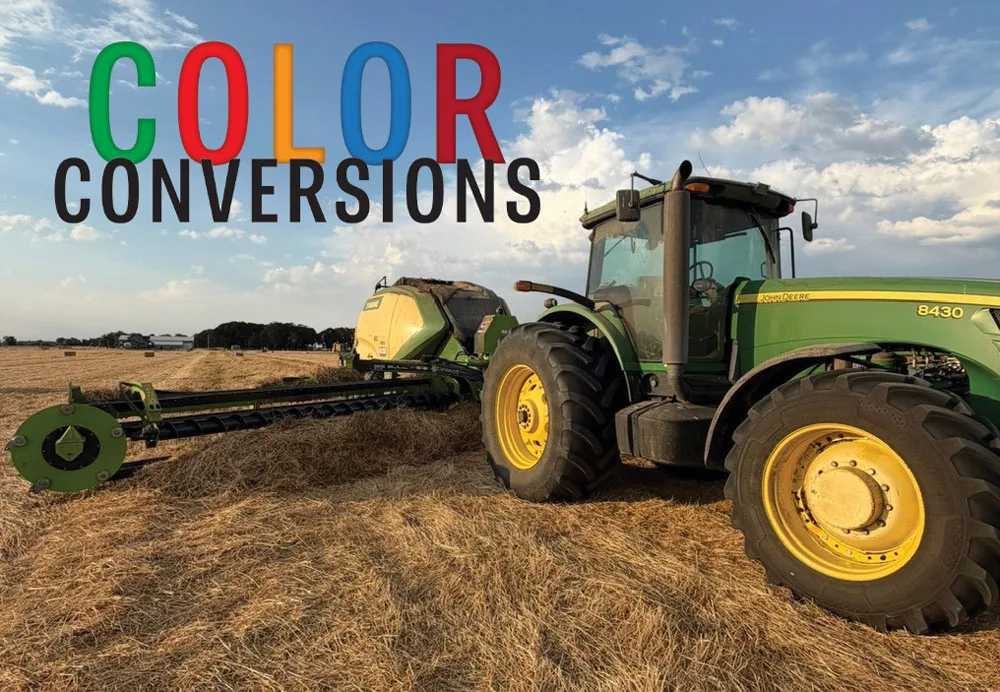
Jesse Bounds was at a crossroads in 2024. He knew he needed to become more efficient to offset inflation and continue meeting the needs of his growing hay exporting business. That was never going to happen if his existing fleet of balers continued creating more problems than they were solving.
“I’d bought some Massey square balers around 2014, and ran them up to 60,000 or 70,000 bales,” says Bounds, CEO of Bounds Hay Co. in Junction City, Ore. “They were starting to fall apart, so I got rid of them and got some new ones a few years ago. Two had overheating problems right away, and I had a bunch of other issues with the other ones. The dealer didn’t seem to care. That’s when I started thinking about making a change.”
Bounds ran Krone balers early in his career in 2008. He didn’t have a great experience with those either, but he really liked the dealer. Bounds also realized a lot had changed with the balers over the 15-plus years he’d drifted away from them. Maybe it was time to give the brand another try.
“I stayed in touch with Roy after I quit using Krone balers,” Bounds says in reference to Roy Garman, service manager at Linn Benton Tractor in Tangent, Ore., which is now a part of Oregon Equipment Sales. “Roy sent me to one of the Krone baler schools in Reno, Nev., around 2014. He said he wanted me to go to the school to see how much better the balers were because eventually he’d get me back as a Krone customer.”
It required a little patience, but Garman was right. Bounds purchased 4 new Krone 1290 BiG Pack large square balers in 2025. Bounds had done his homework and concluded that these were the best balers to meet his needs. He also had fond memories of working with Garman and Linn Benton Tractor.
“We need to be baling all day long. Our farmers are not waiting for us…”
“I always got along with Roy and enjoyed a good ‘argument’ with him,” Bounds says. “We’d go round and round about Massey vs. Krone. Roy always said Massey wasn’t a bad baler, which I respected. But he also said in the heat of the day, when it’s 95°F and you’re baling annual ryegrass straw, what’s that bale going to look like coming out of the baler? Will it have all the strings around it? That’s the difference between a Krone and a Massey, and it’s the difference my operation needed.”
More Weight, Less Hassle
Bounds first started baling hay in the early 2000s. He did 3-tie for a few years before switching to large square balers in 2008. The majority of his business is exports to South Korea and Japan, so square balers are a must. That comes with some challenges.
Bounds primarily bales grass straw, which he says is the hardest thing to bale. “The strings don’t want to stay around the bales, and it’s hard to get good weight because it’s so dry,” he says.
The typical workaround is to bale at night when there’s dew. But that doesn’t work for Bounds. The majority of the acreage he bales is being farmed by other growers. Bounds pays them for their stubble, but cannot take his sweet time getting it out of their fields.
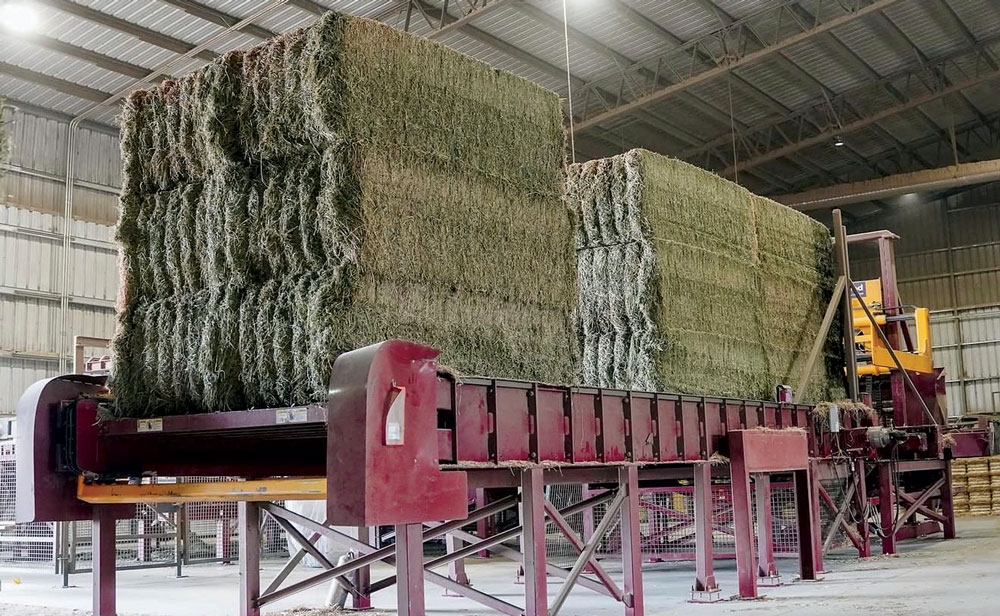
Its ability to make a heavy bale that can easily go through his hay press was one reason Jesse Bounds switched back to a Krone large square baler. Bounds Hay Co.
“Even though it’s the grass seed capital of the world,
Oregon’s Willamette Valley has a really short season,” Bounds points out. “Farmers are looking to get their combining done in about 10 days, so guys like me need to keep up. We need to be baling all day long. Our farmers are not waiting for us. They want the straw off the fields as quickly as possible so they can start working their soil. If we break down and fall behind, they’ll get somebody else.”
Bounds naturally started thinking about which baler could provide that ideal combination of bale weight and reliability. He started doing some research on the latest models from the top manufacturers. Then he talked to another hay farmer he was working with.
“In addition to what my operation bales, I buy a lot of straw from other hay farmers,” Bounds says. “Guys are bringing me bales that have gone through all different kinds of balers. I see what these bales look like and what they weigh. I had one farmer who was consistently bringing me nice, heavy bales. I asked what kind of baler he had. He said it was a really old Krone, but he has Linn Benton Tractor overhaul it every winter and he just keeps on running it. That really got me thinking about what I could do with one of the newer Gen 5 Krones I’d heard about.”
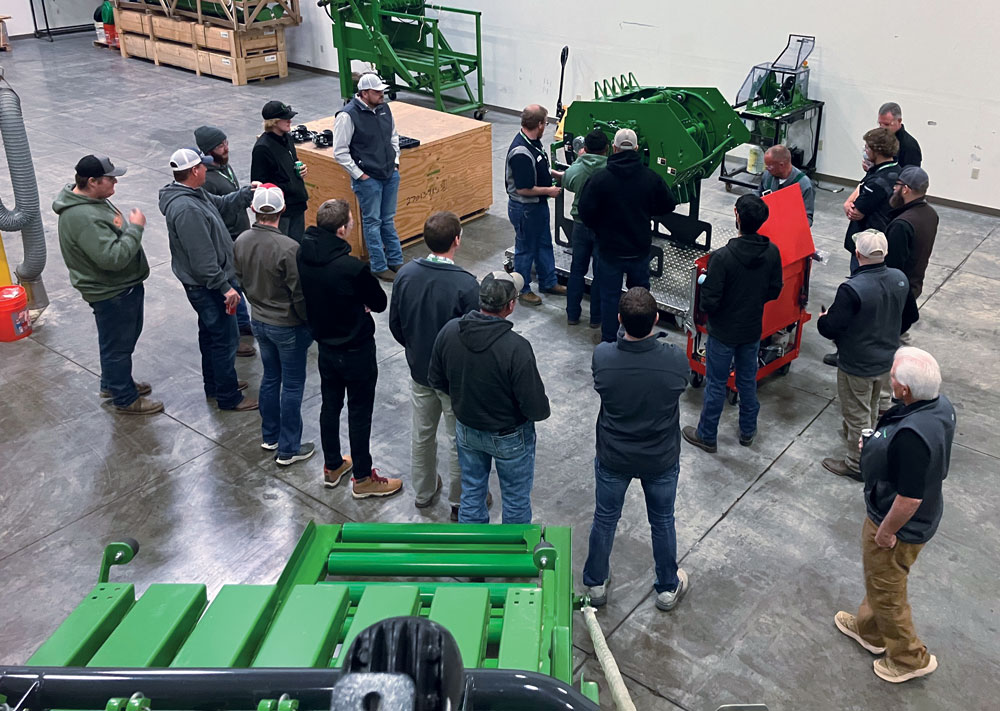
Krone offers baler service training at its warehouse in Reno, Nev. Dealer Roy Garman once sent Jesse Bounds to this training with hopes of winning him back as a Krone customer one day. Krone North America
At this point, Bounds was heavily leaning toward Krone balers and even had a pretty good idea of which specific model he wanted. That’s when he got in touch with Garman at Linn Benton Tractor.
“It was never like I was always on Jesse to try and get him to switch back to Krone again,” Garman says. “We have just always had a strong presence in the area. When Krone’s Gen 5 large square balers came out, which are more expensive than the Gen 4’s but also feature a lot of improvements, that’s when Jesse really became intrigued with Krone again after all these years.”
The support Garman’s team of baler technicians provides was just as intriguing.
Do Away with Downtime Distractions
According to Bounds, a technician will be pulling up within an hour if he ever calls or texts Garman with a problem.
“We have a big presence for balers because it is what we do all year long,” Garman says. “Jesse even conveyed that to me. He was thinking about buying one of the new Krones, but he also knew he needed support. I have a team of 9 guys who do nothing but chase balers all summer and work on them all winter.”
In addition to the 4 new Krone Gen 5 1290 BiG Pack balers he bought from Linn Benton Tractor in 2025, Bounds recently purchased a 5th from a friend.
“We had a baler catch fire this past summer,” Bounds relates. “We have no idea why and could never find anything wrong with the baler. Roy told me that if Krone couldn’t get the parts we needed, he’d pull them off a new baler. That kind of support is what it really comes down to. But I ended up buying a used one from a friend because it only had around 30,000 bales on it.”
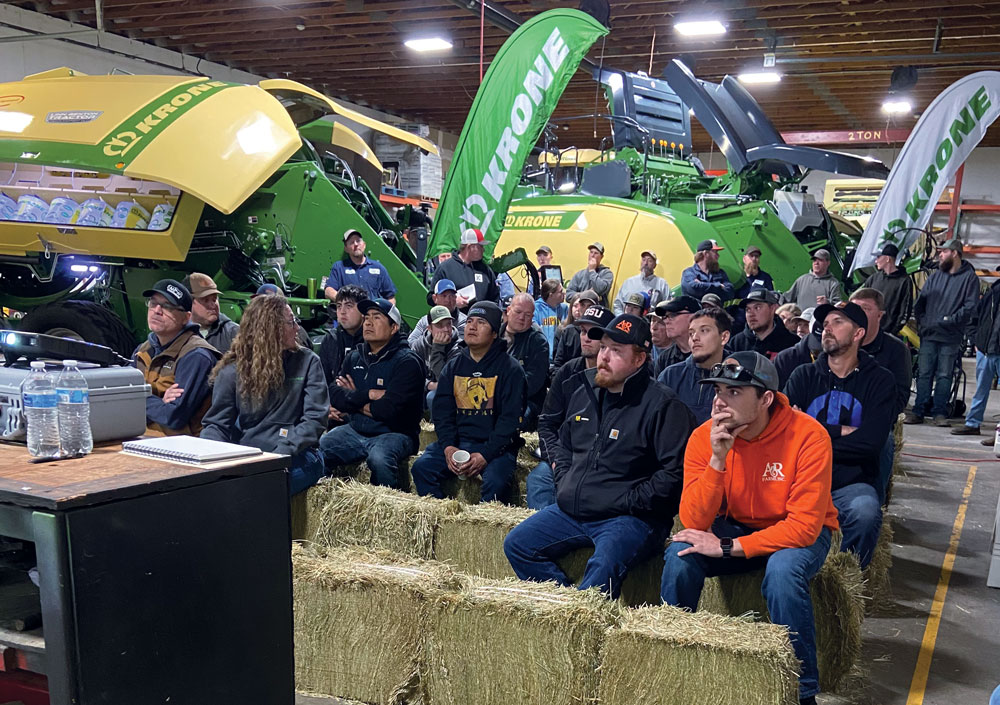
Krone dealer Linn Benton Tractor, now part of Oregon Equipment Sales, is well known for its baler support. Pictured here is one of the popular baler schools put on by Roy Garman, service manager at Linn Benton Tractor. Krone North America
Bounds and his crew take care of daily greasing and maintenance, but look to Garman’s team to handle the rest, including off-season overhauls. This is a big reason why Bounds decided to go with Krone after deciding to move away from Massey.
“My guys and I learned how to work on Massey balers because we’d been using them for so many years,” Bounds says. “I even had a container full of Massey parts sitting at my yard. That’s the main reason it took me almost 2 years to finally make the switch. But I didn’t want to be running around fixing balers anymore. Roy’s team will do that. You pay for that, but it’s worth it.”
Linn Benton Tractor overhauls roughly 100 balers every year. The program starts in September and typically finishes by July, so customers can be out baling in July and August. And, the dealership warranties its labor.
“Anything we overhaul in the off-season is covered. If a customer breaks a spring or something, we’re fixing that,” Garman says. “Some of my baler technicians don’t even make it back to the shop for 3 or 4 days because I’m just dispatching them from job to job and field to field. That’s how it works in the summer, and we’re known for that.”
Total Cost of Ownership
It took Garman more than 15 years to earn back Bounds’ baler business. Bounds’ operation grew considerably in that time, and he personally matured as a business owner. Garman says it is easier to sell the value of a more expensive baler when the customer can see the bigger financial picture.
“These Krone Gen 5 large square balers are a $250,000 investment, but they’re going to last a while,” Garman says. “It’s a good thing when you can finance for 5 years, but then get a few more years of production after that when you aren’t making payments. When the customer starts looking at the extra weight and how they hold up, that’s when a baler like this can start to sell itself.”
“Everybody around here knows it isn’t cheap to run a Krone,” Bounds adds. “You typically have higher depreciation and parts are typically more expensive. But you can overcome that in a couple of ways and actually reduce total cost of ownership (TCO).”
The first factor ties back to bale weight. As Bounds explains, an extra 100 pounds per bale translates to big money — especially considering how he has limited storage space and wants to be able to ship as much product overseas as possible.
“We try to export around 100,000 tons a year,” Bounds says. “My main facility can store 40,000. That means we need to store 60,000 tons in remote locations, which is why we rent a few barns in the area. We’re hauling our bales from the field to those storage locations, and then to our main facility where we have a bale press that runs all year long. Then we truck them up to Seattle to ship overseas. The heavier those bales are, the better.”
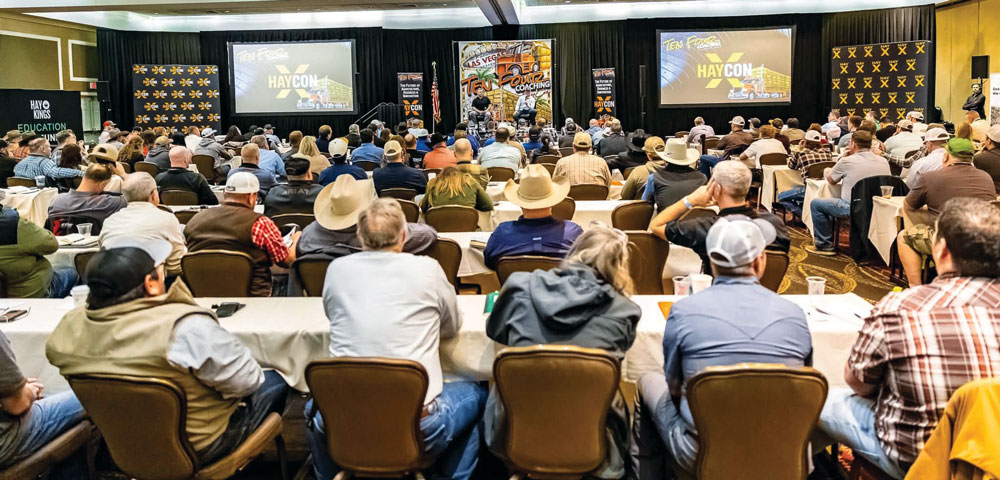
Bounds Hay Co.
Hay Farmers Converging on the Flamingo Las Vegas
“It has been interesting to watch how much Jesse Bounds’ hay farming operation has grown since I first started working with him almost 20 years ago,” says Roy Garman, service manager at Linn Benton Tractor in Tangent, Ore., which is now part of Oregon Equipment Sales. “Everybody knows Jesse Bounds.”
Bounds is taking advantage of that notoriety, along with his passion for farming, to present his second annual HayCon conference at the Flamingo Las Vegas in December. Attendees can check out vendor exhibits, educational sessions, and expert panel discussions to learn about the latest innovations and best practices in hay farming. Numerous networking opportunities will also be available. Last year the conference had over 200 attendees.
HayCon 2026 is taking place on December 10-11.
Visit haycon.org for more information.
The second factor impacting TCO ties back to baler life. Bounds is optimistic about running his new Krones up toward the 100,000-bale mark before he starts to see repair costs escalate. His operation averages 10,000-14,000 bales per year, which should allow for a 7- to 10-year baler life. That’s at least 40% more useful life as compared to the balers he was running in the past.
That longer life, if it proves to be the case, will also help Bounds save another $37,000, or more. He runs rakes on his balers. Every time he gets a new baler, it costs him $7,000-$8,000 to take the rake off the old baler and install it on the new one.
“If I can put rakes on my 5 Krone balers and not worry about them for 8 or 10 years, as opposed to every 4 or 5 years, that will save a lot of time and money,” Bounds says.
For Oregon hay farmers like Bounds, time is money. They have a narrow production window, and time spent idle with broken down balers isn’t an option. Furthermore, time spent baling, transporting and exporting underweight bales is money out the door. Most importantly, time spent working with a dealer who doesn’t have your back is the costliest mistake of all. It took more than 15 years, but Bounds says he isn’t making that mistake anymore — or ever again.