Takeaways
- Prioritize Authentic Storytelling: Feature real employees, customers and families in marketing efforts to create an emotional connection.
- Move Digital Strategy Up the Funnel: Engage buyers early by focusing on digital marketing strategies.
- Back Up Values with Community Action: Support local regions through active participation, such as partnerships with non-profits and paid employee community service hours, turning brand values into real impacts.
- Target Key Demographic Segments: Create marketing campaigns that address specific motivations and life stages of distinct customer groups to garner their attention.
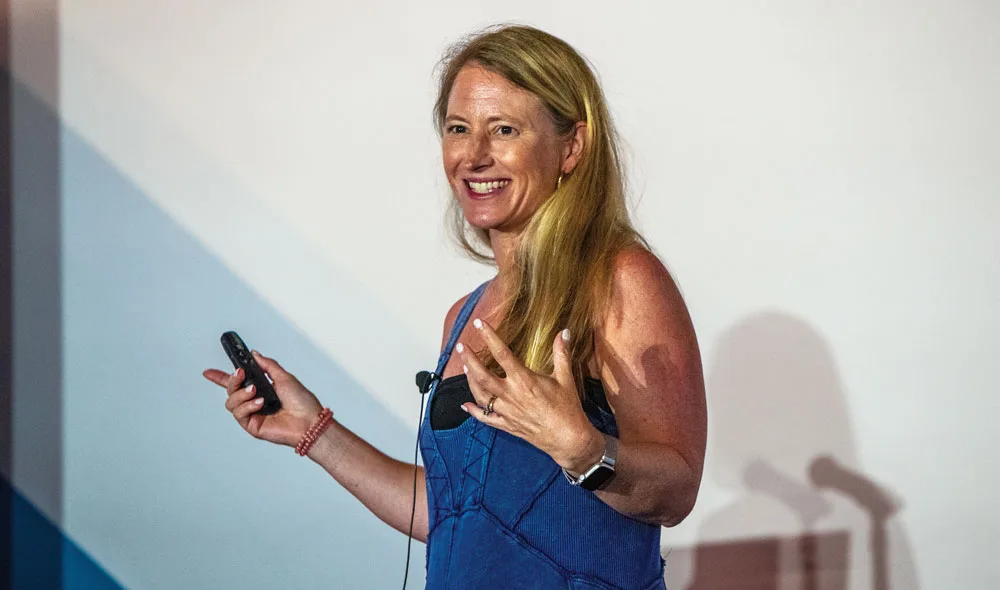
When Rebecca Conway took on the role of vice president of marketing for United Ag & Turf (UAT), the organization was facing a hurdle — operating more than 50 locations without a unified brand identity. The rapid growth was driven by the acquisition of over 20 independent dealerships, and created a division in the brand. Each dealership had its own culture, customer ties and market expectations. Additionally, the name United was shared with numerous unrelated major corporations, leading to confusion on United Ag & Turf’s identity and values. Bringing nearly 2 decades of experience from Timberland, Conway began a comprehensive transformation in UAT’s marketing department. The marketing initiative focused on integrating the 20 acquired dealerships under one brand with the same values and identity, while also preserving the authentic, community focused trust that customers had with those local independent dealerships.
Branding Challenge
Entering a new industry always entails a learning curve. Reflecting on her transition, Conway noted that when she announced her move to United, she experienced confusion from colleagues and friends about which “United” she was joining. While friends assumed she was taking a position with United Airlines, colleagues thought she was joining United Rentals. In a more humorous assumption, her run club thought she was moving to United Site Services, a porta-potty provider.
Although these were lighthearted assumptions, it did showcase an issue within UAT. They did not have a brand identity, and awareness local to them was nearly non-existent. Another issue was UAT covered multiple sectors — ag and turf, construction and forestry.
In addition, there’s the south-central division of the company in Texas, which has the same owners, but operates independently of the Northeast division and functions in a completely different way.
Building a brand identity required figuring out the unique “DNA” of United Ag & Turf. This included distinct logos, font, colors, tagline and industry impact. The primary goal was to ensure that customers and employees would be able to recognize the brand and its voice, purpose and standard of service.
Balancing Scale & Intimacy
The core challenge at United Ag & Turf stemmed from the rapid growth they experienced in a short time span. Having acquired over 20 dealerships, each having their own unique process and strengths, Conway says the company was “anything but United.”
The independent dealerships that were acquired brought along a focus on local relationships, regional knowledge and community trust. Since they were smaller, they were able to build these deep and meaningful relationships with customers.
On the other hand, UAT gained a lot of power and people. In addition to having over 50 stores, they also were backed by John Deere. This gave them the ability to have wide equipment availability and parts inventories, quick field service and solid support, Conway explains.
Rather than focusing on one identity over the other, she suggested leaning into both.
“I’d love to tap into this idea of acting really big,” she says. “Being able to lean into our scale and all of the things that our location and power does for us, but also feel small.”
This led to the creation of the brand’s unifying tagline: “Together, we’re United.” Internally, it helped bring employees together under a shared mission and common identity. For customers, it helped reassure them the expanding scale would strengthen personal commitment rather than dilute it.
Leveraging Storytelling
To bring the tagline to life, Conway took an authentic approach. She believes storytelling is a great way to get customers interested. With a limited budget, they wanted to focus on real employees, customers and a regional focus. Conway even mentioned casting her 12-year-old son riding a bicycle for a video commercial focusing on family life.
Normal equipment marketing often focuses on standard product showings and low monthly financing rates. Instead, Conway showcases a demonstration of products and evokes emotion. Including that aspect is crucial for marketing strategies, she says, as customers are prone to remembering how the company and people make them feel, rather than numbers and statistics.
UAT used a snow day to focus on that aspect. While snow days are normally focused on children, they used it to showcase that snow days can be for everyone with their equipment. This presented real-life enjoyment customers can get by using their products, proving that life doesn’t have to stop being fun with age, she explains.
Digital Strategy
In today’s digital age, many buyers research online prior to even visiting a dealership. That is why UAT decided to push digital strategy higher up the sales funnel. Conway says waiting for the customer to walk into the dealership is often too late. In order to capture interest early, the marketing team integrated storytelling and authenticity into their digital channels. They used organic customer highlights to showcase satisfaction while also keeping the relationships strong with customers.
Some of the features included multi-generational family farms. Conway shares that this resulted in a top-performing post, featuring 3 generations of farmers. This specific post generated over 50,000 organic views.
“It is this organic, relatable marketing content that does well for us and balances out a lot of other content that we have higher up the funnel,” she says. “Whenever we can, we take these organic stories and images of our customers and weave them into everything we’re doing.”
Learn More Online
To watch Rebecca Conway’s full presentation and others from the 2026 Dealership Minds Summit, visit Farm-Equipment.com/DMS26videos
The 2026 Dealership Minds Summit Video Replay is brought to you by Aptean.
UAT regularly incorporates customer highlights into its monthly email newsletter. These often feature photographs of recent equipment buyers with their new products. Conway shares that by incorporating real customers into their paid social channels, they have dramatically boosted engagement and conversion rates.
UAT also brings its own employees into its digital marketing strategies. Sales rep Gary Nadeu, is often recognized by customers for his part in the dealership’s PSAs. UAT does around 6 PSAs a year where employees talk about safety tips, such as tractor or winter safety.
“It’s a great way to get into people’s living rooms on their TVs without having that message of selling, low prices and low financing,” she says.
Community Strategy
A brand tagline will not resonate with customers without tangible action. To back up “Together, we’re United,” UAT instituted a policy that allows employees to get paid community service hours. Staff members are encouraged to utilize company time and equipment to support regional non-profits. The dealership partnered with Mission Working Dogs, an organization that trains PTSD and mobility assistance service animals. Using dealership machinery, employees worked over 2 days to clear land and construct multiple wheelchair-accessible nature trails for clients and veterans. UAT customers were invited to work alongside the dealership staff, helping to create a personal bond from their shared values.
Similarly, the company has an ongoing partnership with End Hunger. They hosted 3 events in Maine, which has the highest rate of food insecurity of all 50 states. During the government shutdown in fall, they invited 200 farmers and their families to come in to help pack food. They raised $7,000 and packed enough macaroni and cheese to feed around 30,000 people. During the event, they made sure to include proper PR, inviting local news stations and newspapers there, and told customers to show up wearing their own brands, Conway says.
“As the farmers were talking to the local news that night, they were getting free publicity about this awesome thing they had done,” she says.
The Role of Technology
With the rise of technology, Conway focused on implementing it into her marketing plan. UAT is using Artificial Intelligence (AI) in 3 ways: tracking citation, optimizing content and garnering more reviews. AI is not used as a replacement for the UAT team, but rather as a productivity tool to get things done more efficiently. One example of how Conway uses it is for predictive sending with emails. With the implementation of AI, she is able to predict the day and time that customers are most likely to open an email.
Although AI is great to use for productivity, Conway shared an AI implementation test that did not work for them. They ran a paid social campaign 2 years ago, using AI to create images for their “Don’t Get Unprepared” campaign. They noticed that customers were feeling AI fatigue, and ended up receiving negative feedback. Conway shares that it was still vital for the team.
“We got a little bit of negative sentiment in our social commentary, but it is super important to still test that out,” she says. “Take a pulse on where your followers are at with that kind of content.”
Another technological trend that UAT focuses on is first-party data. First-party data is a crucial part of keeping the business moving forward, Conway says. A new product that UAT adopted was Lead Forensics, used to help with their B2B leads. With Lead Forensics, whenever a B2B customer goes on the dealership’s website, the marketing team is able to see the person’s name, address, phone number and email address. They are also able to review how much time these customers have spent on the website, what pages they visited and how much time they spent on each page.
The Philosophy of Trust
The transformation of United Ag & Turf demonstrates how separate businesses from regional acquisitions can be brought together into a strong, unified brand without losing local community trust. By balancing the power from being a major John Deere dealership group with authentic local service, the company created a long-lasting market presence.
“The goal of digital marketing isn’t to create clicks, it’s to create confidence because confident customers buy sooner, stay longer, recommend us, come back again and we’ll keep advocating for you for that lifetime customer relationships,” Conway says.