
In this episode of On the Record, brought to you by Associated Equipment Distributors, we review the decline in farmer sentiment in April, which saw the Ag Economy Barometer and the Farm Capital Investment Index drop to their lowest levels since October 2024. In the Technology Corner, Noah Newman visits with Stotz Equipment. Farm Journal CEO Prescott Shibles highlights the critical financial impact of rising interest rates on the ag equipment industry. We cover AGCO’s Q1 results, reporting net sales up 14.3% year over year, with strong performance in high-horsepower equipment and precision ag.
.png)
This episode of On the Record is brought to you by Associated Equipment Distributors — the leading association in North America for the equipment distribution industry.
Get ready for a powerful start to the year with AED’s packed lineup of Q1 and Q2 events designed to connect, educate, and energize industry professionals. From high-impact conferences and hands-on training sessions to exclusive member gatherings and strategic leadership programs, AED is bringing together top experts and forward-thinking dealers to share insights that drive growth. Whether you’re looking to sharpen your team’s skills, stay ahead of emerging trends, or expand your network, our first-half-of-the-year events deliver unmatched opportunities to elevate your business and strengthen your competitive edge. Visit www.aednet.org/ for more information.
TRANSCRIPT
Jump to a section or scroll for the full episode...
- Farm Capital Index Hits Lowest Level Since October 2024
- Commodity Ticker
- 24-Store Deere Dealer Shares How It’s Implementing AI
- Interest Rate Impact on Ag Industry
- AGCO Net Sales Up 14.3% in Q1
- DataPoint: U.S. Pork Exports Projected to Grow
Farm Capital Index Hits Lowest Level Since October 2024
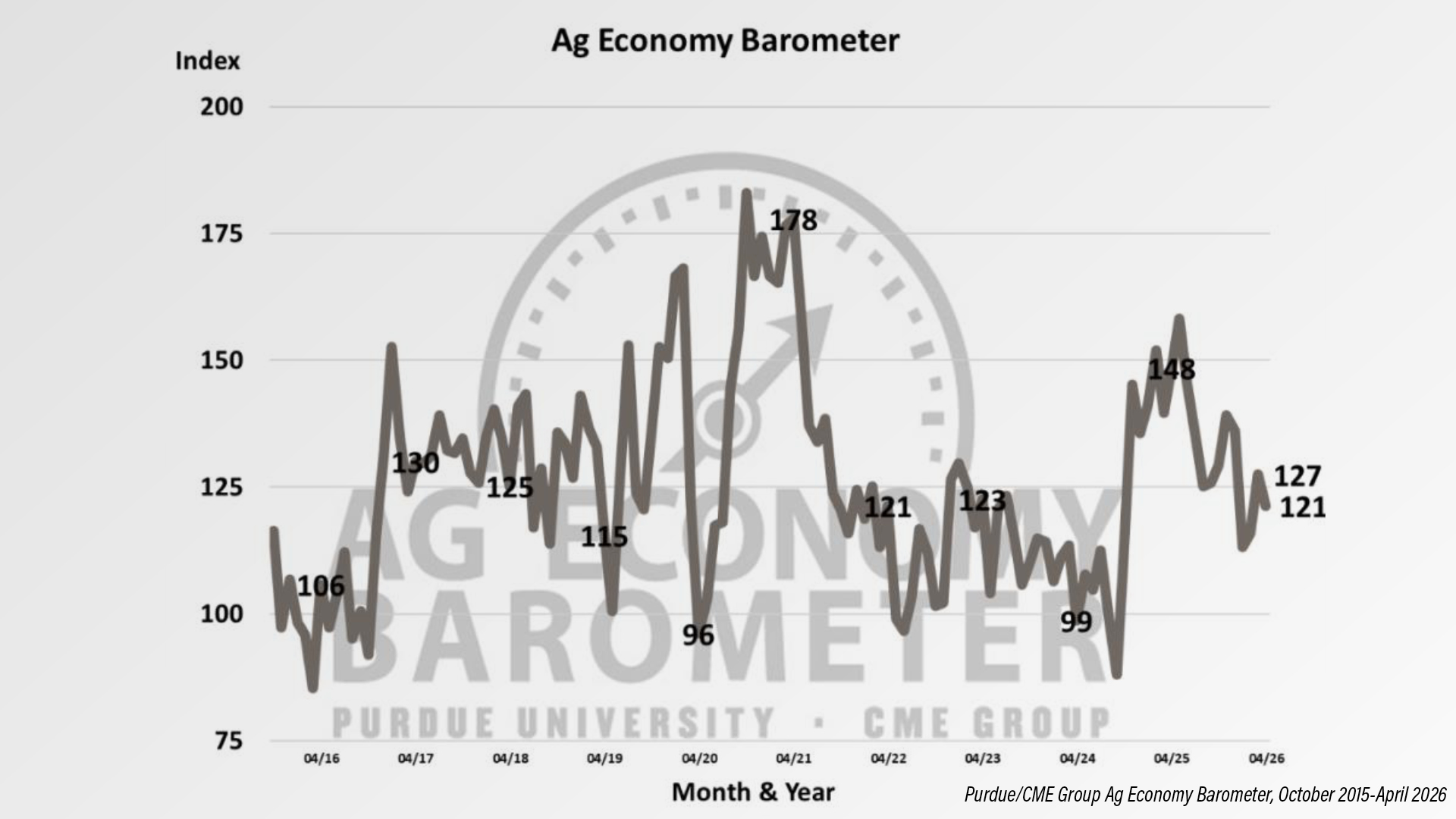
Farmer sentiment dropped in April with the Purdue University-CME Group Ag Economy Barometer Index falling from 127 in March to 121.
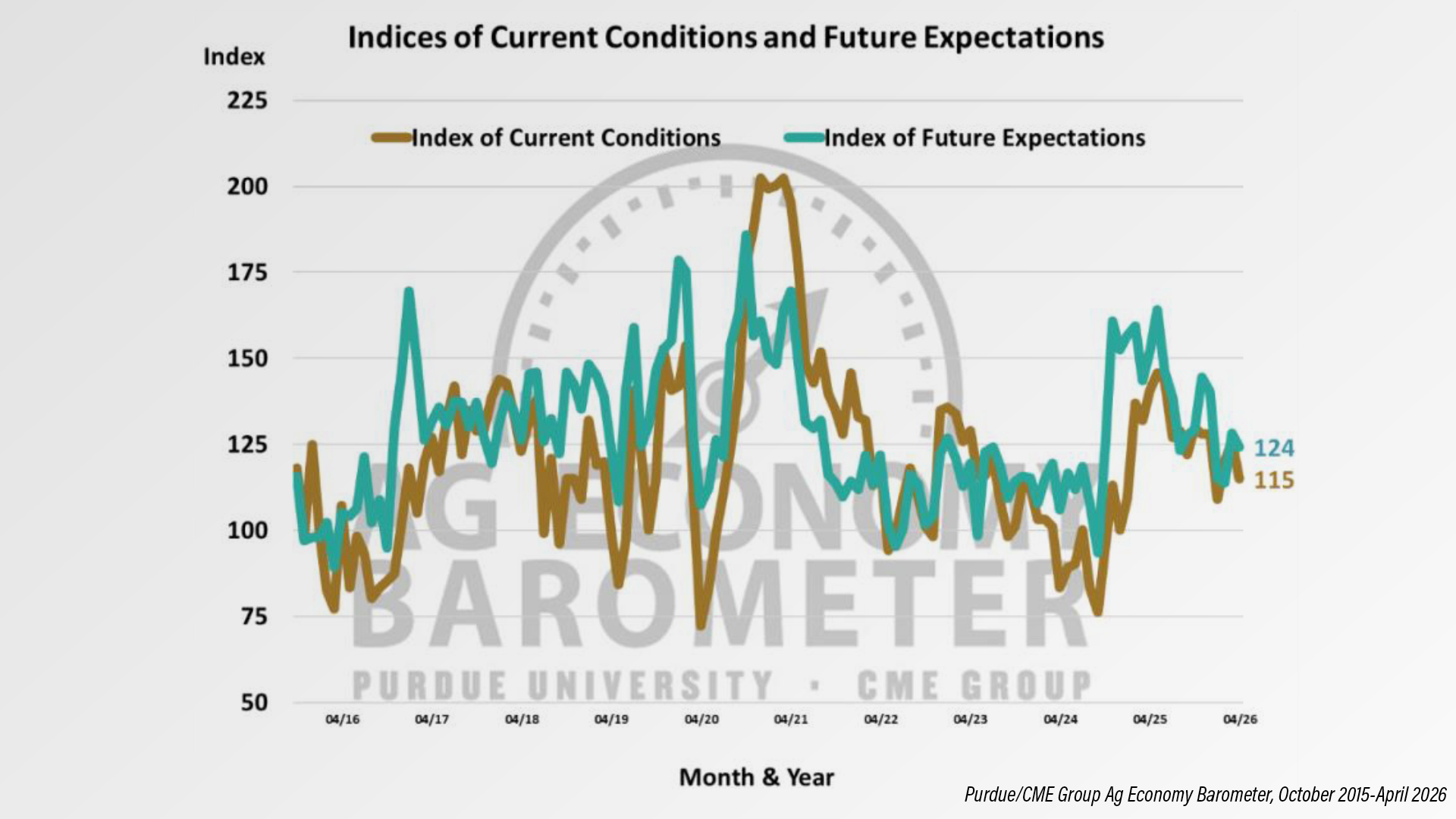
The Current Conditions Index fell by 11 points, while the Future Expectations Index decreased by 4 points
The percentage of respondents who listed high input costs as their biggest concern remained at 46% this month, while the percentage who listed input availability as their biggest concern increased from 11% to 14%. The percentage of respondents who think the U.S. is headed in the “right direction” and who expect land prices to be higher five years from now also decreased.
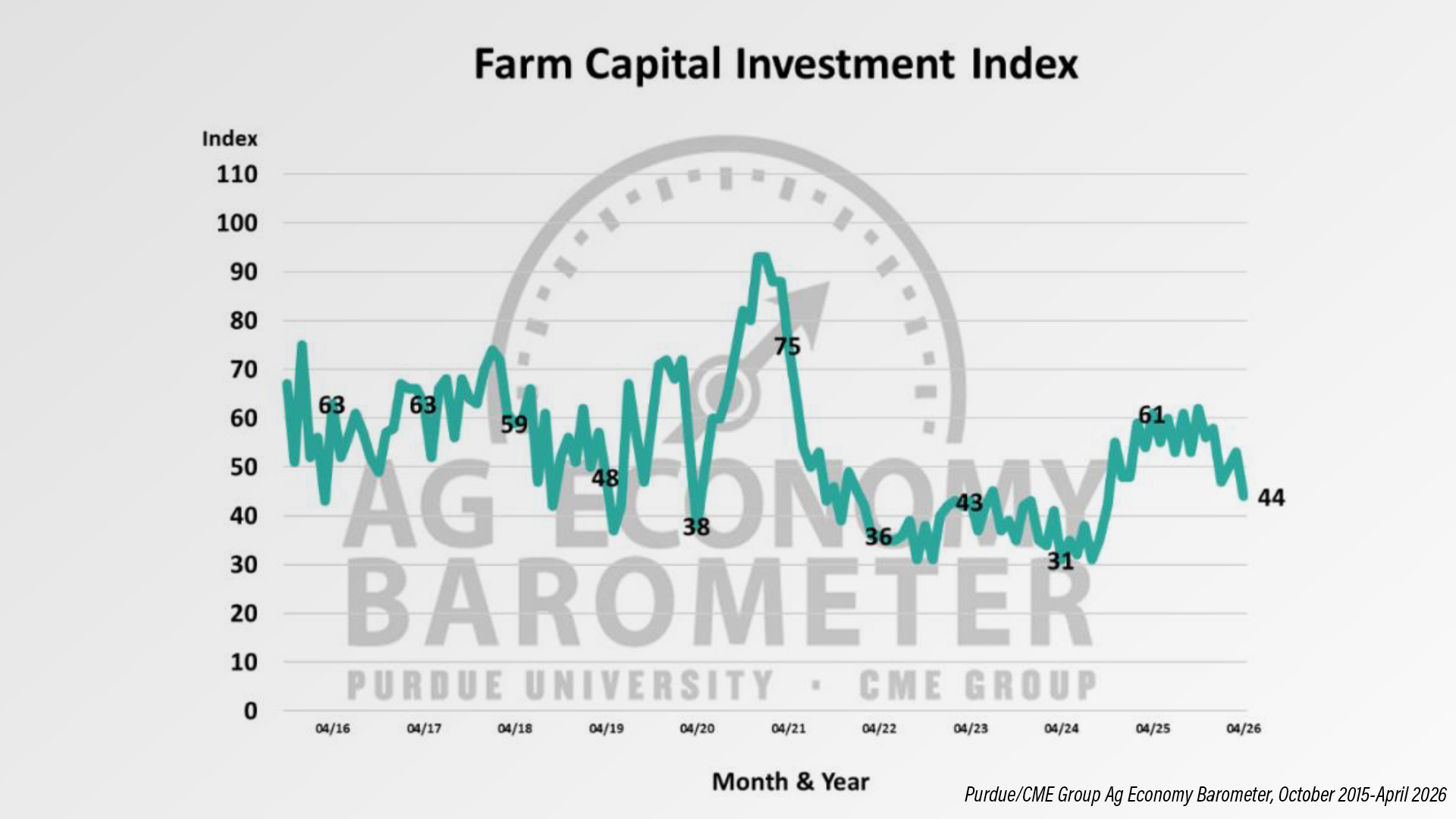
Only 15% of respondents indicated that their farm operations were better off in April than they had been a year ago. Looking ahead to the next 12 months, 28% expected worse financial performance, compared with 25% who expected better financial performance. The Farm Capital Investment Index fell 9 points to 44, its lowest level since October 2024, indicating a decline in willingness to make large investments.
Commodity Ticker
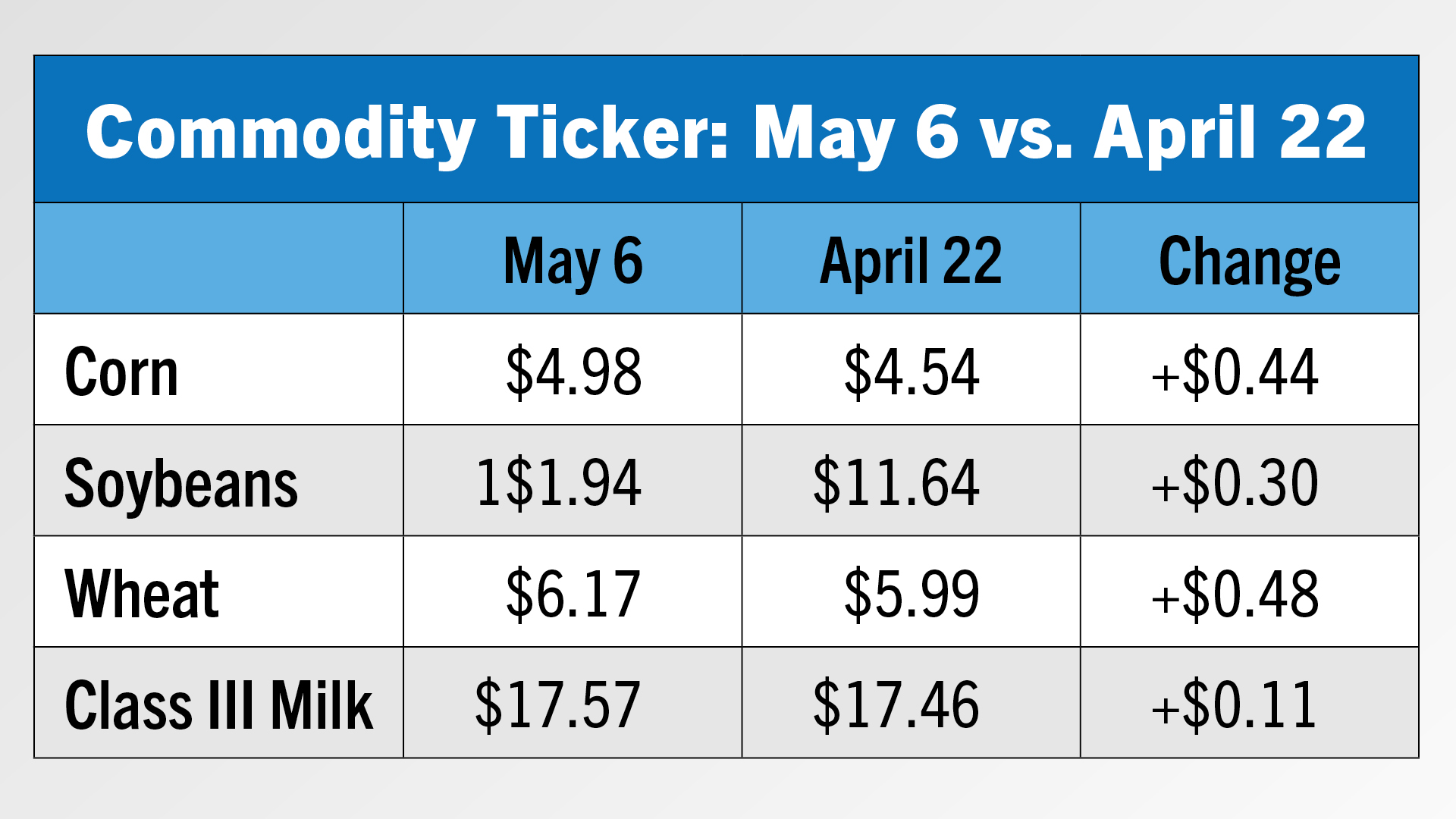
As of May 6, corn prices were $4.98 up 44 cents from our last episode. Soybeans closed at $11.94, up 30 cents. Wheat closed at $6.17, up 48 cents and Class III milk prices closed at $17.57, up 11 cents.
24-Store Deere Dealer Shares How It’s Implementing AI
From technician to service manager to now chief technology officer, Layne Richins has pretty much seen it all in his 20-plus year career with Stotz Equipment. And now he’s at the forefront of implementing AI at the 24-store John Deere dealership. I caught up with Richins to get some insights on how they got started with AI.
“We partnered with a company called Mainstreet AI, and they just helped guide us in our business and try to give us some safe AI tools. At the end of the day, we all know that AI is awesome, but you’ve got to use it responsibly. You’ve got to use it in a way that's safe and conscious of where that data is and where that data's going. So I think there was a lot of hesitation initially, but when we partnered with Mainstreet AI, they were basically a consultant with us and trying to help us understand what we could do, as well as what tools we could enable for all of our users and make it quick and easy for them to start utilizing AI in a safe manner.”
“And one of the first things was just getting what we called the StotzGPT instead of ChatGPT. And it was our own ChatGPT that we allowed everyone access to, and we connected it to all of our internal documents. So, it had business knowledge about Stotz Equipment so people could then start chatting in there and asking questions. If you wanted to know anything about insurance benefits or wanted to know about a process or whatever, it was connected to our data. So, then we were using those language models to try to figure out how can we become more efficient and how can we utilize it in a way that's going to help us? And Mainstreet AI was really the key to helping us figure that out”
Stotz Equipment has a data analytics team that’s exploring how to use AI to help build reports for customers. Catch our full conversation with Richins on the latest episode of the Precision Farming Dealer podcast.
Interest Rate Impact on Ag Industry
Prescott Shibles, CEO of Farm Journal, publishers of the Machinery Pete brand, was interviewed last week by Jacob Donnelly, A Media Operator, at Omeda OX Summit in Chicago.
Shibles informed marketers of the interest rate challenge facing the entire ag equipment industry, citing an example from Titan Machinery earnings reports.
“The biggest pain point right now in the machinery space is interest rates. So Titan Machinery is a very large ... It's the largest Case IH dealer in the world and they're publicly traded. And so you can see that they sold $1.6 billion worth of agricultural products last year and they lost $28 million. 24 million of that was interest from floor plans. So the equipment that's sitting on their lot, they're paying interest on it. Three years ago, that was two and a half million. So interest is the single biggest ... Back to the thing about finding problems and finding systemic solutions to those problems, the interest expense is the core thing that we're focused on. If we can deliver a faster equipment turnover and better sales productivity, we have an ROI, we can actually measure the ROI of the solution.”
AGCO Net Sales Up 14.3% in Q1
AGCO reported its first quarter results on May 5. The company reported net sales of $2.3 billion, up 14.3% year over year. The 2026 Market Outlook remained mostly unchanged from the last quarter's estimates for North America and Western Europe.
AGCO President and CEO Eric Hansotia said, "We outpaced the market, particularly in high‑horsepower equipment and precision agriculture, underscoring the strength of our differentiated portfolio and Farmer‑First approach. We achieved near‑record first‑quarter margins in Europe and continued to grow market share in high-horsepower offerings in North America."
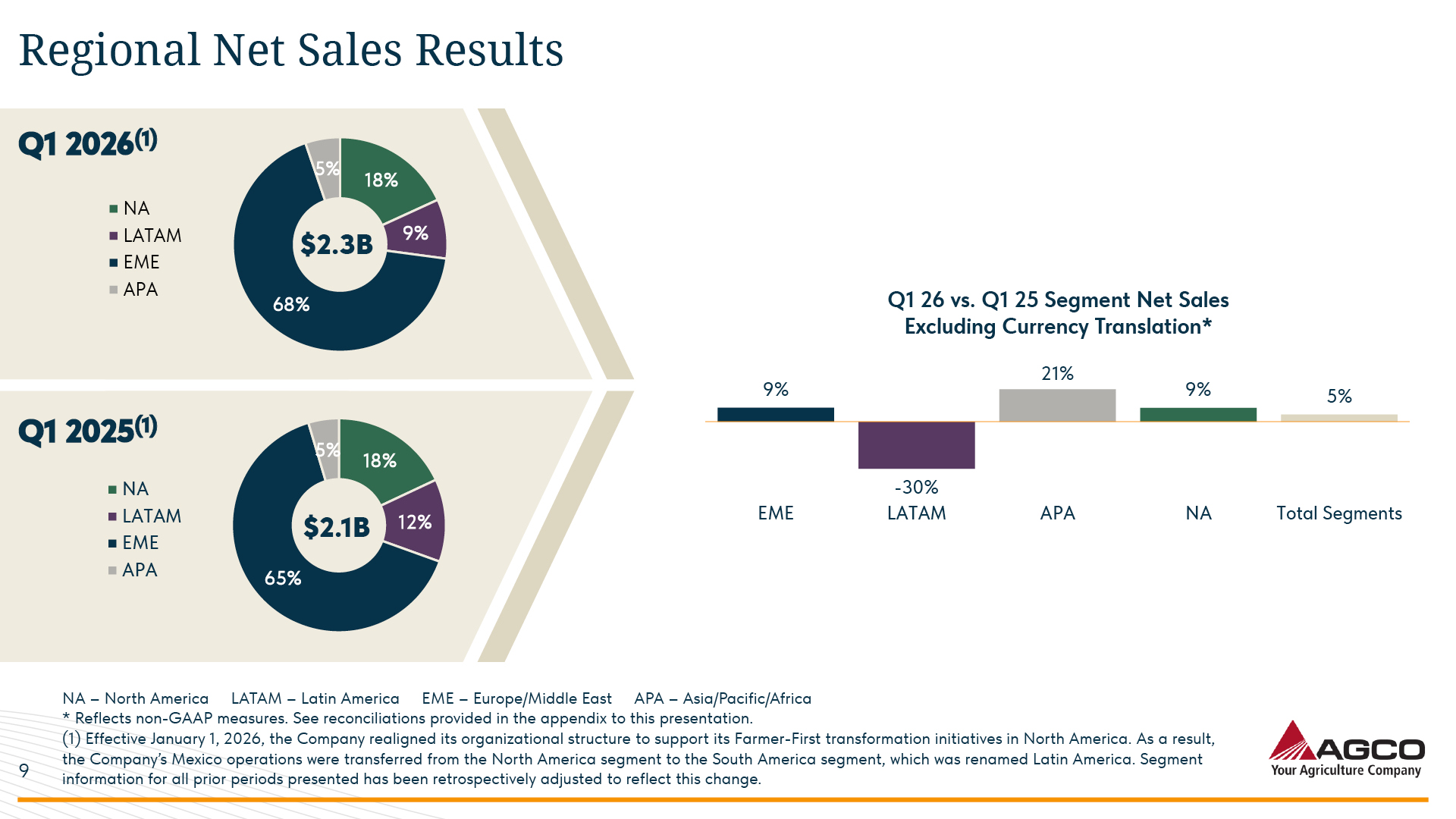
North American net sales were up 9% during the Q1 of 2026 compared to Q1 of 2025. Higher unit sales compared to the prior year supported the increase in sales. High-horsepower tractors, hay tools and sprayers saw the most significant sales increases. Income from operations for Q1 of 2026 was $26.8 million lower compared to the same time last year and operating margins remained negative.
AGCO's net sales for 2026 are expected to range from $10.5 to $10.7 billion. Production volumes are expected to remain relatively flat to slightly lower, with cost controls and positive pricing contributing to performance. The company did note that any changes to tariff policies or related responses could affect these projections.
DataPoint: U.S. Pork Exports Projected to Grow
This week’s DataPoint is brought to you by the Dealership Minds Summit, coming to Springfield, Ill., August 4-5. To view the program and register visit DealershipMindsSummit.com.
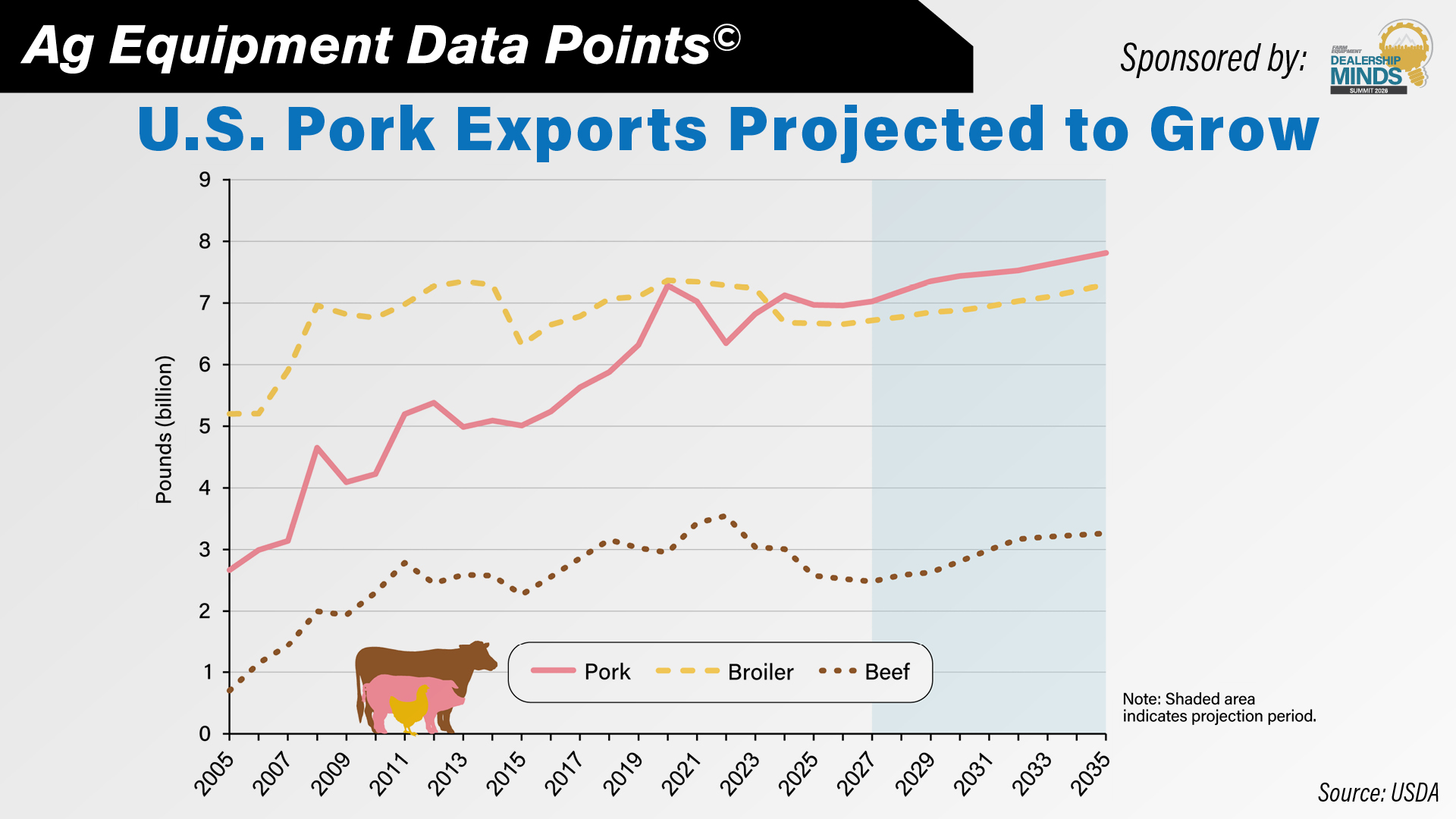
The volume of U.S. meat exports in major categories is projected to grow through 2035, according to USDA long-term projection data. Rising incomes abroad and a projected weakening of the U.S. dollar are expected to boost demand for U.S. red meat and poultry. In 2024, U.S. pork exports surpassed chicken exports for the first time since 1976, and this development is projected to continue through 2035.
Steady growth in U.S. pork production, driven by a combination of increasing slaughter weights, rising numbers of pigs per litter, and higher inventories underlie the continued growth in exports. Environmental policies in the European Union (EU) are expected to impact the region’s pork production and reduce EU export growth, enhancing U.S. competitiveness. U.S. pork exports are projected to increase 8.6 percent from an expected 7.2 billion pounds in 2026 to a projected 7.8 billion pounds by 2035. By 2029, U.S. pork exports are expected to surpass the previous record of 7.3 billion pounds set in 2020, when China’s import demand spiked at the height of their African swine fever epidemic.
On the Record is now available as a podcast! We encourage you to subscribe in iTunes, the Google Play Store, Soundcloud, Stitcher Radio and TuneIn Radio. Or if you have another app you use for listening to podcasts, let us know and we’ll make an effort to get it listed there as well.
We’re interested in getting your feedback. Please feel free to send along any suggestions or story ideas. You can send comments to kschmidt@lessitermedia.com.