A Nov. 18 Wall Street Journal article called attention to the “hard truth about the American labor force” and applauded Ford Motor CEO Jim Farley for his candor on the topic. Farley shared on a podcast last week that Ford — much like the dealers and manufacturers in the ag industry — can’t find enough skilled mechanics to run his manufacturing plants. You can watch the full interview at the bottom of the page.
According to WSJ, Ford can't fill 5,000 mechanic jobs that pay $120,000 a year.
The article quotes Farley saying, "We are in trouble in our country. We are not talking about this enough. We have over a million openings in critical jobs, emergency services, trucking, factory workers, plumbers, electricians and tradesmen."
Sounds like a familiar problem doesn't it? According to preliminary data from 2026 Dealer Business Outlook & Trends survey, 63.5% of dealers plan to hire service techs next year, but a nearly equal percentage (63.3%) said they were “most concerned" about technician availability.
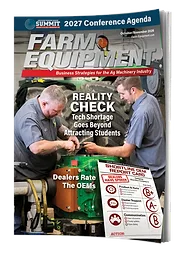
Recognizing the challenges the ag equipment industry is facing in terms of recruiting and retaining employees that exist today and the ongoing need for good people, we introduced our Careers in Ag special report in the October/November issue of Farm Equipment. This first edition of the report focused on precision ag careers, but our intention is to focus on a different aspect of the dealership with each subsequent report that can be used as a recruitment tool that highlights the career paths that exist in the ag industry.
According to Farley, the automaker is struggling to hire mechanics at salaries that would make Ivy League grads envious. The article states:
“A bay with a lift and tools and no one to work in it-are you kidding me? Nope," Mr. Farley lamented. "We do not have trade schools" in this country. He's right to a large degree. Few high schools teach trades these days. Community colleges are mostly remedial high school education, and government worker-training programs have poor results.
“Government subsidies for college and graduate education have encouraged the young to go to college even though they might be better off learning a trade. This has created a skills mismatch in the labor market. Unemployment among young college grads is increasing, while employers struggle to hire skilled manufacturing workers, technicians and contractors.”
I would add that it’s not just the government subsidies encouraging the young to go to college. The idea that I — a millennial — wouldn’t go to a 4-year college wasn’t even on the table. While it wasn’t beaten over anyone’s head that they must go to college or be considered a failure, it was definitely the expectation.
It’s been over 25 years since I was applying to college, but based on friends and acquaintances with high school aged kids right now, not much has changed in that regard, especially considering the current crisis Ford’s CEO pointed out and the challenges that countless ag dealers and manufacturers share with our team.
Back to the WSJ article, which noted that only 114,000 Americans in their 20s completed vocational programs during the first 10 months of last year, compared to 1.24 million who graduated from 4-year colleges and 405,000 who received advanced degrees.
It goes on to say, “Yet recent bachelor's recipients in their 20s were 5.6 percentage points less likely to be employed than those who finished vocational programs.”
The article notes that “The National Federation of Independent Business reported this month that one third of small business owners reported jobs they couldn't fill, and 49% reported few or no qualified applicants for positions they were trying to fill. 27% cited labor quality as their most important problem.
“If companies can't find skilled workers in the U.S. and aren't allowed to import them legally from overseas, they will move production offshore to the extent they can.
“The GOP tax bill's modest reforms to student loans might reduce the incentive for young people to pursue unpromising graduate degrees. But the government bias steering every high school student toward college is doing tangible harm to the labor market-and the young.”