Takeaways
- In a tough time for new machinery sales, rebuilds can be a cost-effective alternative for farmers & dealers alike.
- The chance to examine “if” something can be accomplished on a broader scale can be reason enough to warrant a lower-risk learning experiment. “The action is the juice,” so to speak.
- The repeatable-task, controlled work setting can attract/retain a different kind of technician that could otherwise be lost to the other industries.
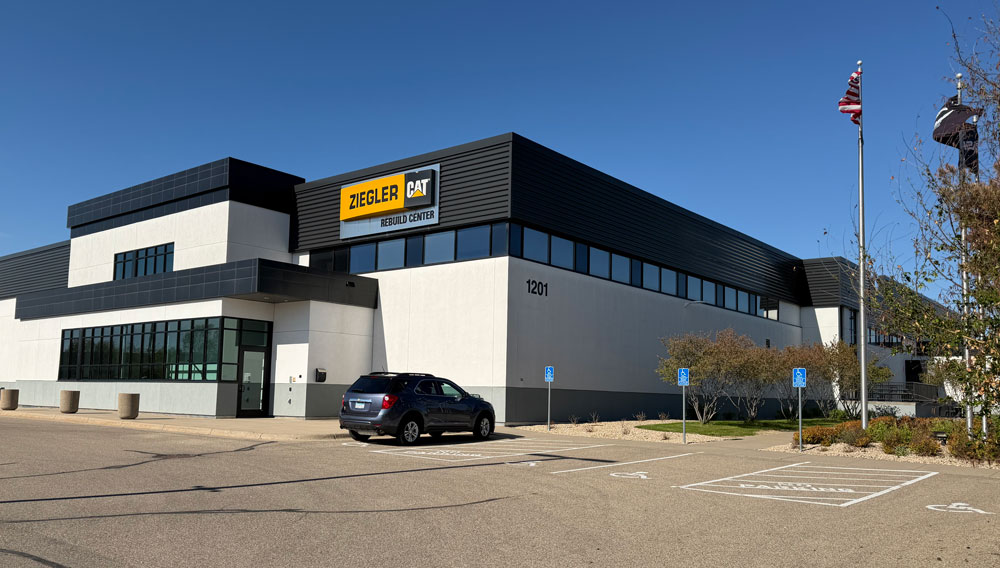
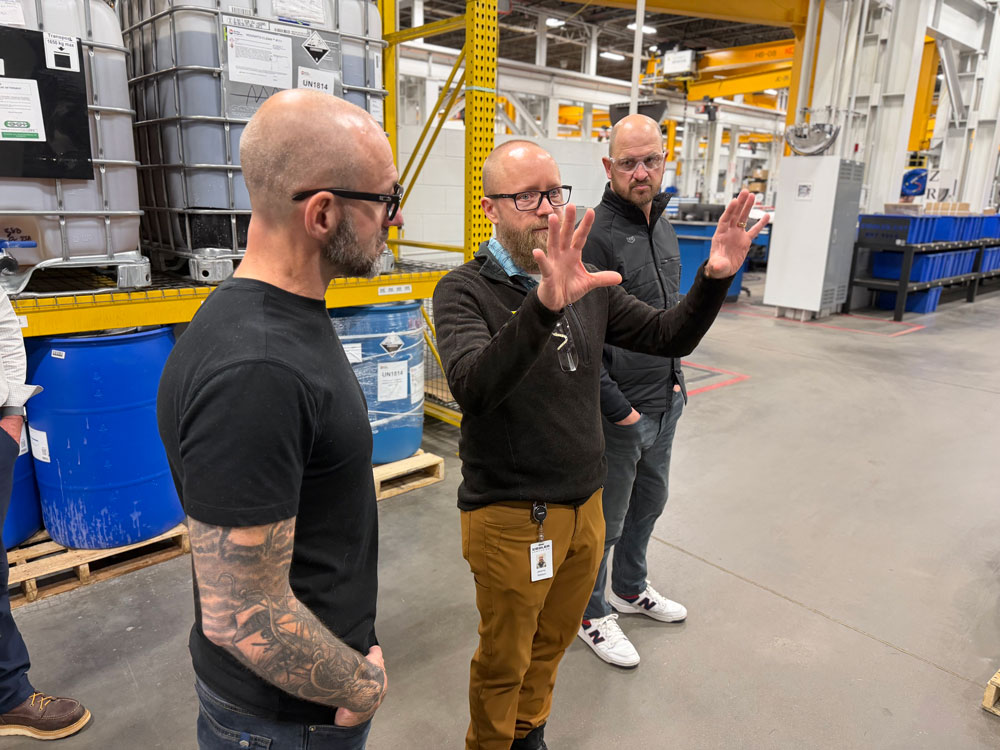
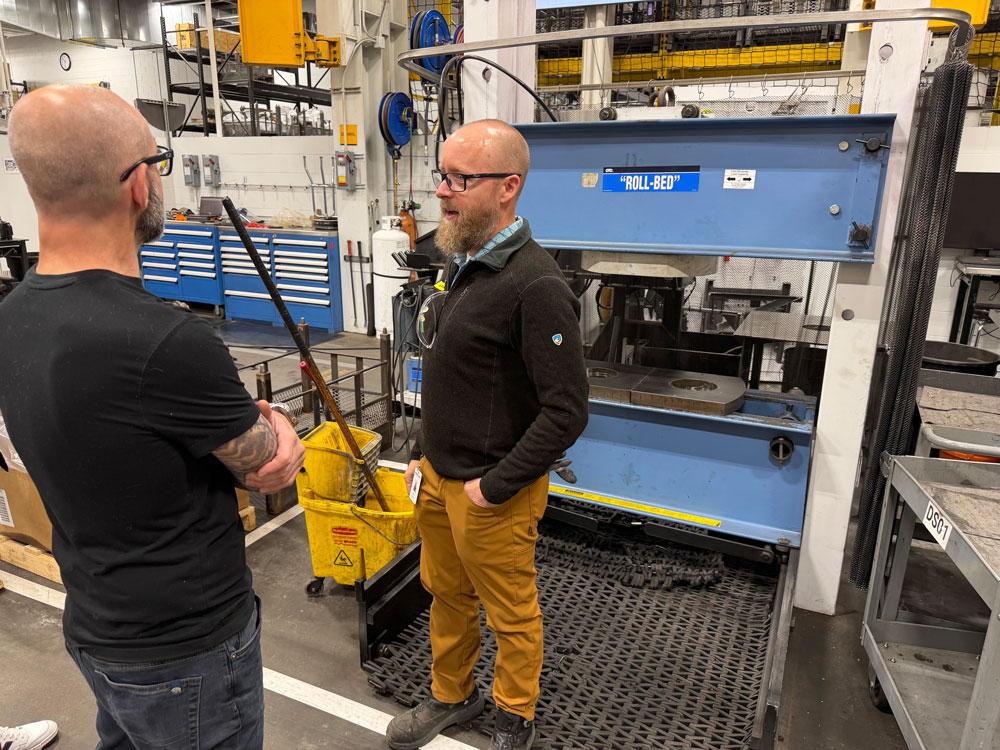
In mid-May, Farm Equipment received a personal tour from 6 managers of the Ziegler Rebuild Center (ZRC) in Bloomington, Minn. Located in a dedicated facility less than 1 mile from the 34-store dealer group’s headquarters, the ZRC is a modern, fully-equipped repair shop with complete rebuild component services for engines, transmissions, torque converters, final drives, axles, differentials, fuel pumps and more. The site is one of just 22 globally and among two that can service the entire Caterpillar line.
It handles everything from skidsteers and telehandlers all the way from the largest crawler bulldozers to off-road trucks and even locomotives (1 rail spur with an 86-foot extended bay).
Market wise, about 40% of the work goes to mining, another 40% to construction and about 20% to ag, says Julian Ramirez, GM of Product Support.
With the backdrop of the deep-dive tour, this article also shares a case study presented at the 2023 Dealership Minds Summit on a project that examines total rebuilds on an ag-based tractor. The ZRC turns 10 years old this August.
Facility Walk-Through
In the conference room above the ZRC, division managers noted that rebuilds in the construction and mining industries have been common for a half-century.
Machinery is designed to receive a second life by utilizing the original framework of the unit and replacing whatever may be needed to operate at the original, or better, specifications. Mining and construction machinery, says Ramirez, are on routine schedules to be taken out of service and rebuilt — before downtime occurs. It’s a standard practice in those markets.
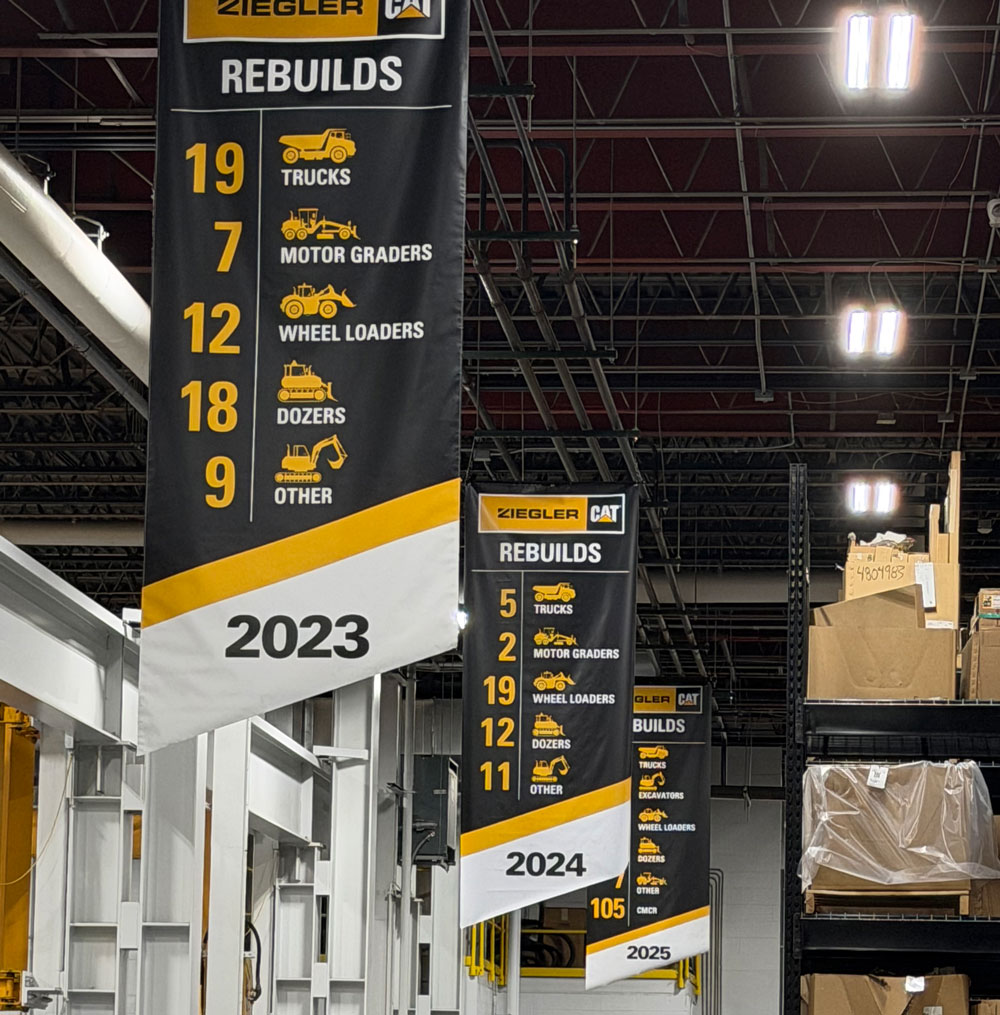
To borrow from early 1970s TV series, The Six Million Dollar Man, the Ziegler team heeded the challenging words of Oscar Goldman, operations chief at the fictional Office of Scientific Intelligence (OSI) who oversaw bionic recreations and performance of Steve Austin and Jaime Sommers. “We can rebuild them. We have the technology. We have the capability to make it better than before.”
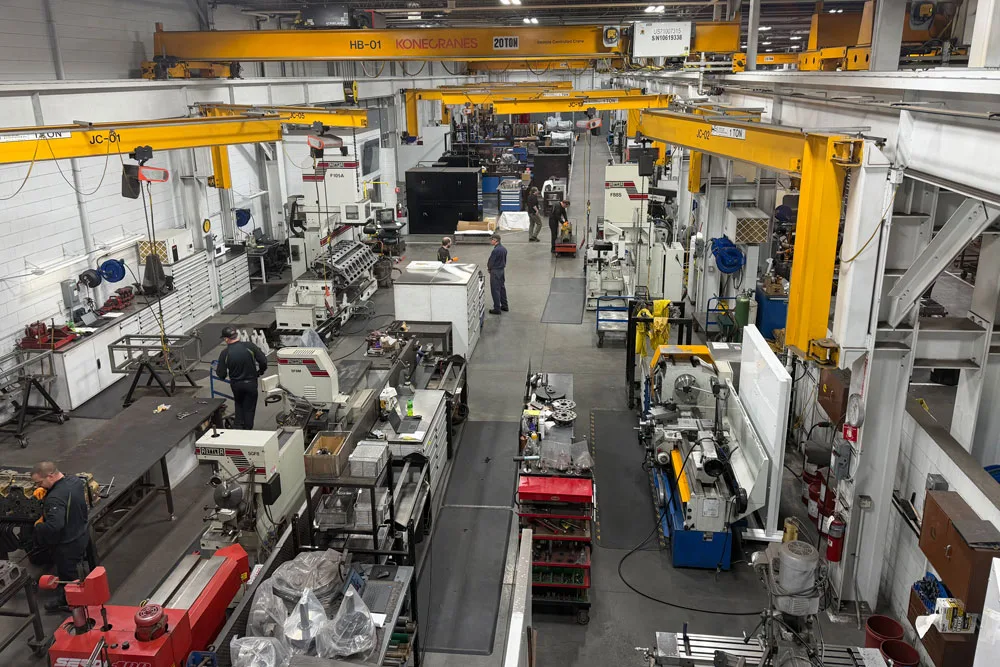
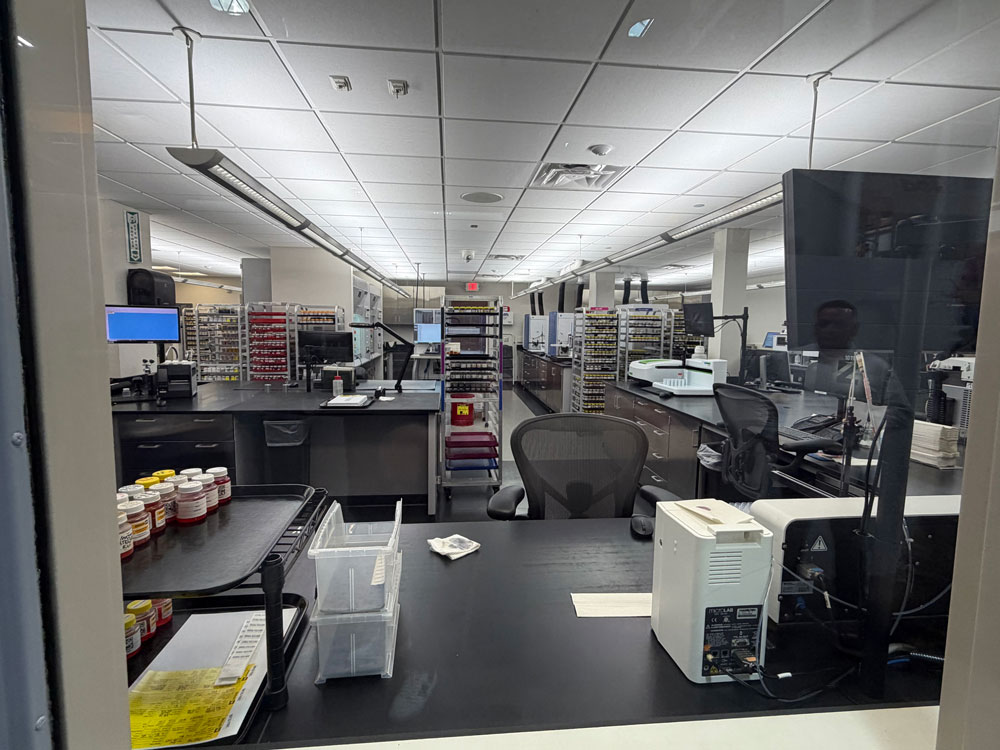
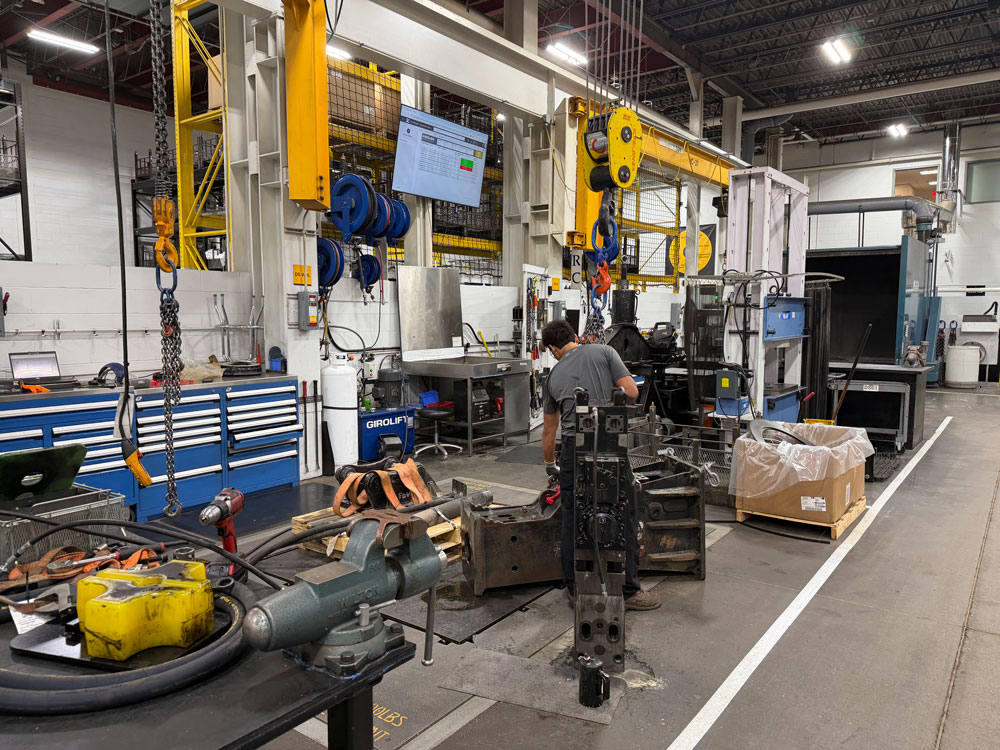
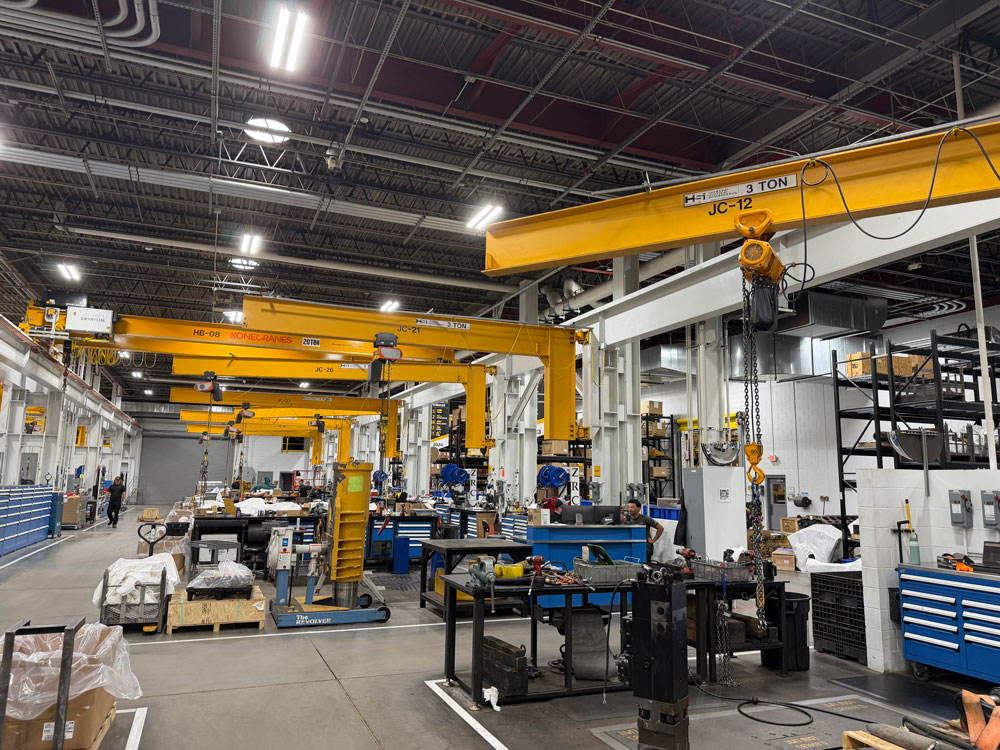
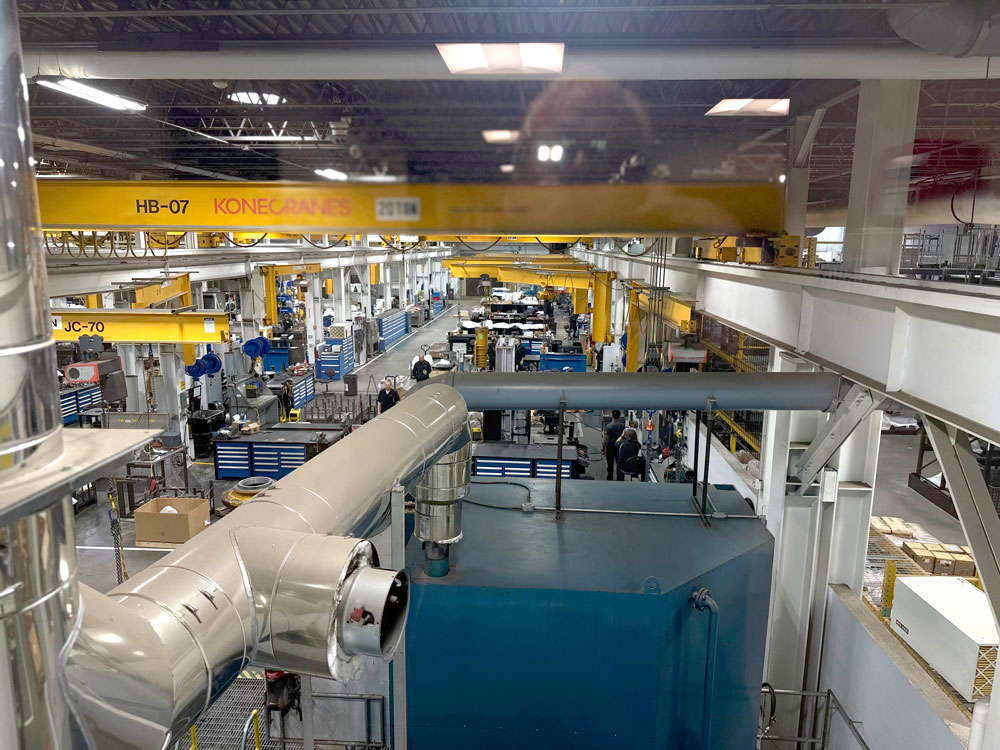
The 120,000-square-foot facility handles complete rebuild component services from engines, transmissions, torque converters, final drives, axles, differentials, fuel pumps, and more. A tour of the facility turns up the following details:
- Inhouse component machining of cylinder blocks and heads
- Transmission test cells, with 500 hp transmission test bench (Taylor Dynamometer)
- 2,000 and 4,500 hp engine dynamometers (Taylor Dynamometer)
- 9, 20-ton overhead bridge cranes and another at 10-ton capacity (Kone)
- 73 1-2-ton jib cranes (Kone)
- Industrial washer and blaster
- GPS technology repair center
- Fluid analysis lab, where 800 oil samples are handled each day.
Ben Freidhof, general manager of used equipment for Ziegler Ag Equipment, described the certified rebuild center this way to his dealer peers. “It’s basically an assembly line similar to any one of our OEMs. We bring in an engine, a powertrain, a transmission and it can be torn down in a clean, controlled environment and rebuilt back to even better than the original specs.”
The inhouse standards must exceed Caterpillar factory standards for safety, quality and contamination.
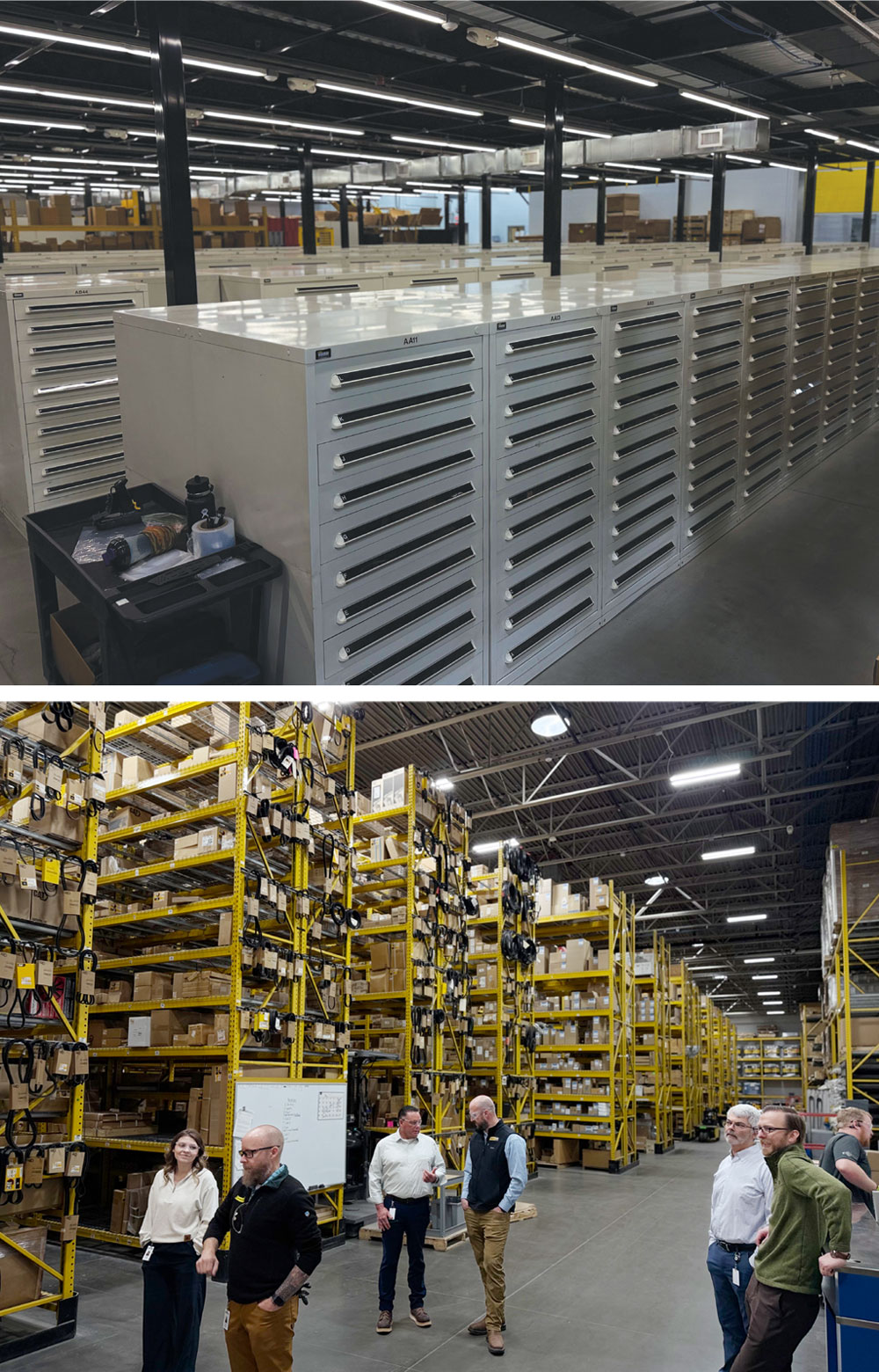
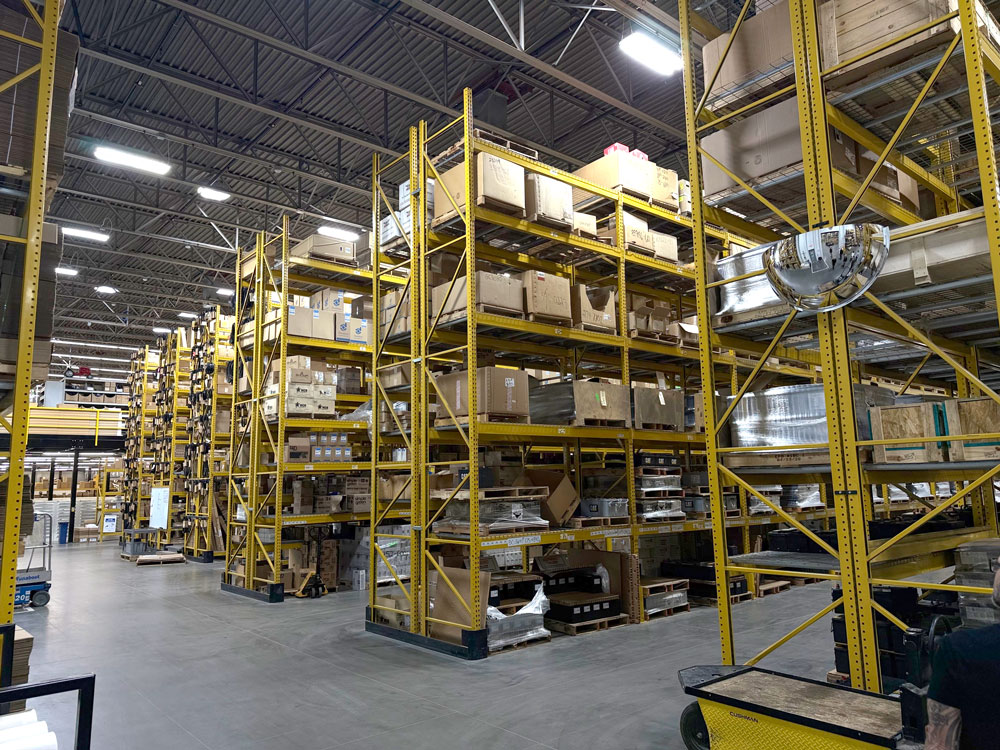
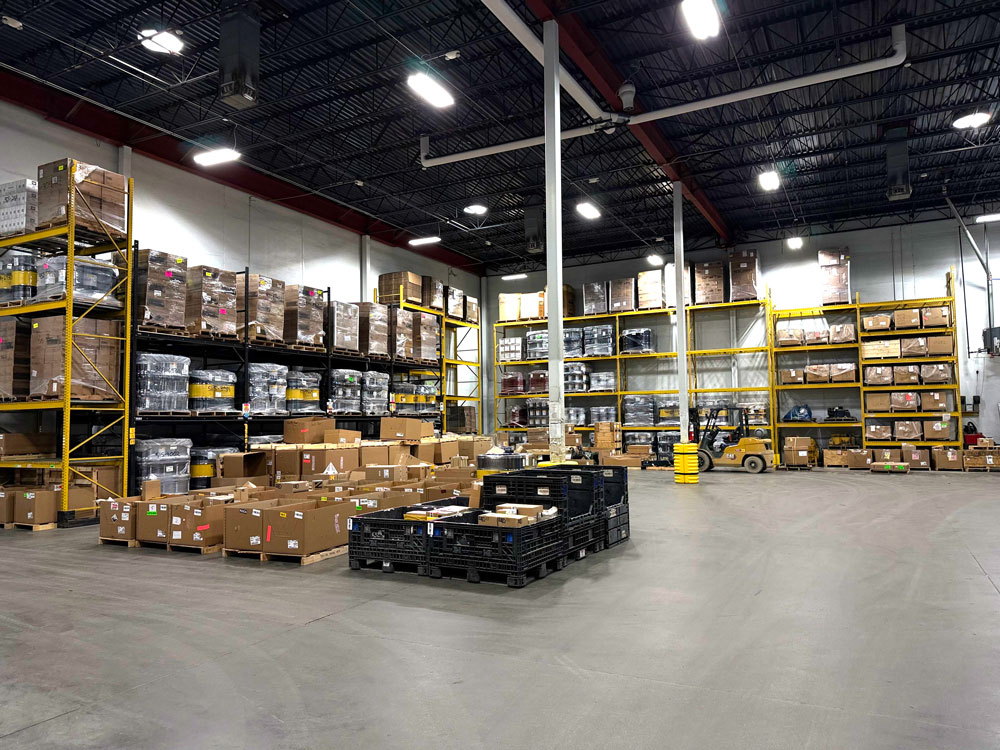
The facility also serves as the regional distribution center for 31 stores, not only for the massive parts inventory needed for rebuilds but also to send in-demand parts to drop zones and dealerships for quick turnaround parts delivery. Mike Lessiter
Peter Fern, service operations manager ZRC, explains the approach of the facility. “Our position on rebuilding components is not just to rebuild one component and move to the next one. If not done right the first time, it will not last. We put a great amount of detail and effort every time to improve the turnaround time and to improve our quality for our customer.”
Parts Distribution Center
With 40,000 square feet of warehouse space (and another 7,000 square feet on a mezzanine level), the site also serves as a regional parts distribution center and a GPS repair center.
The parts needs are significant for inhouse use alone. A complete machine build will require up to 7,000 new, remanufactured or reconditioned parts, while a certified powertrain rebuild will need more than 3,500 new.
Facility Highlights
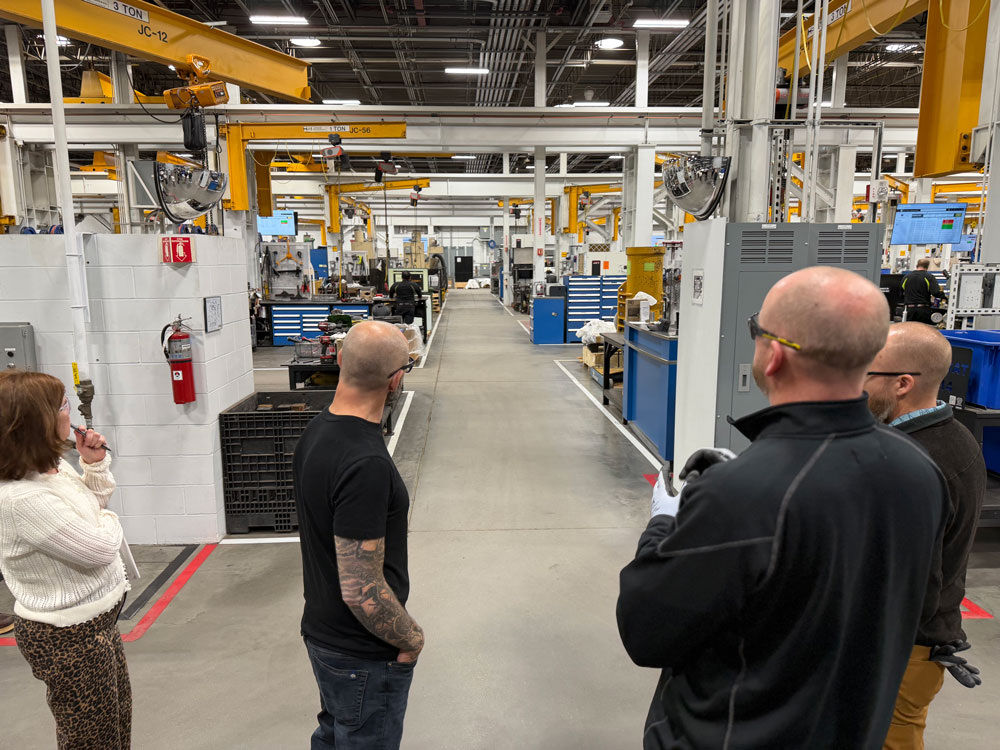
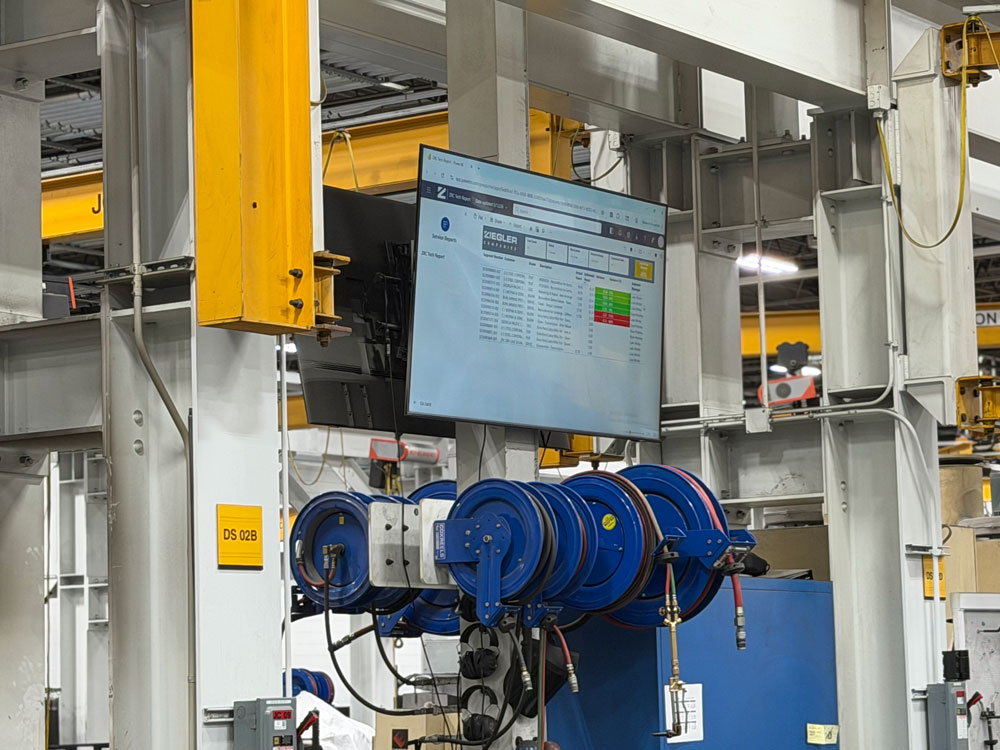
Visitors to the facility are impressed by the cellular station operations, the QR codes on parts (tracking every component and its location in real time to keep techs efficient), large-scale monitors tracking timeliness and performance and a clean, well-lit facility.
Cleanliness is of no small importance. A controlled and clean environment is essential to avoid contamination. “Our tolerances are so tight one granule of sand can take out a bearing,” says Corey Kettner, director of aftermarket sales and digital services.
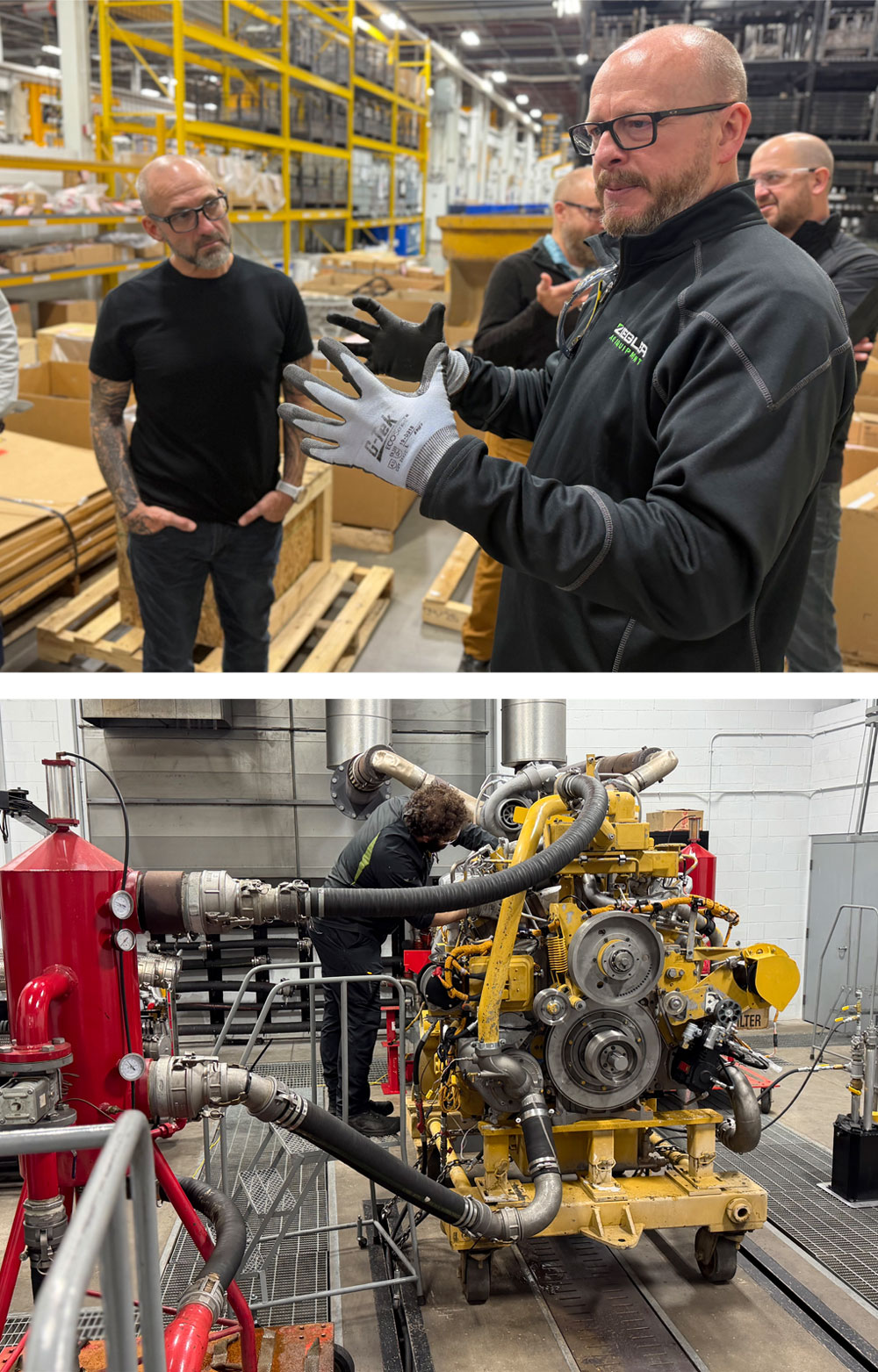
The 70,000-production floor is separated into disassembly and assembly functions, secondary operations, the dynamometers (pictured) and painting. Mike Lessiter
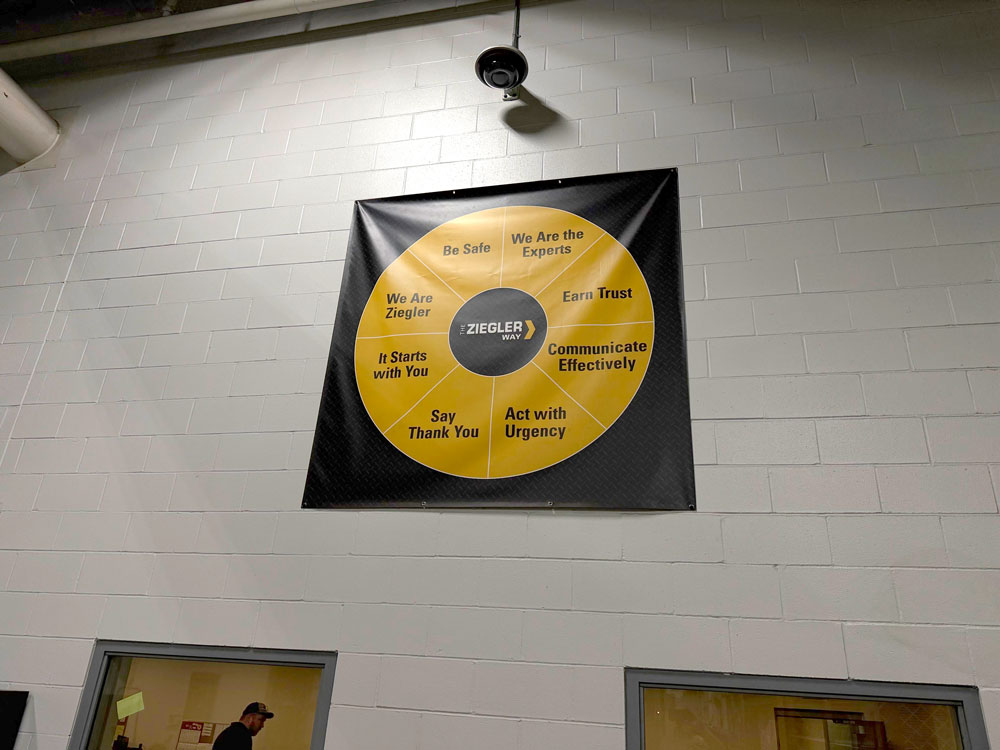
Ramirez notes that a neutral team called the “clean police” inspect and insist standards are met. “Cleanliness is part of our culture,” he says.
Tours also land in the dynamometer rooms, which Fern says is the last stop with all of the components that are making sure that they’re 100% ready — in real machine conditions — before they go to customer machines.
Incidentally, the ZRC has the first serial number on the 500 horsepower HTC 500 Taylor Test Center..
Why Do It?
Management realized that the 18,000-square-foot shop at the Bloomington headquarters facility was the bottleneck. The high demand winter months often had 200 feet of stacked lines. “Every time we had a big job or axle, a customer bay was inactive, and that was dead time on the bay,” says Jeremy Mattson, ZRC Branch Operations Manager.
“Every last inch of that facility was eaten up — that was the catalyst.”
Certified Rebuild Options
The Certified Rebuild Program incorporates the latest engineering updates into a second life for major component rebuilds or a complete machine rebuild
1. Certified Complete Machine Rebuild
- 7,000 new, remanufactured or reconditioned parts, including replacement of parts like harnesses, sensors, gauges, etc.
- Ziegler performs salvage operation as appropriate
- Critical engineering updated incorporated
- Fresh paint and decals
- 1-year / 1,500-hour complete machine warranty
- Extended Powertrain Protection – 3-year / 5,000-hour warranty included
- Product Link hardware and access to VisionLink included
2. Certified Powertrain Rebuild
- More than 3,500 new, remanufactured or reconditioned parts, including replacement of the parts like harnesses, sensors, gauges, etc.
- Removal and installation of all powertrain components
- Rebuild of the entire powertrain from radiator to final drives
- Powertrain components are completely disassembled and all critical engineering updates are incorporated
- 3-year / 5,000-hour powertrain warranty
- Product Link hardware and access to VisionLink included
- Rebuilding and kidney loop of the hydraulic system
3. Certified Hydraulic Rebuild
- Restoration of hydraulic systems
- Renew performance with focus on your hydraulic and hydrostatic systems
- Individual components
4. Major Component Rebuild
- Restores any major component to like-new performance
- Assembled and tested to Cat cleanliness and performance specs
- All critical engineering updates are incorporated
- 2-year / 2,000-hour warranty
- Component removal and installation available
Ziegler CAT acquired the 11.3-acre, 120,000-square-foot former Anvil International manufacturing facility just 1 mile from its headquarters in 2015. The company transformed it into the ZRC and opened it in August 2016 after an aggressive renovation process. At the time of its opening, it had 30 techs splitting time between engines and drivelines.
Today, the ZRC employs 100 techs and tripled its capacity in 8 years, with every year since 2016 notching more complete rebuilds than the year before.
Ag Machinery Prospects
While not generally as common in farm machinery as in other industries, ZRC Product Support Manager Steve Lehn says tractors with 12,000-14,000 hours on them can find 2-3 times the new life by rebuilding components.
Auctions illustrate the large demand for pre-emission, clean, low-hour machines and simple horsepower for large tillage applications. A lot of customers like what they’re accustomed to and don’t need the bells and whistles of the latest technology, they say.
Ziegler Ag Photo Gallery

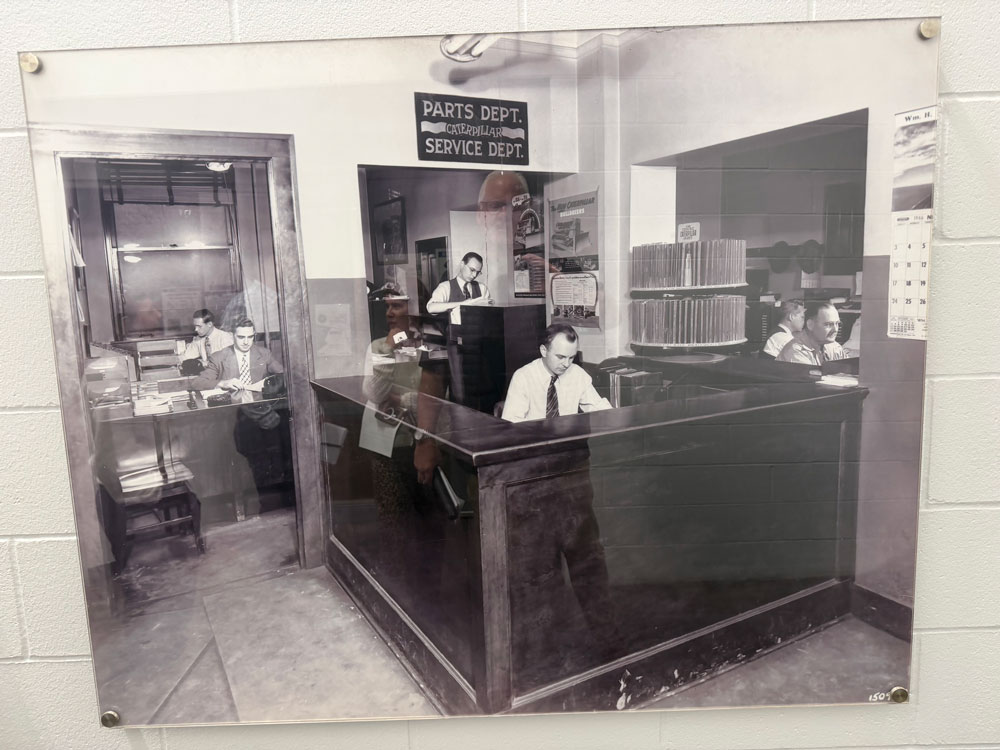
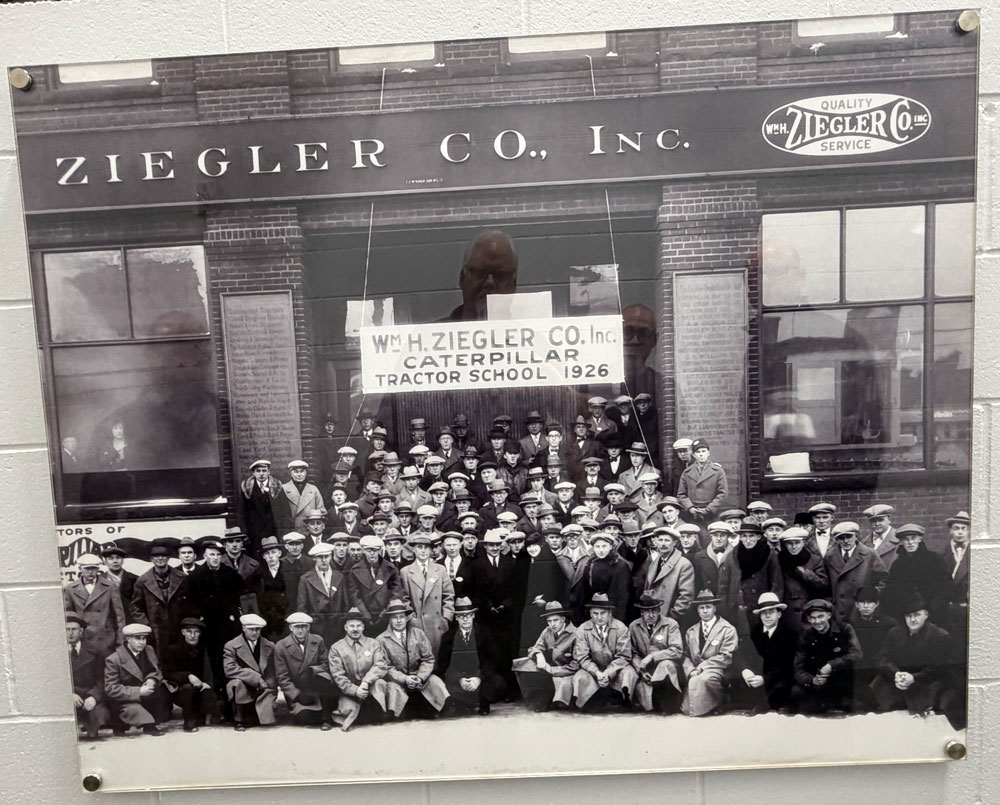
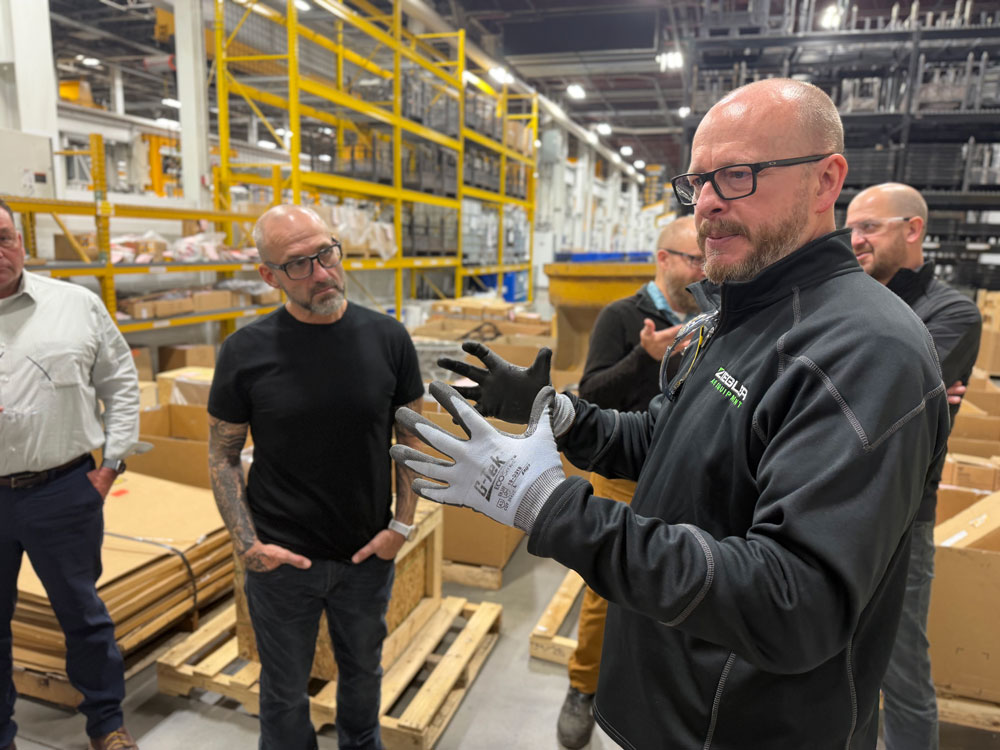
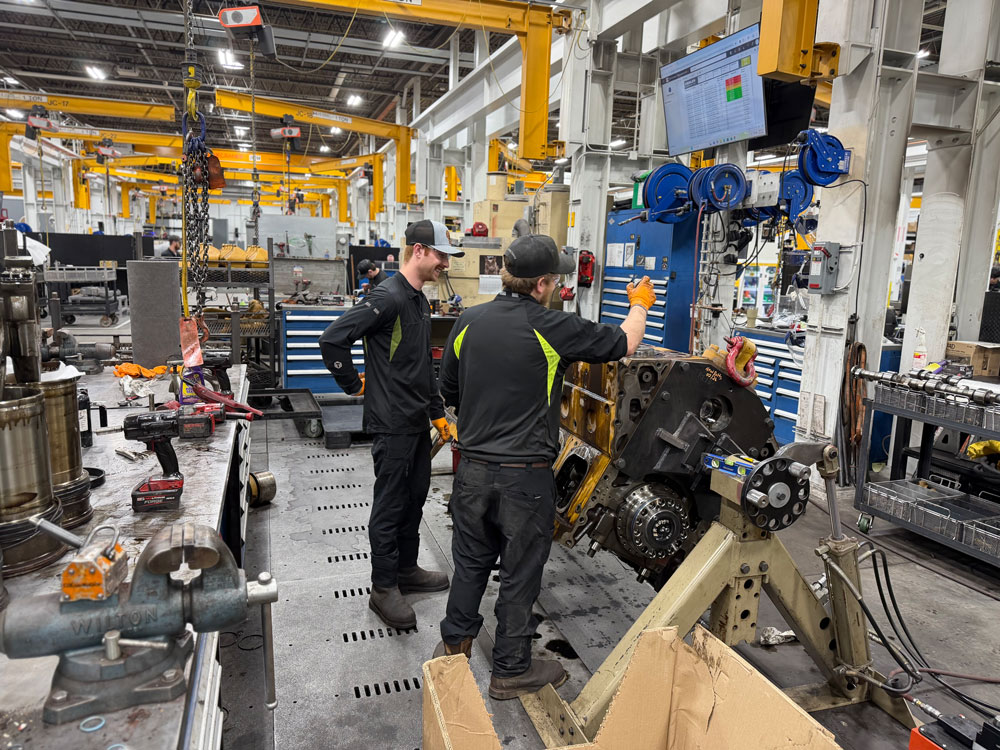
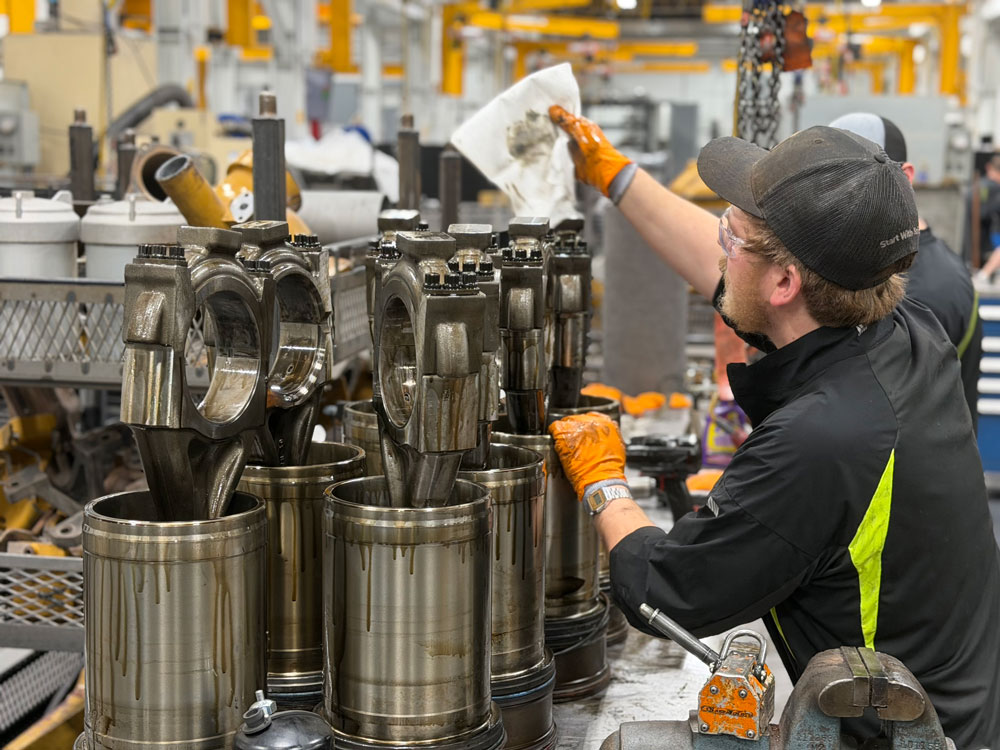
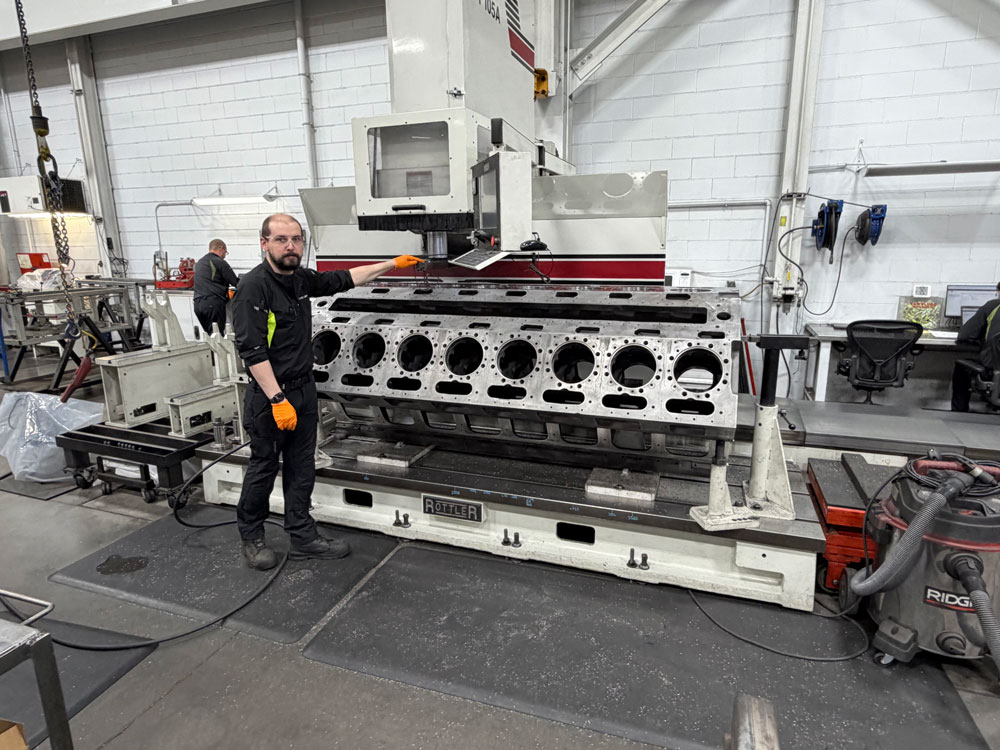
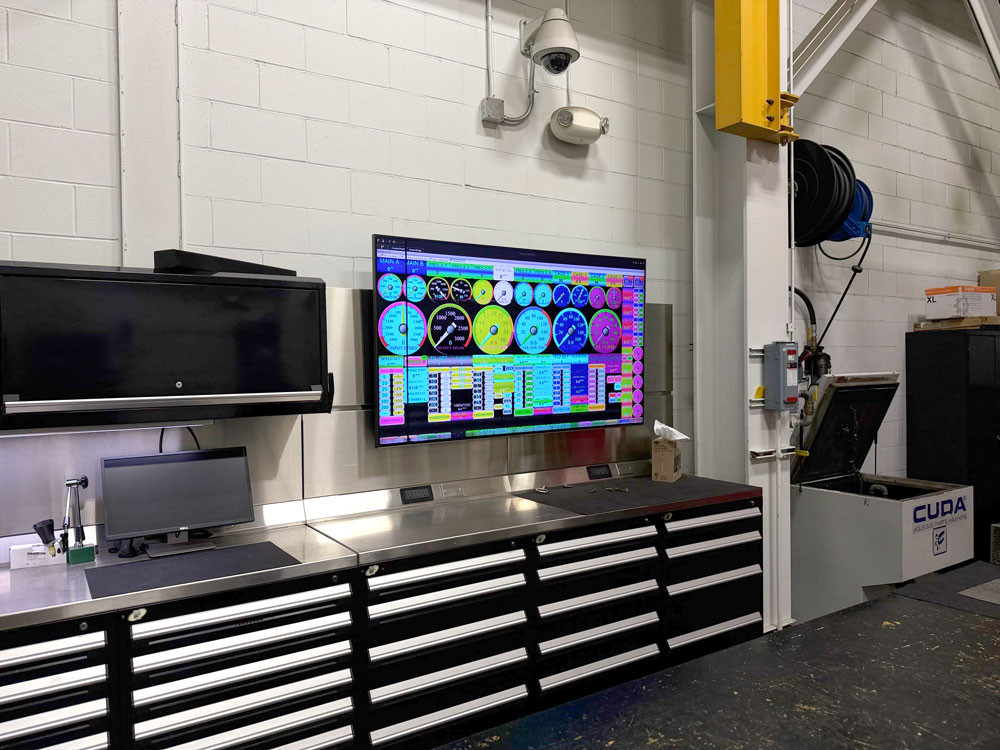
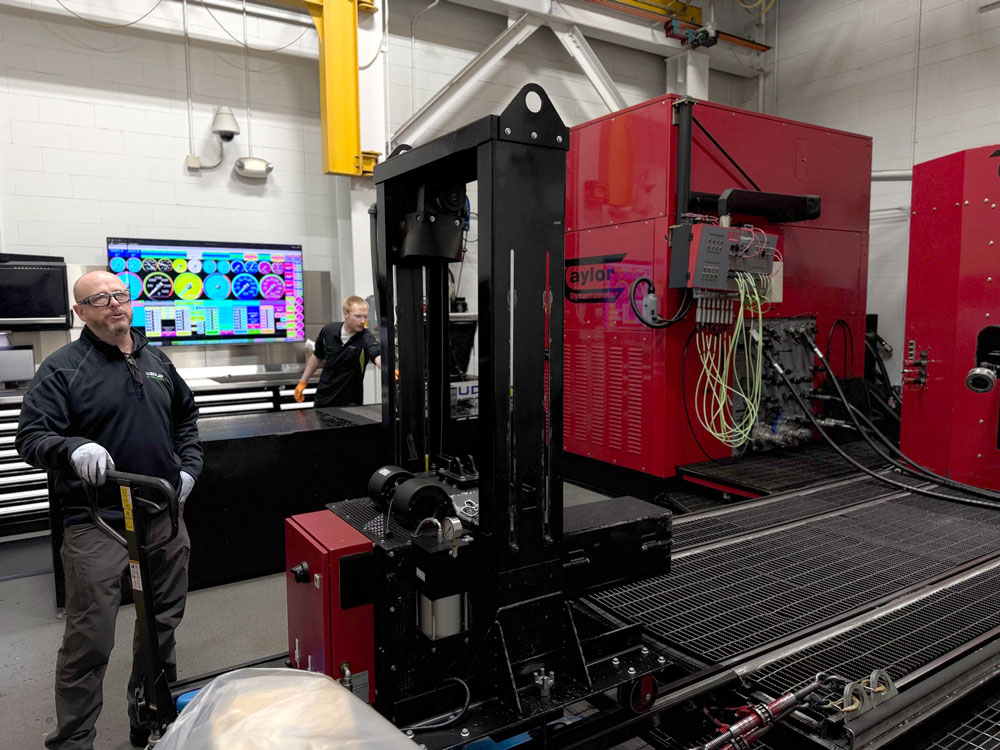
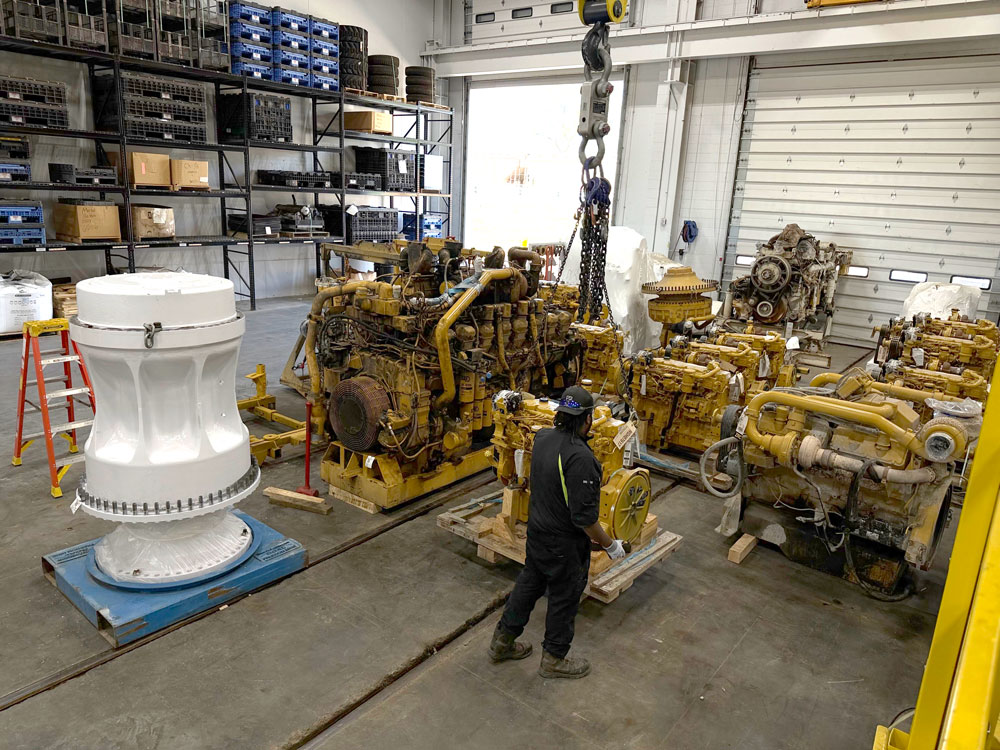
With 26 ag locations out of 31 total locations, there’s ample room for those kinds of discussions. But these aren’t just a little “touch up” after pulling Grandpa’s tractor from the fenceline. The ZRC affords a full rebuild of tractors with very high expectations.
Case History for Ag Tractor
Dealership Minds Summit attendees heard about the successes, and lessons learned, of how the rebuild process was applied to ag tractors. They studied rebuilds on the ag side before introducing it further into the ZRC, one of the few rebuild centers of its kind in the nation, which opened in August 2016.
For the trial, the test tractor was the Challenger MT800 SeriesTractor, a simple-chassis unit built for large-scale, heavy-duty tillage and deep ripping. With a large population of 10,000-15,000-hour machines in Ziegler’s AOR, the MT800 earned a reputation for strength and reliability and is a high horsepower, low-technology application that has a good following on both ag and construction, namely for pulling scrapers.
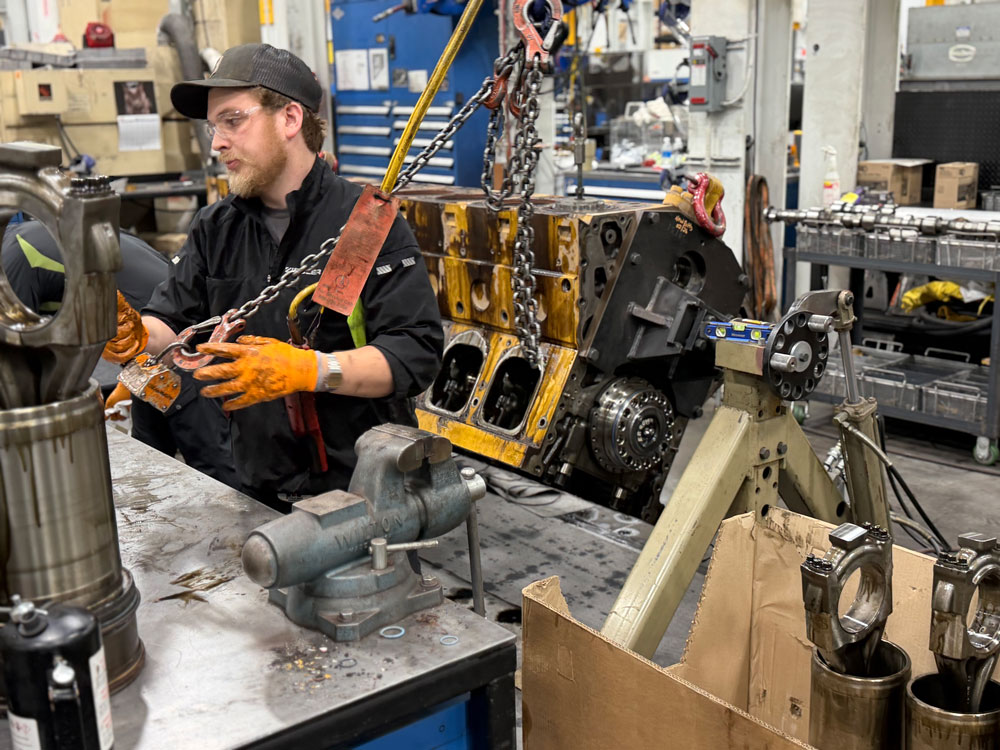
After opening with 30 technicians a decade ago, the ZRC now employs 100 techs, a good option for those workers who prefer repeatable work in a controlled environment. Mike Lessiter
With successful new sales of those units a generation ago, the potential existed to refresh those units on simple tillage applications without the higher technology needed for planter tractors.
Aims & Objectives. Ziegler aimed to test out the market and bought tractors to work on at its own pace, and to learn whatever came its way, including:
- Time for rebuild
- Parts availability
- Customer acceptance & financial feasibility
Customers catching wind of the project learned it was altogether different than bringing an old tractor in, fixing a few oil leaks and a freshly painted cab that was called a rebuild. Ziegler intended a “total rebuild.”
Ziegler aimed for rebuilt units that could be retailed for 66% of the price of a new unit, a target based on construction market studies and what low-hour, late model versions of these same tractors were bringing.
It anticipated that if successful, ample benefits in long-term parts and service revenue could be realized, and to keep the shops busy by bringing in 15-year-old tractors.
Learn More
And finally, like the pursuit of the mountain climbers, to prove that it can be done. For the Ziegler team, to be able to say that it remade a 2008 tractor brand new again.
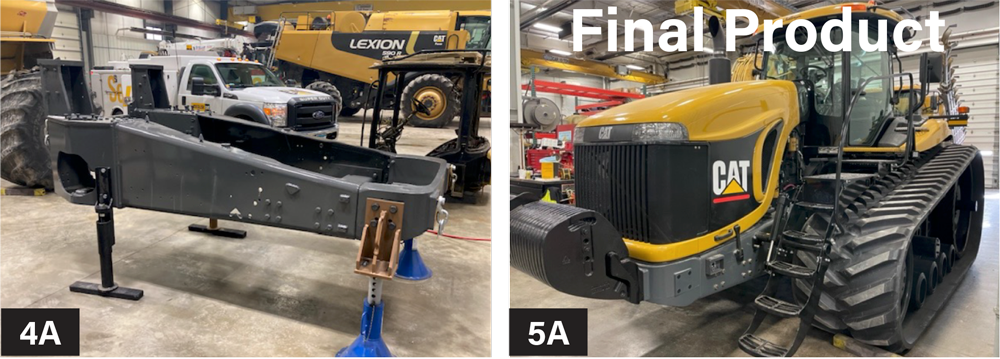
The sidebar at left shows the units and various steps in the rebuild process.
Conclusions. Ziegler’s experiment was done at separate branch locations vs. the centralized ZRC in part to turn them quickly with several hands on it, itself a lesson learned.
Citing the price of learning was costly on the first few units, Freidhof added that later units were close to breaking even and the final one in the study achieved margin targets.
Freidhof provided these conclusions from the initiative:
• Clear Lead Needed. More challenging if done at more than one site, but decisions need to be made in real time and requires a champion.
• Finding Consistency. To be efficient, learning is essential to modify the next time. At multiple locations simultaneously, there was some reinventing of the wheel. But that experience also showed the promise of integration into the dedicated full rebuild center while tying in our reconditioning for used equipment.
• Reuse vs. Replace. The process approached “going new” on everything, to take it all off and put only new parts on. They did OK if they could find the parts, but it was also extremely expensive, and some could be cleaned up vs. replaced.
That also opened an examination of the used parts business to find components not readily available. Friedhof invested many hours in this mission, even buying parts from England, but also met a lot of new contacts nationally during the process.
• Pre Delivery Inspections. While there were very few hiccups when units went to the field, Ziegler created a modified plan to make the process more robust. It involved a pre-delivery inspection at the facility the work was done, followed by a fresh set of eyes from another technician, and then a lead technician’s examination at the location it would be serviced from. Three different branches put their stamp of approval on it.
• Buy in from Sales & Service Teams. You had to build the pride and “the want” to do this or it wasn’t going to work. This is a top priority. It’s very much a pride thing for that location and they tell everybody,” says Freidhof.
• Pricing — Negotiable but Clear. This is not an “out of the catalog” pricing decision. It comes down to the tractor in possession and what can be done with it. The options are limited and cannot be easily changed, so it’s important for the salesmen to know what is and is not possible or cost-effective to do.
• Company Warranty. If somebody’s going to invest in these 15-year old rebuilt tractors, they’ll want to know the backing behind them. Part of it is through our normal repair process that warranties parts and labor.
Because of the controlled environment of the ZRC, Ziegler offered a 2-year, 2,000 hours warranty on these tractors with the ability to add another 3 years up to $3-year, 5000-hours warranty powertrain warranty. The Ziegler-sponsored warranty aligns with the company’s confidence they had in their rebuild work.
• Financing Partner. An unforeseen variable that emerged through the process was financing — and finding a partner that understood the rebuild process to finance a 15-year-old tractor. Ziegler worked with a few partners but once fully described the work and showed the lenders the process, the financing fell into place.
• Move to Customer-Owned Experience. While it bought, rebuilt and sold out of used inventory, the better route is moving it to a customer experience where they bring their tractor in and specifically note ala carte what they want rebuilt vs. putting all-new tracks or a new cab onto a unit. As long as certain gateways are hit, the warranty can still be offered.
A lot of dirt work guys say the rebuilt tractors are the most cost-effective way to pull the pan.
• Finding Buyers, More Sales Opportunities. Friedhof said the initial rebuild experience was a “dream of the used team” who’d grown up selling those tractors 10-15 years ago and was excited to do so again.
Five salesmen went out and sold it and every one was sold before the units were put back together. There was no advertising, just word of mouth, helped in part by a driver who chatted everyone up at every truck stop, and single-handedly spurred 6 phone calls.
The low-hanging fruit for sales of these units is the dirt-work companies who can use these simple tractors and put anyone in the seat. The rebuilt tractors provide a lower cost per hour for pan pulling.
Ziegler received interest in other smaller sizes, such as the MT700 series, but a limiting factor is the more advanced hydraulics needed for the functions of users who use those tractors for planting. Inquiries are coming in for fully rebuilt combines and forage harvesters as well.
Step by Step: Total Rebuild of the 2008 MT865B Cat Challenger
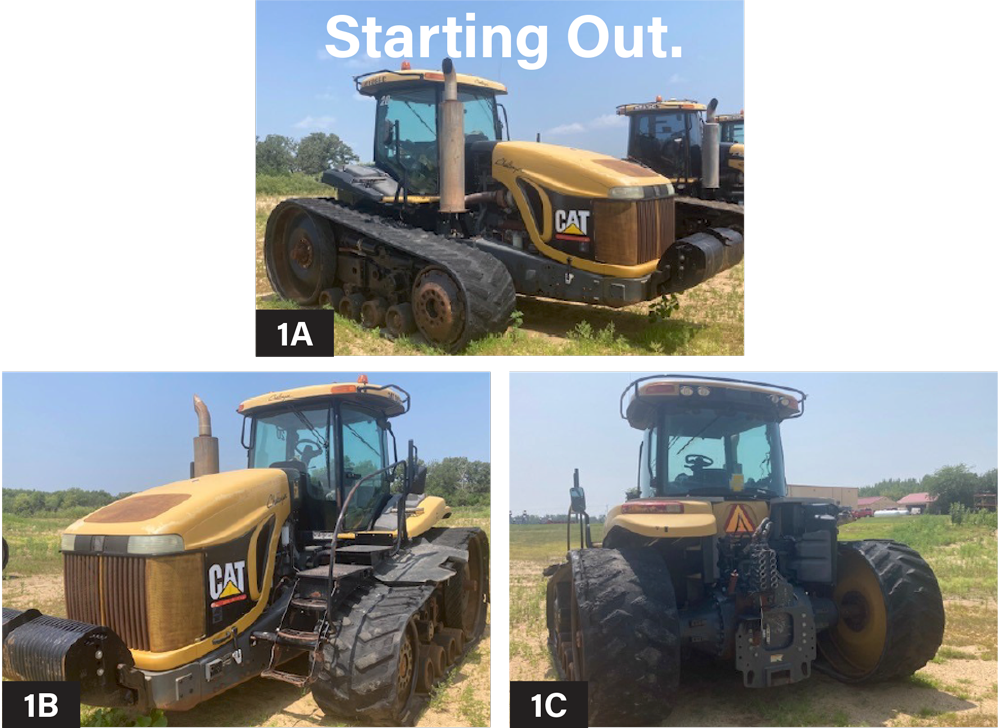
1. Starting Out. Ziegler bought 6 tractors, ranging from 12,000 to 18,000 hours, out of the coal mines of Kentucky that were pulling scrapers. The tractors had various conditions, paint, rust quality, undercarriage, that stuff.
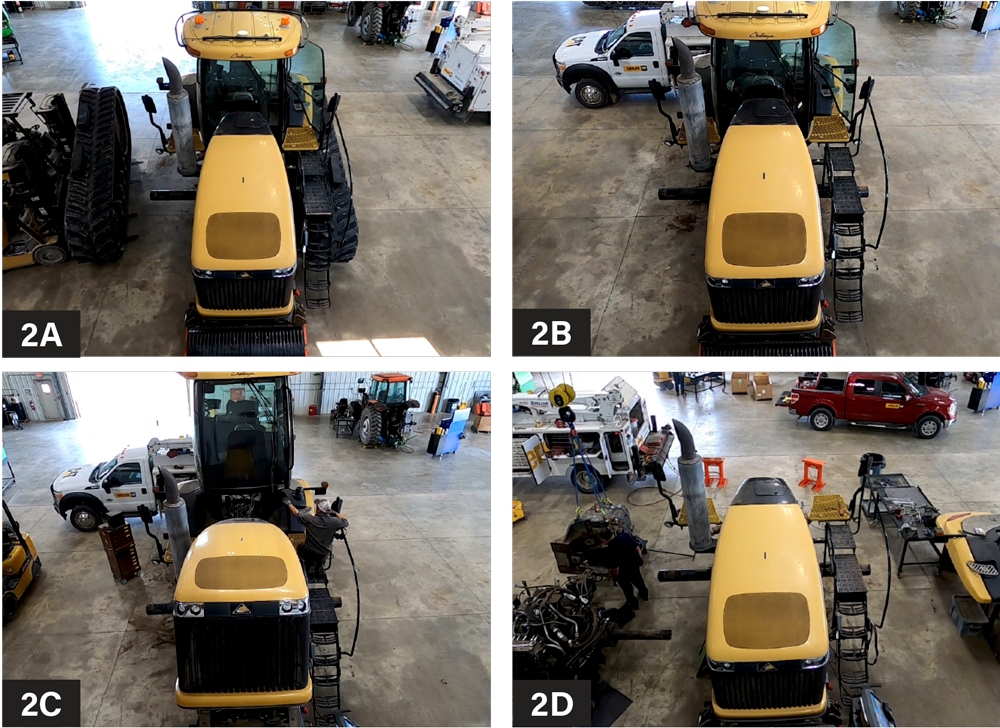
2. Teardown. Back in the shop, the technician was told to strip the units all the way down to the frame.
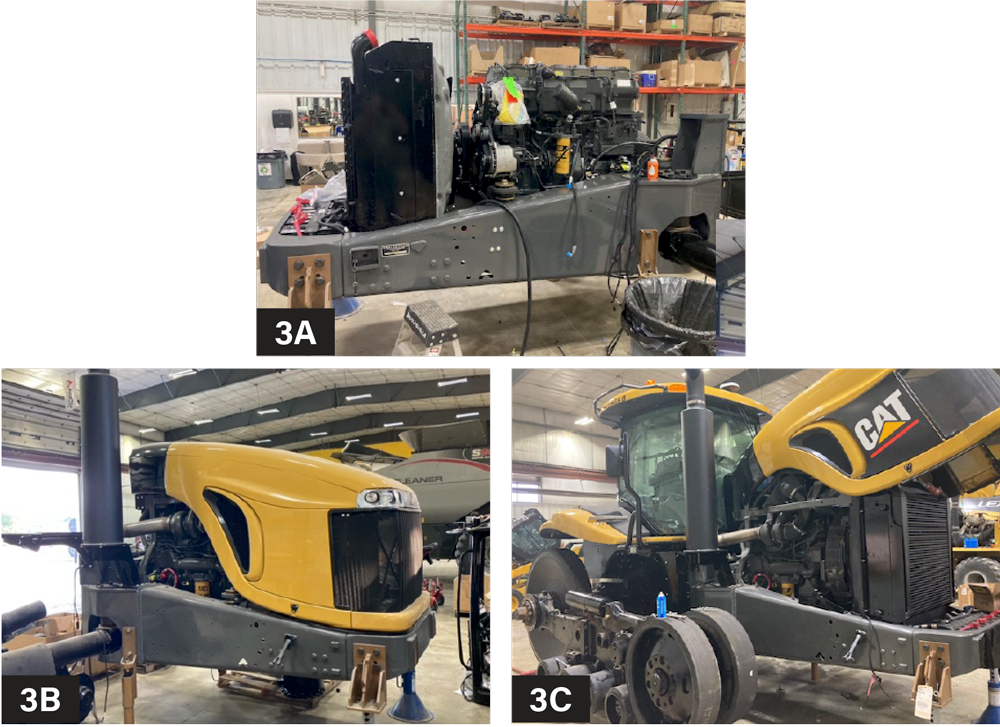
3. Starting Over. The frame was stripped, bead-blasted, sand blasted and repainted and was equipped with all-new wiring harnesses, engine components, batteries and rubber components. The undercarriage was completely gone through with new bogey wheels.
4. The Final Product. From tip to tail, the 2008 MT865B Challenger tracked ag tractor with Cat C18 engine was built “better than new,” again, with exceptional paint, fit and finish.