In this episode of On the Record, brought to you by Associated Equipment Distributors, we bring you highlights from the Precision Farming Dealer Summit and National No-Tillage Conference. Representatives from CNH, AGCO and Kubota were on hand and shared their outlook for autonomy in the ag market. In the Technology Corner, John Fulton talks about the future of autonomy that was on display at Agritechnica. Also in this episode: Horizon Ag makes its entrance into the U.S. market during the National No-Tillage Conference, Bingham Equipment’s Stephanie Pharris talks about how technology can bridge the gap between equipment purchases and an update on Purdue’s Capital Investment Index.
.png)
This episode of On the Record is brought to you by Associated Equipment Distributors — the leading association in North America for the equipment distribution industry.
Get ready for a powerful start to the year with AED’s packed lineup of Q1 and Q2 events designed to connect, educate, and energize industry professionals. From high-impact conferences and hands-on training sessions to exclusive member gatherings and strategic leadership programs, AED is bringing together top experts and forward-thinking dealers to share insights that drive growth. Whether you’re looking to sharpen your team’s skills, stay ahead of emerging trends, or expand your network, our first-half-of-the-year events deliver unmatched opportunities to elevate your business and strengthen your competitive edge. Visit www.aednet.org/ for more information.
TRANSCRIPT
Jump to a section or scroll for the full episode...
- CNH, AGCO & Kubota Share Outlook on Autonomy
- Tracking Crop Prices
- Autonomy & Robotics Take Center Stage
- Horizon Ag Enters the U.S. Market
- The Role of Technology When Wholegoods Sales are Down
CNH, AGCO & Kubota Share Outlook on Autonomy
During the Precision Farming Dealer Summit, we had representatives from CNH, AGCO and Kubota on hand to share their insights on the precision side of their businesses and to share with dealers what’s on the horizon.
Autonomy has been a hot topic at the event the last few years, and it once again was an area that produced questions for the panel. To get the conversation going, the panel, which included Nathan Greuel, North American Product Marketing Manager for CNH, Jake Ridenour, Channel Sales Management with AGCO/PTx Trimble, and Joe Michaels, Senior Director of Kubota North America Product Portfolios, was asked what they thought the biggest development on the autonomy front was in the last year. Here’s what they had to say.
Nathan Greuel: "I think the word autonomy means different things to different people. It's almost like sustainability. It's one of those kind of vague words that we use. And even when it was introduced 10 years ago or five, 10 years ago, I think everyone kind of thought they're little robots and swarms of robots going out. Or are we just going to make our existing machines autonomous? And I always think about it as an adjective. It's an autonomous tractor, not necessarily a noun product of autonomy. A little bit different, I think, and that's my probably personal opinion, how you guys look at it. But there's really six stages. And where we're at in '25 and moving on, we introduced guidance 35 years ago. Connectivity came 15 years ago. Machine to machine communication came 10 years ago."
"We're now at the sensing and the acting. We've got to get really good on automating tasks. And when we can automate guidance and we can automate speed and we can automate turning, the machine just becomes autonomous. It almost just folds into autonomy naturally. And the biggest progression we've made in '25 has really been around the obstacle intelligence, obstacle detection, avoidance, all of that good stuff that I think is really the last step of making all of these tasks automated to have an autonomous machine."
As a follow up, we asked the panelists what strides they hope to make in autonomy over the next few years.
Jake Ridenour: "So moving into tillage commercially is next up. We're hoping to do that for the spring to make that commercially readily available. Also, platforms. Right now, we are limited to one or two different platform kits, to which piece of equipment and which model we can retrofit to. So we're hoping to expand that significantly."
"Also, specialty market. We want to take a look at what an orchard and vineyard need. We had gone down that path with Trimble Ag software and Trimble Agriculture at one time, and it's time to reinvigorate that strategy and take a look at that and try to find the needs as you all are trying to find opportunities in different markets that you may not have paid attention to before."
Nathan Greuel: "Same thing. Focus is on commercializing tillage first, looking at specialty orchard vineyards. And I should mention this too. One other thing is if you're taking somebody off of the machine or away from the machine, you're putting more management off board. And all of that digital, whether it's remote viewing of cameras, it has to be connected at all times."
"Information's got to be shared within seconds. We're working on a lot of that off board piece too, path planning, boundary management, remote viewing, alerts, all of that stuff that comes with the autonomous solution."
Joe Michaels: "And for Kubota, very similar in a lot of ways, but I'll go back to that work cycle that your customers are going through to assess the situation, analyze it, and then act. And a little bit of what Nathan was talking about there, you got to bring it all together. And that information through the telematics and everything not only helps manage, but it's the enabler to everything else, as we've been saying here."
"And for Kubota specifically, I've talked already about the autonomy project, a little startup company that we think really has an autonomous solution done well, and we are focusing on the specialty crop markets, those five different categories that the USDA identifies with our specialty crop tractors as our initial project here in 2026 for those autonomous tractors working in solutions of autonomous spraying, of course, very hazardous and we all know the opportunities there for cost savings as well as safety and everything else, but also something as mundane as mowing."
Tracking Crop Prices
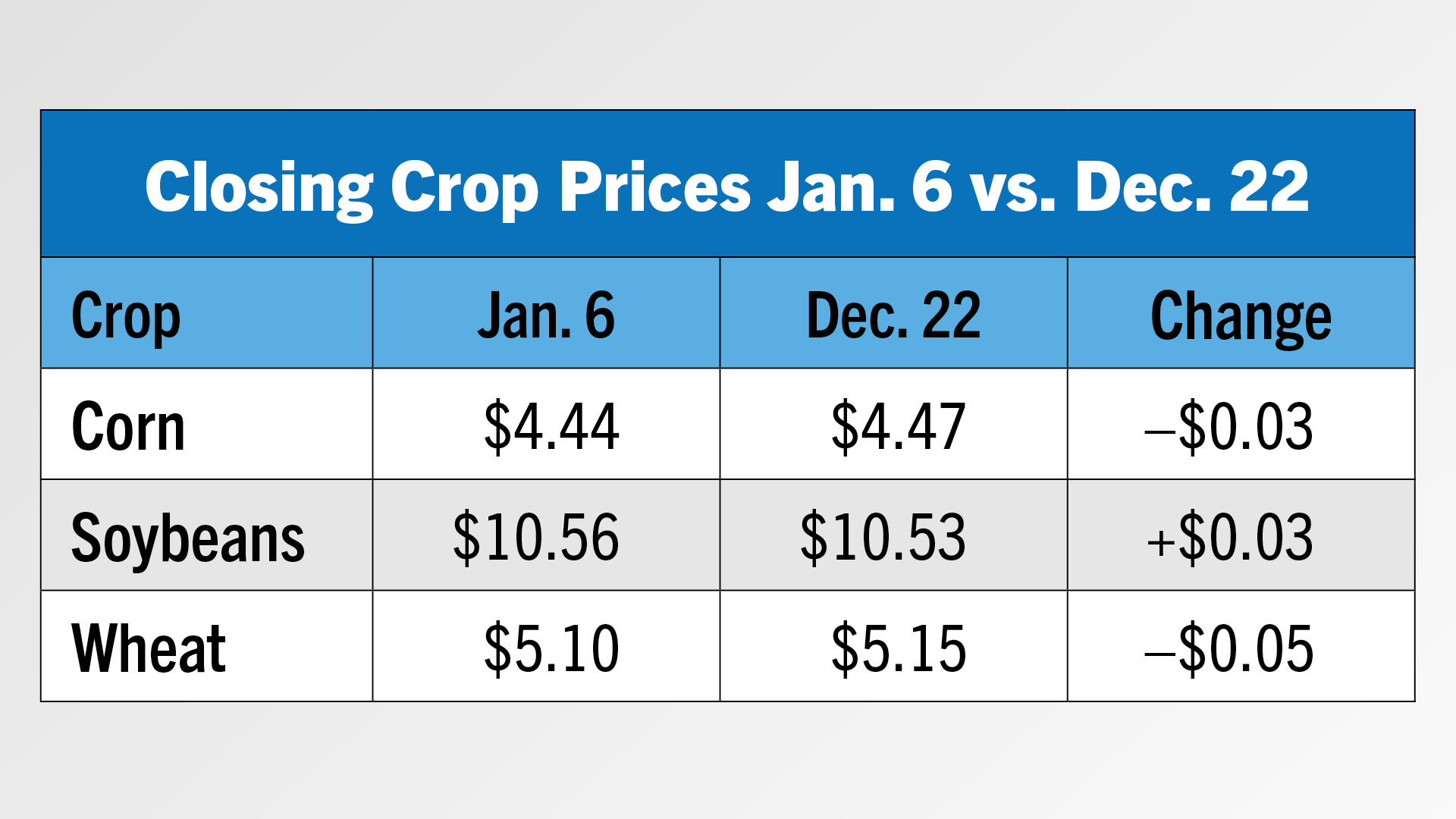
As of January 9, corn prices were $4.44, down 3 cents from our last episode. Soybeans closed at $10.56, up 3 cents. And wheat closed at $5.10, down 5 cents.
Autonomy & Robotics Take Center Stage
We saw a lot of great stuff here at the Precision Farming Dealer Summit this week, and right now here in the Technology Corner, I want to highlight some very interesting stuff that Professor John Fulton from the Ohio State covered during one of his keynote presentations, just about some of the top takeaways that he saw recently at Agritechnica.
"If you have not had the opportunity to go to Agritechnica, if you did not have an autonomous machine in your booth at Agritechnica this year, you weren't keeping up with the Joneses. Okay. It was one of my statements I made to a lot of people. Walking first, walking indoor at Agritechnic, if you did not have an electronic tractor or if you didn't have some kind of autonomous machine sitting in your booth, you were kind of behind the eight ball. But these things are real. Again, some of these are still under development, okay?"
"But I do want to show this, and I'm not picking on anyone in particular, but Deere, it was all about technology in their booth, okay? One of the facts is they did not have a John Deere planter in their booth this year. How about that? We talk about planners all the time. They had some other planting technology, but they didn't not have a John Deere planter in their boost this year, but they had all the technology."
And that's just the tip of the iceberg of what we've seen here this week at the Precision Farming Dealer Summit. Much more coming soon to precisionfarmingdealer.com.
Horizon Ag Enters the U.S. Market
Horizon Agriculture Machinery is a UK-based manufacturer focused on overcoming the challenges associated with conservation agriculture practices like no-till, strip-till and targeted biological nutrition applications.
Horizon Ag used the National No-Tillage Conference to launch their presence here in the U.S. I checked in with Charlie Eaton, sales and marketing director, to find out more about their plans for North America.
"So, Horizon are a young company. We're only five years old or we're going into our sixth year of trading now, but we're growing at a rapid rate of knots. So, we've now got machines in 40 countries worldwide. The focus for the last five years has very much been developing our markets in Europe, but we've actually taken more and more interest from farmers in North America. So, we went up to Ontario in Canada to an event, the Canadian Outdoor Farm Show in September last year. We've sold a couple of seeders up there. I've sold a seeder down into Colorado last year, but this really is the first time for us to come to the USA speaking to US farmers. What we're keen to do this week at the conference is to learn about this market and learn about the suitability of our product for this market."
"We know we've got a great no-till disc drill. This seeder row unit is fantastic. It's very well-received everywhere we take it, but we got a lot to learn about the US market and what you guys are looking for."
The Role of Technology When Wholegoods Sales are Down
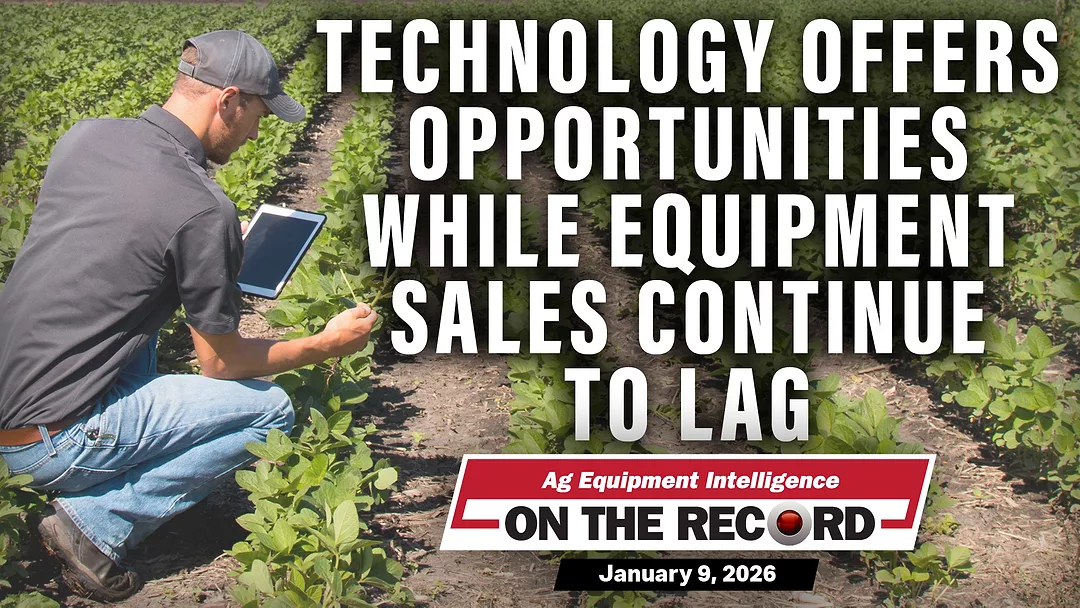
Precision technology provides an opportunity to build customer relations and drive business when wholgoods sales are flat or down, says Stephanie Pharris, machine technology for Bingham Equipment Company.
Pharris has a vast ag-tech background. Prior to joining Bingham Equipment, she spent over 10 years implementing technologies for a multi-state farming operation and also worked on a global team that scouted ag tech startups for partnerships with an ag OEM.
"I think my number one takeaway is that we're focused in the right areas. Most people will tell you they're forecasting equipment sales to be flat or slightly up if we're really lucky. So, you're going to have to drive some of your other areas of business for your dealership."
"So, precision, service, parts, those things. And precision, especially with telematics, has an opportunity to help drive all of those things if we're doing it correctly and we're being intentional on how we're leveraging that customer data and things like that to help our customers improve. It's going to be a down year for them, likely too, they've experienced. So, precision can help them save money, help them get return on investment."
"So, if we can really partner with them to bring an ROI to their business during this time when it's down, it builds that relationship and that loyalty so that when there is a turnaround, they're coming to us and we're moving more of the iron side as well."
She says the precision sales can help bridge the gap when customers might be holding back on large equipment purchases and helps bring value as well.
"Ultimately, from a customer perspective, that's what you want. I don't want somebody who's just selling me something. I want somebody that's committed to understanding my business and my challenges and bringing me solutions. So, if we can really use this kind of free time year where sales aren't just rocking and rolling and we kind of have more time to put towards it, let's bring that customer value in some other way."
Capital Investment Index Improves in December
Purdue University and the CME Group released its latest Ag Economy Barometer on January 6.
Farmer sentiment weakened slightly in December as the Ag Economy Barometer Index dropped just 3 points in December to a reading of 136.
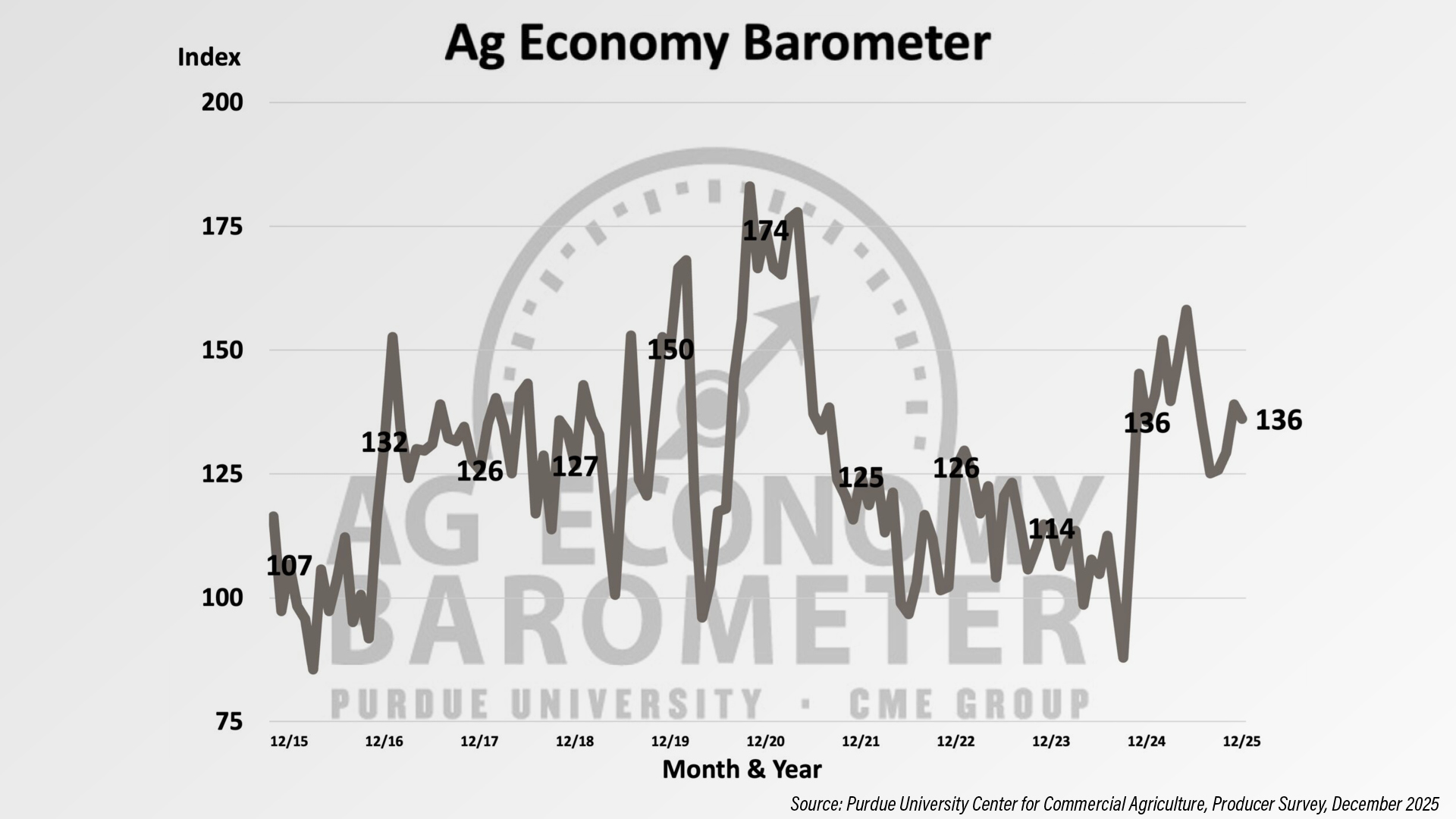
Weakness was attributable to a modest decline in producers’ long-term outlook, as the Future Expectations Index fell to 140, 4 points below a month earlier.
Producers’ expectations for their farms’ financial performance changed little compared to November, as the financial performance index rose just 2 points to 94
Underlying the index’s small improvement was a shift toward more producers saying they expect this year’s farm financial performance to be about the same as last year’s.
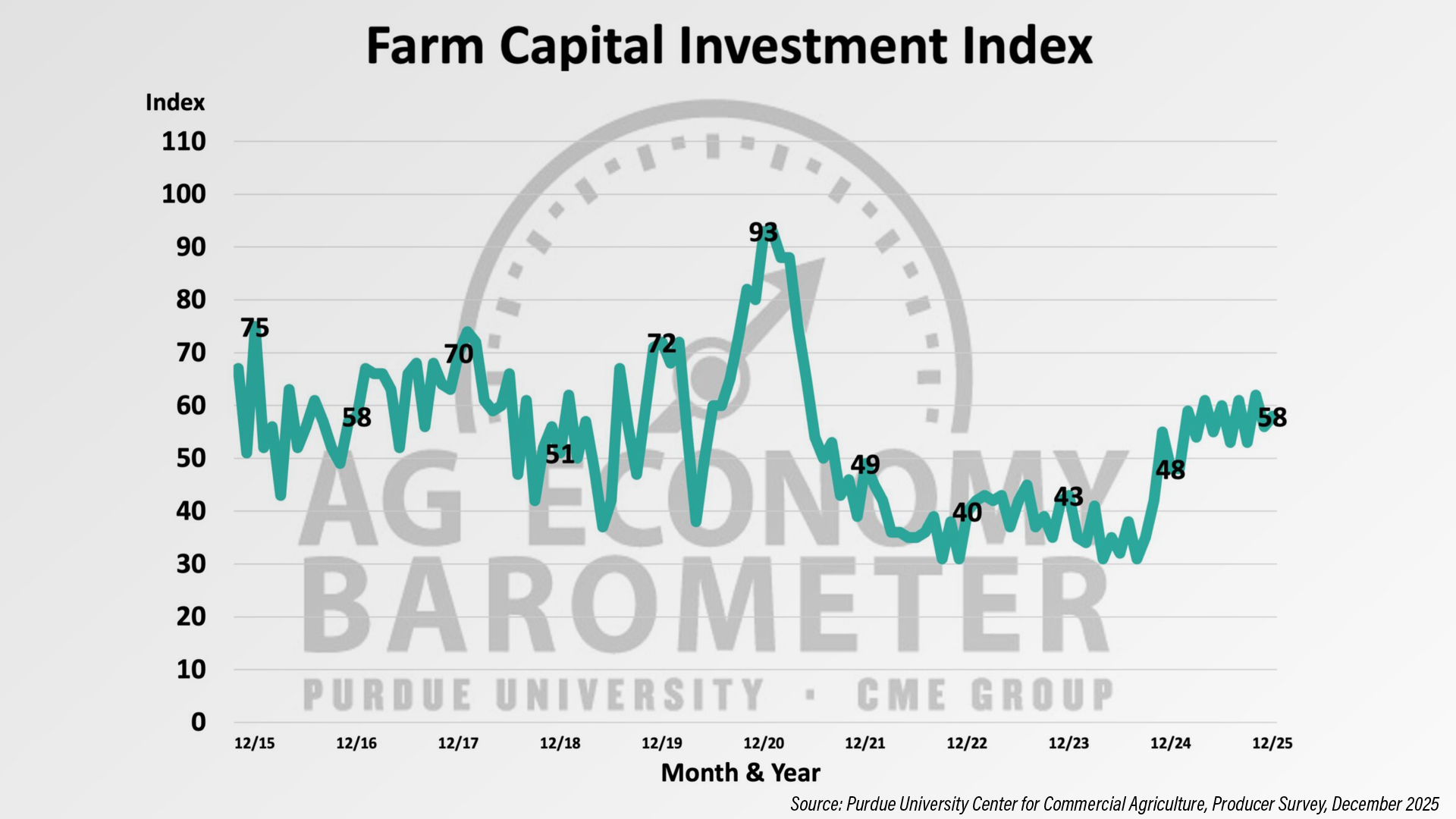
At a reading of 58, the Farm Capital Investment Index also increased 2 points compared to a month earlier. Although the investment index rose slightly in December, 60% of producers still said it was a bad time to make a large investment in their farms.
On the Record is now available as a podcast! We encourage you to subscribe in iTunes, the Google Play Store, Soundcloud, Stitcher Radio and TuneIn Radio. Or if you have another app you use for listening to podcasts, let us know and we’ll make an effort to get it listed there as well.
We’re interested in getting your feedback. Please feel free to send along any suggestions or story ideas. You can send comments to kschmidt@lessitermedia.com.