Takeaways
- Leveraging inter-store synergies has never been more important in helping keep customer downtime to a minimum while still running a lean dealership.
- As adoption of precision farming technologies grows, dealers must invest in the right training and staffing to continue meeting customer expectations.
- Next year’s outlook is still a bit murky, so now’s the time to find out what customers may need in 2026, while also assessing your own inventory stocking agility.
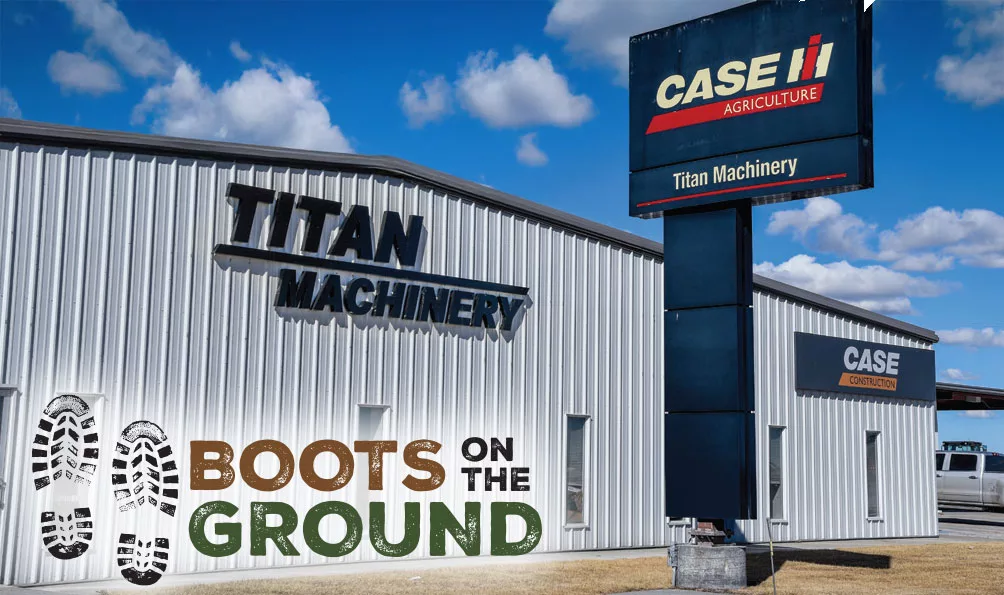
When the first installment of this 4-part Boots on the Ground series published back in February 2025, Marcus Dunbar was hopeful his customers would be experiencing some positivity by the end of this year. But as 2025 draws to a close, reality has set in.
“Overall, 2025 wasn’t a stellar year for most of our customers,” says Dunbar, general manager of Titan Machinery’s Holdrege, Neb., location. “If I had to speculate, many of our customers will be in a slightly more difficult cash position to end the year than they were at the beginning of the year.
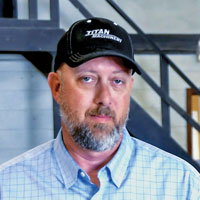
“I’m hopeful that some trade deals will come about, and some of this tariff pressure we’ve been dealing with will somewhat go away…”
“A lot of that depends on how much grain they carried over to this year. But in general, things haven’t gotten much better for our ag customers over the past 12 months.”
Given that less-than-rosy assessment of 2025, Dunbar says the store is still poised to meet most of its financial goals for the year. When he last spoke to Farm Equipment in mid-November, he was also holding out hope that some customers would be coming back to the dealership to pull the trigger on last-minute buying decisions. He concedes it’s tough to know what farmers will do until year’s end, when they know what their balance sheet looks like.
A challenging harvest put a bit of a damper on Dunbar’s year-end hopes — especially from a service standpoint. Some customers said corn yields were down, as much as 20% in some cases, and erratic fall weather put farmers in an unusually tight harvesting window.
That created a logistical problem for Titan’s shop, because it’s tough to get so many farmers started up at once, Dunbar says.
“You could have 125 people on staff and still not keep up with customer requests. You have to get customers acclimated to their harvesting equipment again, reminding them how to set things up and run their monitor the right way,” he says. “Everybody has their own setup and it takes them a little while to remember everything. As their dealer we must be there for them — and that’s hard to do when everybody needs you all at once.”
Need for Synergy
To overcome the challenges of this year’s harvest, the Titan Holdrege staff did what it had been doing all year long. “We learned to adapt and survive,” Dunbar says.
“Adapting and surviving” has largely come down to working closely with other Titan Machinery locations in southwestern Nebraska, particularly the store just 30 miles away in Kearney, which Dunbar also manages. Leveraging inter-store synergies proved crucial once again during the compressed harvesting window.
“There may have been a night when the Holdrege area got a lot of rain, but the Kearney store didn’t see any,” Dunbar shares as an example. “If possible, we had a technician or two from Holdrege help out in Kearney while farmers there were hustling to get in the field while the weather allowed. One thing we’ve learned this year is that you just have to roll with whatever challenges come your way.”
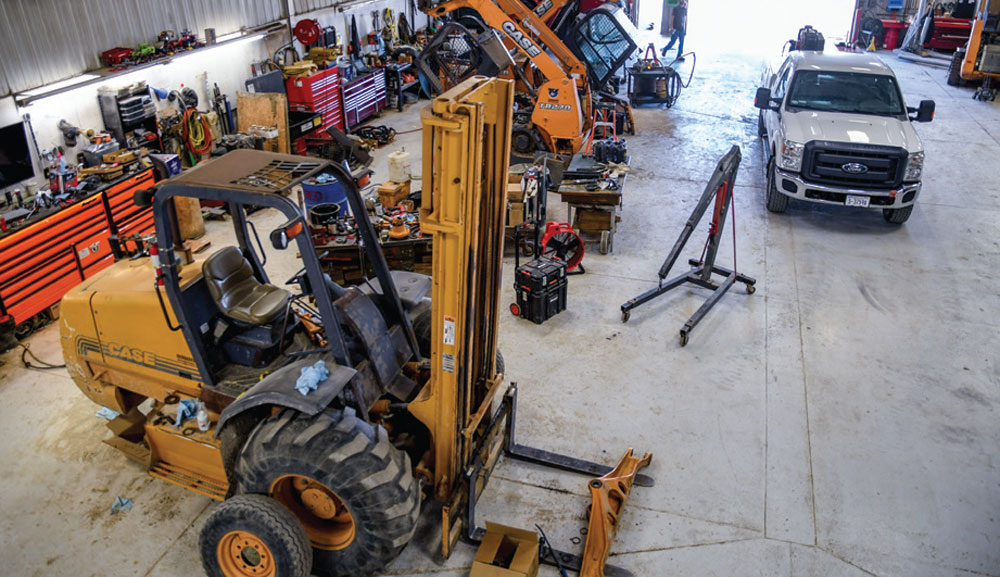
Titan Holdrege General Manager Marcus Dunbar says “adapt and survive” were the watchwords in 2025 in Titan’s shop, as erratic fall weather put farmers in an unusually tight harvesting window. The store worked closely with other Titan Machinery locations to leverage “inter-store synergies” that proved crucial during the compressed harvesting window. Source: John Dobberstein
Lean-and-mean has been the name of the game in terms of inventory. With respect to the parts department, Dunbar says lead times have been good in most instances throughout the year. Thus, he’s feeling comfortable in continuing to run leaner on inventory to help preserve cashflow.
“You can’t always have every single part at every store when you’re running lean,” Dunbar says. “What we can do is make sure a part is available within a 4-store radius. We study the equipment sales at each store. Then we have a pretty good understanding of what types of parts each store will stock more heavily. We’ll even look beyond our immediate 4-store region if we have to.”
That strategy has been largely successful throughout 2025.
“I would love to say that our customers are happy with how we can deliver 100% of the time,” Dunbar says. “But to be realistic, it’s fair to say we’re batting somewhere in the 90s. And just like any year, you find out that your customers might have some different needs, and you learn from that so you can do better next time.”
Case in point, the staff recognized early in 2025 that their ag customers were getting stretched pretty thin. With Titan Holdrege relying more on sister stores to maintain a high parts fill rate, the staff had to look for ways to minimize any inconvenience that might have on customers.
One idea that came about earlier this year was to put a “parts lock box” outside the store. While this tactic hasn’t been implemented yet, Dunbar says customer feedback has provided the proof of concept he was looking for.
“The purpose of the lock box is to save farmers time and money from having to travel a longer distance to a store that has the parts they need,” Dunbar explains. “We’re leaning toward using an oversized steel toolbox that won’t blow away. We’re also leaning toward having one of our parts employees cover a daily route between all the stores, transferring parts from one store to another as needed.
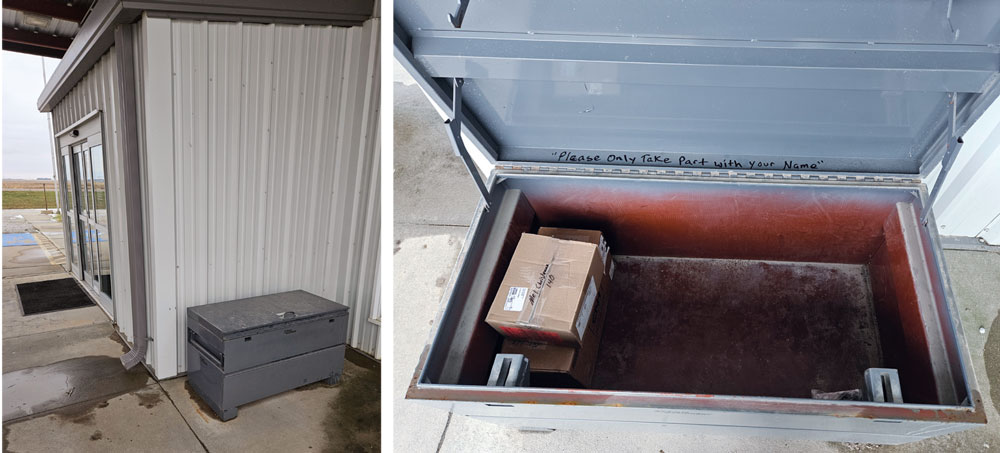
Titan Holdrege has installed a “parts lock box” outside the front door to save farmers time and money from having to travel a longer distance to a store for parts they need. The dealership is also planning to have a parts employee cover a daily route between all the stores, transferring parts from one store to another as needed. Source: John Dobberstein
“We’re still working out the logistics of what the route might look like so we can keep those lock boxes consistently stocked,” Dunbar continues. “In the meantime, we’re also considering having different employees transfer parts from store to store depending on where they live and which direction they go when heading home for the night. But we definitely want to get this program up and running because our customers tell us it will provide a lot of value.”
Investing in Modern Expertise
At a time when the typical farmer’s equipment fleet has aged considerably, running lean as a dealership can’t come at the expense of providing excellent service. Titan Holdrege has emphasized the initial machine diagnosis as the key step toward keeping customer downtime to a minimum. Dunbar says there is no substitute for experience here. But there is also no substitute for technician training.
“We’ve been investing a lot of money in sending people to training for our OEMs and also some shortline manufacturers,” Dunbar says. “We’ve also added some diagnostic tools in our shops. Each of our techs now has their own EST (electronic service tool). We’ve been focused on helping them get more up to speed on how to fully use the tool.”
Titan Holdrege has also been experimenting with how to walk the tightrope of keeping technicians focused on turning wrenches while also granting customers access to the expertise those technicians possess. One approach has been to designate a more experienced technician as “service advisor” whom customers can call with questions.
“Just like any year, you find out customers might have different needs, and you learn from it so you can do better next time…”
“As long as our service advisor wasn’t in the field, on vacation or simply busy doing something else, this approach has worked out great,” Dunbar says with a chuckle. In those instances where the service advisor couldn’t take a call, the service manager or assistant service manager stepped in. “We’ve stressed the importance of asking customers the right questions so any issue can be immediately directed to the right technician in the shop,” Dunbar adds.
Having a service advisor has worked out especially well at Titan Holdrege. One of the store’s most experienced technicians decided it was time to retire. Designating him as service advisor has allowed him to continue working part-time. “He’s providing value to customers through his expertise, without having to beat himself up on a concrete shop floor every day,” Dunbar says.
Having the right people in the right roles is how dealerships like Titan Holdrege have continued to meet customer expectations during a challenging year. With respect to 2026, Dunbar is looking to execute on a couple ideas he’d come up with earlier this year. For one, he wants to create the position of mobile lube tech. He also wants to add a second precision farming specialist. Dunbar was still in the process of filling both positions when he last spoke to Farm Equipment in mid-November.
Adding a second precision farming specialist will be especially important to Titan Holdrege’s longer-term success.
“The volume of calls we’ve been receiving throughout the growing season has been just incredible,” Dunbar says. “Even in late fall when our customers are going back into the field to strip-till and fertilize, it doesn’t take long for our precision farming specialist to get buried with questions and service calls when a pump or controller malfunction, or maybe a wiring harness just gets pinched. All of a sudden, we have 15 calls all at once and only one person to answer them. Adding a second precision farming tech is something we definitely want to do.”
Yellow Iron is Silver Lining
With respect to equipment sales, one bright spot in an otherwise murky year has been Titan Holdrege’s relatively new construction equipment business. Dunbar says they’ve sold everything from skid steers and compact track loaders to wheel loaders, excavators and dozers. “The interesting thing is that 80% of the buyers are our ag customers,” Dunbar points out.
The store made a lot of progress this year toward its ultimate goal of growing the construction segment to at least 25% of the its total revenue.
Its focus is on the Case Construction brand, which Dunbar says already had a loyal local following before Titan Holdrege took it on. In fact, many area farmers and construction contractors had been driving more than an hour away to find the nearest dealer.
Titan Holdrege is now filling that market void — which is providing even more value to their valued customers. And as usual, service has been at the core of the dealership’s value proposition.
“The people who buy this type of equipment really use it a lot,” Dunbar says. “We’re starting to see machines come in for service that have over 5,000 hours on them and require a lot more than the typical PM-type service. Fortunately, we already had 2 technicians who were pretty fluent in Case Construction. Now we’ve trained up a couple more to make sure we can handle the work that comes into the shop as we grow this part of the business.”
“As their dealer we must be there for them — and that’s hard to do when everybody needs you all at once…”
As Titan Holdrege turns the page on a turbulent 2025, Dunbar is keeping an eye on a couple of trends that could have a positive impact on equipment sales and dealership profitability in 2026.
The big one is tariffs. “I’m hopeful that some trade deals will come about, and some of this tariff pressure we’ve been dealing with will somewhat go away,” Dunbar says.
He is also keeping an eye on interest rates. He was pleased to see the Fed make a couple of 0.25% cuts in September and October, though it didn’t have much influence on a farmer’s appetite for financing a new equipment purchase. “Getting into 2026, I think another half-point to a point could start to add some fuel,” Dunbar speculates.
Dunbar is also starting to wonder if the equipment purchases many farmers have been deferring over the past few years will ultimately catch up with them. If some of that pent-up demand gets released in 2026, Dunbar feels good about the wholegoods inventory his stores are maintaining. He’s also confident that, given the lead times he’s been experiencing this year, his stores will be able to bring in the equipment they need when farmers finally decide they’re ready to buy it.
On that note, the big trend Dunbar is watching is the psychology of Titan Holdrege’s core customer segment, the row-crop farmer.
“It’s been so tough for farmers for so long,” Dunbar says. “Many are now of the mindset that they’ll believe things are going to get better when they actually see it. When you get down to it, that’s more less the approach we’re taking as we get ready for a new year. Time will tell, so we want to be ready for whatever comes our way.”
Farm Equipment's Boots on the Ground series is brought to you by Yetter Farm Equipment.
Yetter Farm Equipment has been providing farmers with residue management, fertilizer placement, and seedbed preparation solutions since 1930. Today, Yetter equipment is your answer for success in the face of ever-changing production agriculture challenges. Yetter offers a full lineup of planter attachments designed to perform in varying planting conditions, multiple options for precision fertilizer placement, strip-till units, and stalk rollers for your combine. Yetter products maximize your inputs, save you time, and deliver return on your investment. Visit them at yetterco.com.