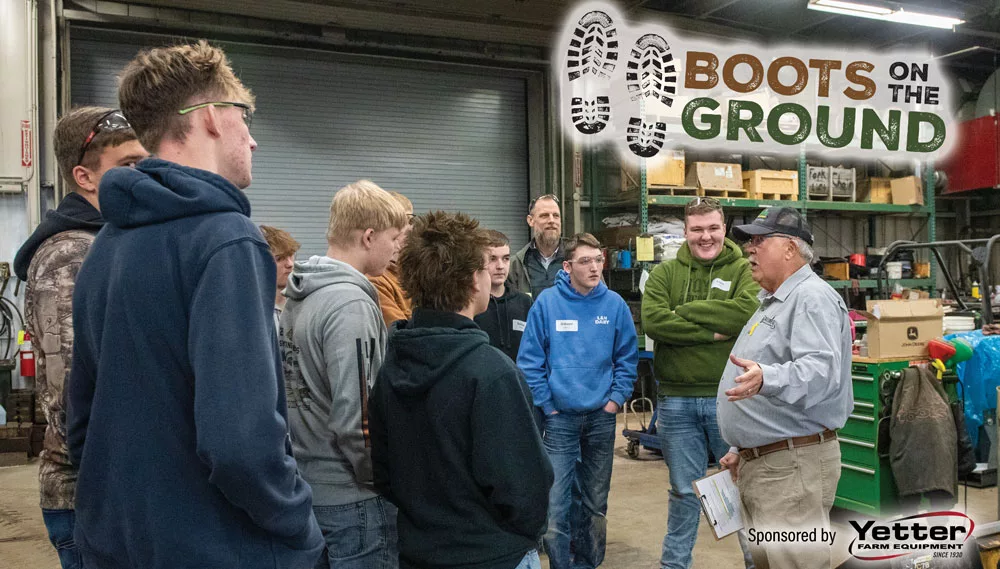
Editor’s Note: Farm Equipment’s Boots on the Ground series gathers insights and best practices from 2-store John Deere dealership Ballweg Implement. The series will cover the dealership’s successes and challenges throughout 2026 in all departments and will detail editors’ on-location visits and the dealership’s Waupun, Wis., store each quarter, covering every season and its unique opportunities and challenges. The series takes an intimate look at the dealership’s operations, shadowing key employees in their day-to-day tasks in addition to examining seasonal trends over the course of the year. The series runs concurrently with coverage of No-Till Farmer’s Conservation Ag Operator Fellow and Ballweg customer Tony Peirick.
High school students from across south-central Wisconsin descended upon Ballweg Implement’s (BI) Waupun store in early February to put their skills to the test during the John Deere dealership’s 4th annual Gator Wars competition.
In teams of 3-4, students move around 6 stations. Judges evaluated the 6 teams on their teamwork, the time taken to complete the activity and whether they complete it correctly, explains Sheila Jaeckel, who organizes the event and works in BI’s precision ag department.
Ballweg Implement
Founded: Dec. 1, 1976
Employees: 56
Ownership: Tom & Joan Ballweg
Markets Served: Corn, soybeans, canneries, dairy, beef cattle, and large scale fresh produce, consumer products
Brands Carried: John Deere, Berlon Attachments, Calumet Liquid Manure Handling, CID Attachments, Dawn Equipment, Degelman, Demco, E-Z Trail, FAST Sprayers, Frontier, HayBuster, J&M Manufacturing, Loftness, Meyer’s Equipment, Meyer Farm Equipment, Norden Mfg., Protero, SurePoint Ag Systems, Walinga, Westendorf, Yetter
The stations vary from year to year, but generally they include an electrical station, something related to engine work and a component identification station. “The goal is to give them an idea of the variety of tasks a technician is responsible for throughout the day,” she says.
While the purpose of the Gator Wars is to expose students to the dealership and what a potential career in ag could be like, these students also walked away with life lessons. Owner Tom Ballweg’s passion for the industry, education and guiding young people to good decisions was palpable during the competition.
After the competition wrapped up, Ballweg encouraged the students to visit with Fox Valley Technical College and Madison Area Technical College (MATC), who both had displays at the event. While he says a degree isn’t required to work at BI, he expressed the value of education.
“Joining a 20 Group is the single most profitable thing I ever did & brought the highest economic reward…”
“There’s a lot of places that have taken that stipulation away, but education is something that can never be taken away from you,” he says. “If you get an education, you should be proud of that. It doesn’t mean you’re smarter than the person sitting next to you. It doesn’t mean you’re a better employee, doesn’t mean you’re a better worker. But it’s something that’s of value and it’ll stay with you your entire life. Remember that when you’re thinking about the tech programs or a 4-year college.”
The White Mustang Lesson
Those who have attended the Gator Wars competition at BI are familiar with Ballweg’s white Mustang story. It’s a story that has a lasting impact. In fact, a student recently told Ballweg the story influenced some of his most important decisions.
As the story goes, Ballweg’s parents, who owned a dairy farm, set up a college fund of $5,000 for each of their 3 children. His sister got married at 19 and used her $5,000 to buy a house. His brother kept his $5,000 in the bank. Ballweg wanted to buy a white Mustang. He even had it picked out at a dealership in Madison, Wis. His mother went with him to look at the car and said, “Tom, that Mustang is going to depreciate and in a few years it’s not going to be worth $5,000. It might be worth three, it might be worth two, it might be worth one, but the value’s going to go away.”
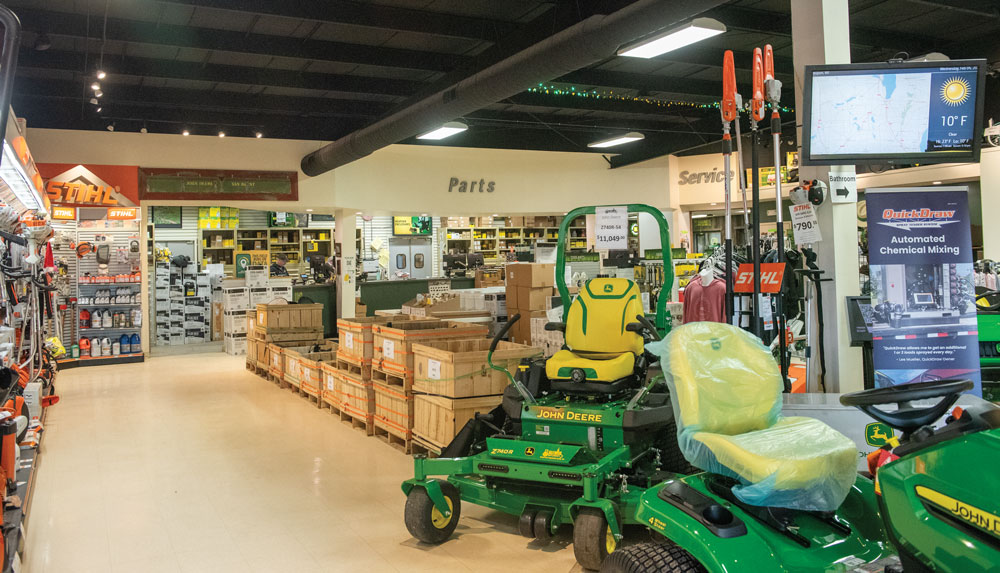
Ballweg Implement moved into its current facility in Waupun, Wis., in 2011. The showroom highlights the dealership’s consumer products, which make up about 20% of its business. Kim Schmidt
Instead of buying the Mustang, she suggested he should save the money. Ballweg took some convincing. But the promise of a car to use when needed and gas at no cost to him ultimately convinced Ballweg not to buy the car.
A few years later while in college, Ballweg and his brother had the opportunity to buy a building that was being torn down to make room for the freeway. They bought it and saved all the lumber they could and then using Ballweg’s $5,000 and borrowing some more money, the two built a duplex. Neither ever lived in it. Upon graduation and shortly after marrying his wife Joan, Ballweg had a sales job that kept him on the road a good portion of the time.
The travel got old, and the young couple started looking for a business to buy — everything from grocery stores to chemical distribution and implement dealerships. They even considered selling most of their belongings and putting the rest in storage and backpacking through Europe for a year.
“We’ve found the biggest problem with increasing your margins isn’t your customers, it’s your employees…”
At 24 years old, the Ballwegs sold everything — including that duplex Tom had used his $5,000 to build — and bought an implement dealership. They of course needed to borrow some money to make it happen, but they made it work. “The first years, you drove old trucks, you lived on love, you ate pizza, you worked together. It worked out just fine,” he says. “We kept on moving forward.”
In 2011, Ballweg came back to that white Mustang. “Lisa let me use her Mustang one day. It was the most miserable car I had ever ridden in my life. I couldn’t believe it. So I went out and I bought a red Corvette,” he laughs. “The moral behind this story is at your age, you’re going to have opportunities. And if you take the opportunity that disappears, you throw away your money, you’re going to struggle your whole life. If you stay focused on your goals, and that takes a lot of determination, you will turn out to be whatever you want to be.”
Hiring at Ballweg
BI’s unique hiring process sets the dealership up for success in most cases. The final hiring decision, Ballweg explains, lies with the employees who are going to be working with the individual. He likens it to picking a friend for someone else. “If I was picking a friend for you, it’s going to be based on what I like, not what you like,” Ballweg says.
The team who hires the new employee takes ownership in making it a successful hire because they have some skin in the game. They’re not going to let him fail because “that’s a black eye on their part,” he says. When the staff is new to hiring, Ballweg provides some criteria for them to consider but says after a while they know what they’re looking for.
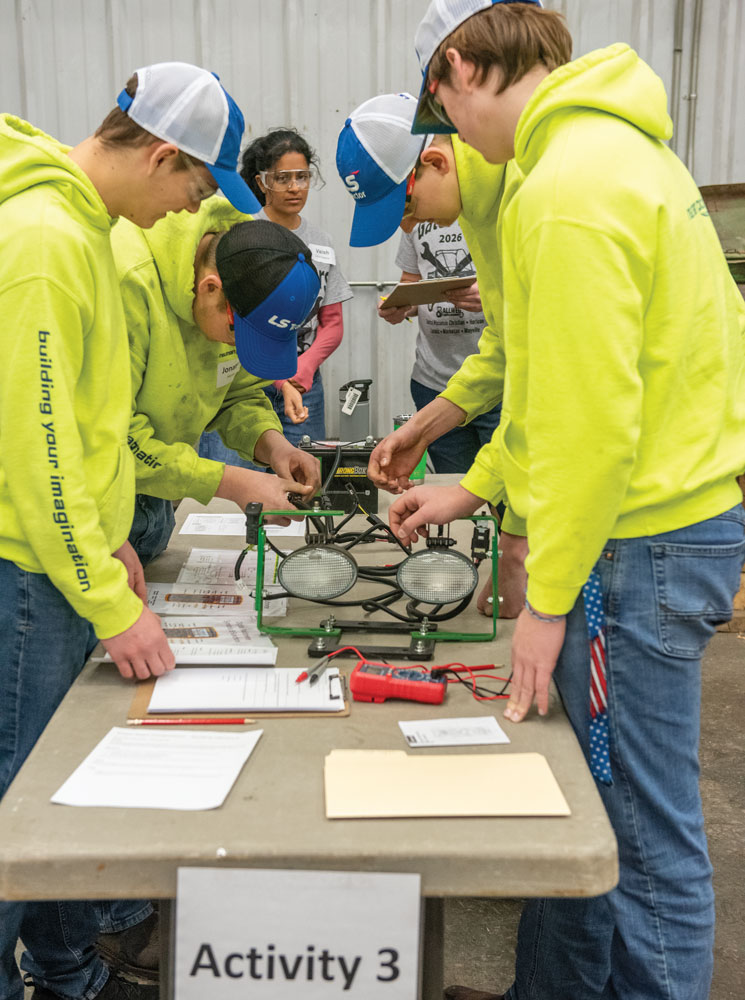
High school students formed 6 teams of 3-4 to compete in Ballweg Implement’s 4th annual Gator Wars. Kim Schmidt
While it’s not a fool-proof method, Ballweg usually knows within the first few weeks if someone isn’t the right fit. When that happens, the dealership acts swiftly to part ways. Allowing the team to hire the employees they’ll work with and Ballweg’s commitment to Maslow’s hierarchy of needs (see sidebar on p. 14) has created an atmosphere where people care about the work they’re doing and the coworkers who work alongside them.
20 Group Value
BI is part of a Machinery Advisors Consortium (MAC) 20 Group led by George Russell. It’s a mixed brand group, which was something Ballweg sought out. The dealership has been part of a mixed brand 20 Group for over 30 years, and Ballweg places a high value on what it has done for the business.
“I knew the competitive brands were making more money on selling parts than we were,” he says “And you can either listen to John Deere, and then every dealer does it exactly the same, or you can go out and get information from the New Holland, from the Case IH, from the AGCO people, and make your dealership more profitable by seeing and understanding what they’re doing.”
Ballweg says when he first joined the group, Deere told him the dealership could only have a 23% margin on parts. Anything over that, and people wouldn’t buy parts from them because they’d be priced out of the market, he was told. There were dealerships in the group that were making 35% margin.

As part of the Gator Wars events, in addition to the tech challenges students toured the store to get a behind-the-scenes look at all the departments that make up the dealership, including spending time in the shop with techs. Kim Schmidt
“My question to them at my first meeting was, ‘How? How can you have a 35% margin on your parts and still sell parts?’” he says. “Their response was, ‘How can you have a 23% margin and still stay in business?’”
Over the next couple of years, BI kept bumping its margins. “We found the biggest problem with increasing your margins isn’t your customers, it’s your employees,” Ballweg says. “Your employees don’t want to raise those margins because they think the customers won’t come anymore. That’s not the truth. And John Deere was in the same boat.”
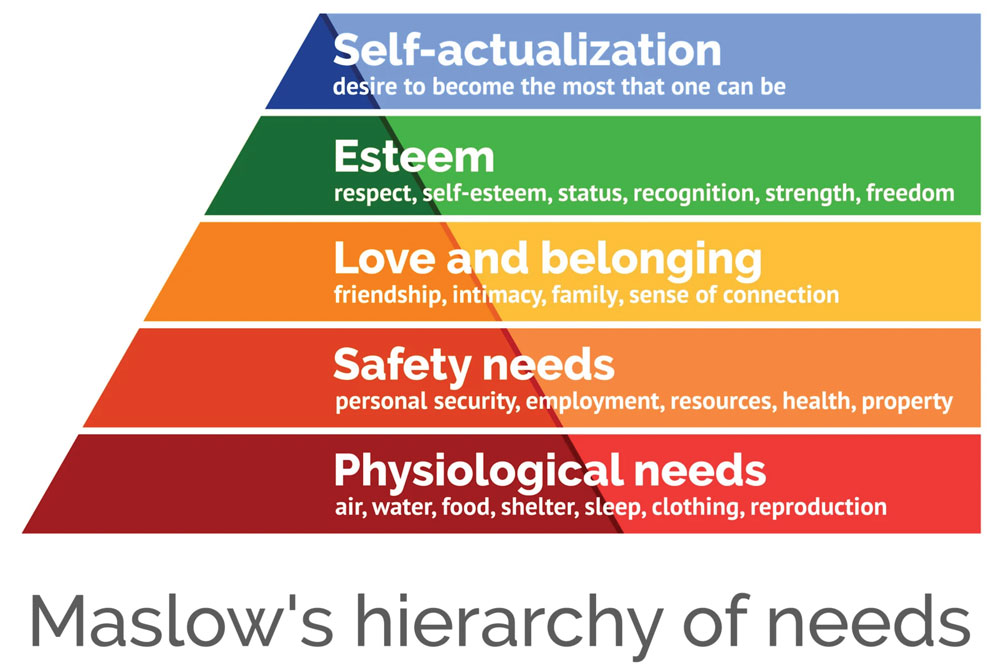
Maslow’s Hierarchy of Needs
Tom Ballweg is a firm believer in Maslow’s hierarchy of needs. It’s a motivational theory in psychology comprising a five-tier model of human needs, often depicted as hierarchical levels within a pyramid. Needs lower down in the hierarchy must be satisfied before individuals can attend to needs higher up.
According to Simple Psychology, “Maslow argued that survival needs must be satisfied before the individual can satisfy the higher needs. The higher up the hierarchy, the more difficult it is to satisfy the needs associated with that stage, because of the interpersonal and environmental barriers that inevitably frustrate us.”
The 5 needs include:
- Physiological Needs: The essential biological requirements, such as air, food, and sleep, that keep the human body alive.
- Safety Needs: The desire for a predictable and secure life, including protection from danger, financial stability and health.
- Love and Belongingness: The emotional need for connection through friendships, intimacy and being part of a supportive group.
- Esteem Needs: The pursuit of self-respect and the desire for status, recognition and appreciation from the people around you.
- Self-Actualization: The personal drive to reach your full potential, grow your talents and find true self-fulfillment.
“People talk about money, but they aren’t affected by money,” he says. “With Maslow’s hierarchy of needs, there’s a certain amount of money that once you’ve got that, you can buy all of the physiological needs. Safety doesn’t have to do with getting your finger cut off. Safety has to do with not being laid off. That’s your safety. There’s an island there. If somebody’s going to take a pay cut, Joan and I’ll take that pay cut. We won’t make you take that pay cut. If we have to cut back, we’re going to cut back. We’ll cut people’s hours, we’ll do what we have to do, but you’re not going to get laid off. You’re just not. We’re not going to allow that to happen.”
Love and belongingness comes in the form of coworkers and managers who take a personal interest in your life. They care about you and have your back. “They want you to go along and they want you to do things. They ask you whether or not you got a girlfriend. They ask you about your vehicle,” Ballweg says.
That goes hand-in-hand with esteem needs, he says.
Recognition, at the dealership level, happens when customers call specifically for an employee. “They don’t call for Tom Ballweg, they call for Tim, they call for Jonathan, they call for Butch, they call for whoever it is. They hit self-actualization. How many people get to hit that in their lifetime? Not many.”
Prescribing to this way of thinking leads to a strong and happy workforce, and Ballweg says it’s good for the customers too. “Customers have somebody they can talk to,” he says. “If a customer comes in and says, ‘I’m not doing any more business with you.’ I tell them, ‘No problem. You do realize that you’re going to lose Butch.’ ‘What the hell is that supposed to mean?’
“You get the dealership, you get Butch. You get Butch, you get the dealership. You want to go someplace else? Go. But then you have to reestablish everything there. It holds the customers as well.”
When the OEM called Ballweg and told him he couldn’t raise his margins like that, his response was, “For our size store, we’re selling 60-70% more parts than what your other stores are selling. And they’re selling it at 23%. We’re at 29%, why are you calling us and telling us we’re not doing it right?”
He says Deere eventually changed its tune, but BI was about 15 years ahead of the OEM. “I learned that from the dealers in the 20 group,” he says. “All problems are pretty much the same. They just happen at different addresses at different times. If you can identify a problem that’s going to happen, you can take corrective action prior to it occurring at your place and minimize it.”
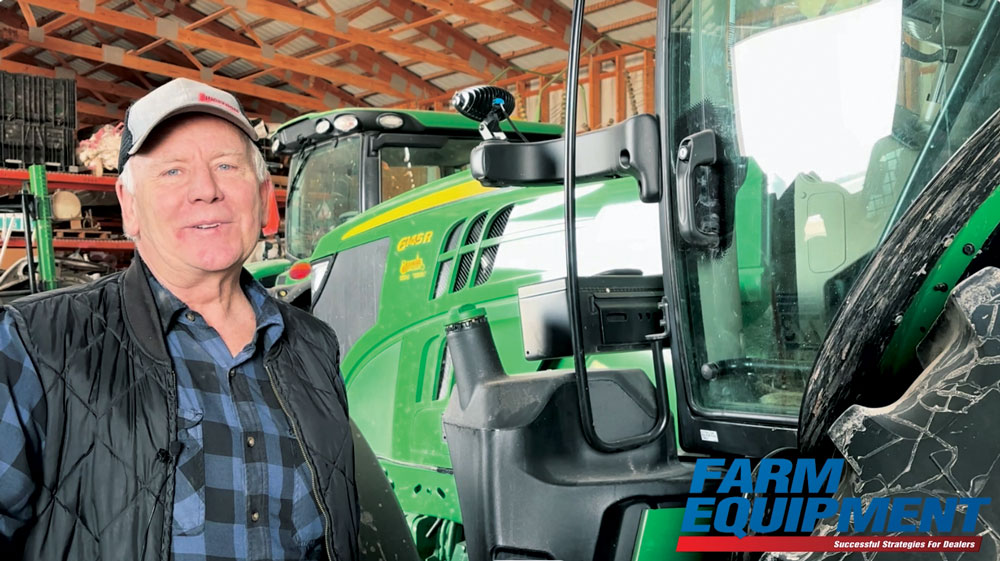
Exclusively Online
View video interviews with the Ballweg Implement team & customer Tony Peirick at farm-equipment.com/BOTG
As a smaller dealership, BI needs to do things differently than the large dealerships, which Ballweg says are largely sales organizations focused on wholegoods. That differentiator for BI is parts, selling 3 times as many parts as a typical dealership. In 2025, Ballweg sold $9.3 million in parts alone. For context, he says a dealership of their size normally sells $3.5-4 million in parts.
Based on his experience within the 20 Group, Ballweg says dealerships with 2-5 stores need to realize they can’t operate like the 40+ store operations. “It’s like somebody who’s got 3 hardware stores and they’re trying to function like Walmart. They’re going to be out of business. They’re not Walmart. That doesn’t work,” he says.
Ballweg’s outlook for 2026 is for some improvement. The next visit with the BI team will take place as customer Tony Peirick, No-Till Farmer’s 2026 Conservation Ag Operator Fellow, gets into the field for planting.
Farm Equipment's Boots on the Ground series is brought to you by Yetter Farm Equipment.
Yetter Farm Equipment has been providing farmers with residue management, fertilizer placement, and seedbed preparation solutions since 1930. Today, Yetter equipment is your answer for success in the face of ever-changing production agriculture challenges. Yetter offers a full lineup of planter attachments designed to perform in varying planting conditions, multiple options for precision fertilizer placement, strip-till units, and stalk rollers for your combine. Yetter products maximize your inputs, save you time, and deliver return on your investment. Visit them at yetterco.com.