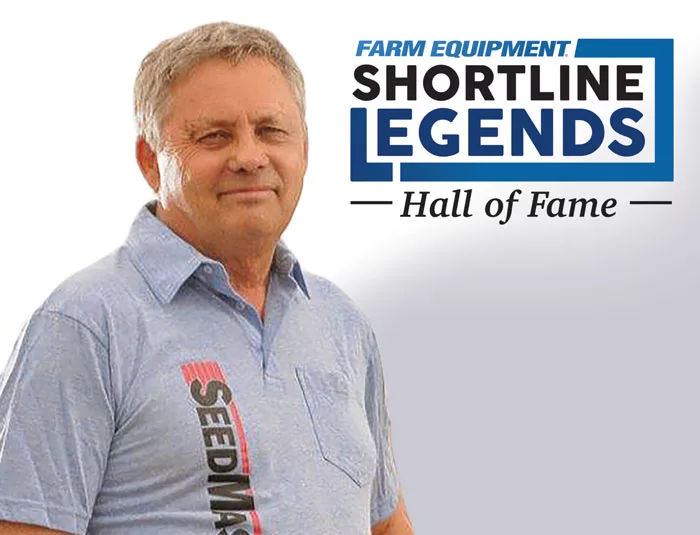
Shortline Legends Hall of Fame Recognized at FEMA's 2025 Convention
The 2025 inductees of the Shortline Legends Hall of Fame were recognized — in front of their peers — on October 30, 2025 during a presentation at the Farm Equipment Manufacturers Assn.’s Marketing & Distribution Convention in Las Vegas. Watch Norbert Beaujot's featured segment.
Farm Equipment‘s Shortline Legends video series is brought to you by FEMA.

For 75 years, FEMA members bring choice, value and Innovation to Agriculture. Shortline manufactures offer preferred brands at better margins, First to the market with innovation and dealers are more profitable with shortline manufacturers. For 75 years, customers prefer equipment from FEMA shortline manufacturers. Learn more at www.farmequip.org.
A self-proclaimed “designer at heart,” Norbert Beaujot, founder of Seed Hawk, SeedMaster and DOT, has spent his career creating revolutionary farm equipment in the western prairies of Canada.
“Don’t be afraid of failure. That’s a big part of innovation,” Beaujot said during an interview for Farm Equipment’s How We Did It podcast. “We’ve been at the forefront of no-till in Canada. It’s the way of the future and I think a lot of the bigger companies in the beginning saw it as a gimmick. But now it’s become the conventional way of farming in many parts of the world.”
Growing up on an 800-acre farm between Kenosee Lake and Whitewood in Saskatchewan, Beaujot developed an unrelenting passion for farming and soil health. There was no question about his next move after earning an ag engineering degree from the Univ. of Saskatchewan.
“I always felt that I’d end up back at the farm,” says Beaujot, who returned full-time after his dad, Leon, retired in 1985. “While taking over the farm, I had a passion for efficiency and perfection. It doesn’t matter what I’m touching, I’m always trying to improve it.
“It all started with openers,” Beaujot recalls. “At harvest one year, I dragged a screwdriver through the soil and thought to myself, ‘This can’t be that complicated. We should be able to build a better way of putting seed in the ground.’”
Canola First
Air seeders were the top option on many wheat farms in western Canada at the time. But by the early 90s, canola was becoming more popular in Saskatchewan, which called for a different kind of seeding tool.
“I realized the current methods of seeding were terrible for that kind of crop,” Beaujot recalls. “In Saskatchewan, we struggle with a short growing season, so the efficiency of a seeding operation is critical to the farmer’s survival. Canola is very sensitive to improper seed depth, and when you’re no-tilling, you have that precious amount of moisture right at the surface that if you deal with it properly, it’ll get the crop going well.”
Norbert Beaujot

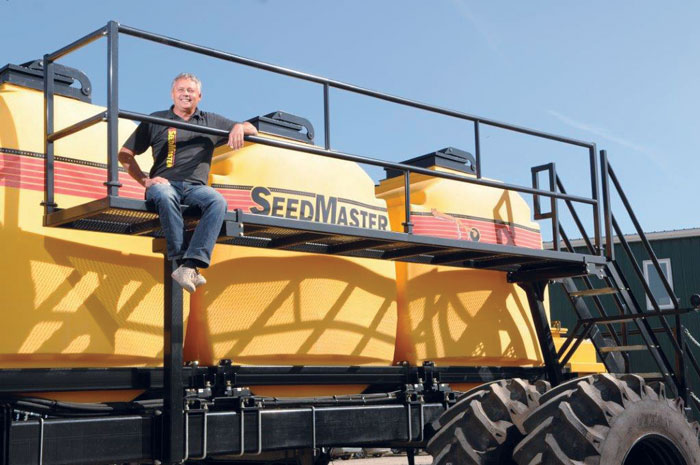
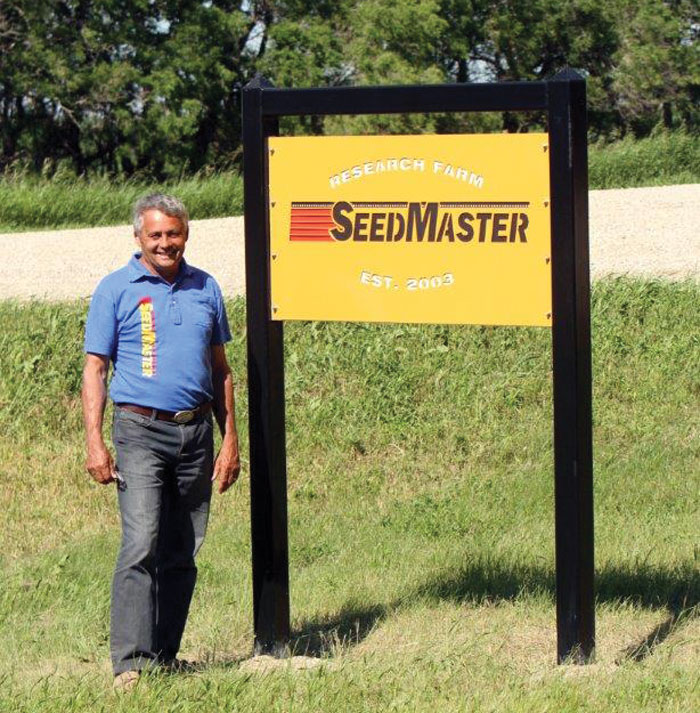
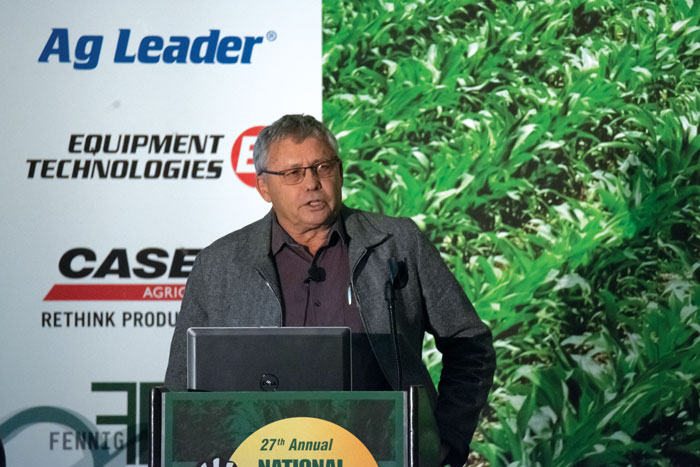
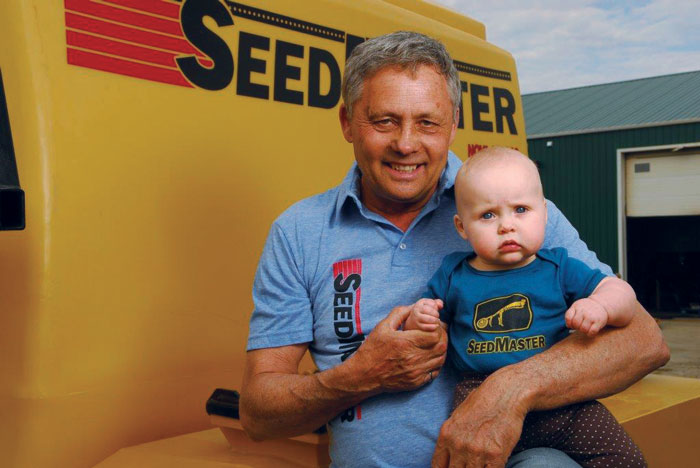
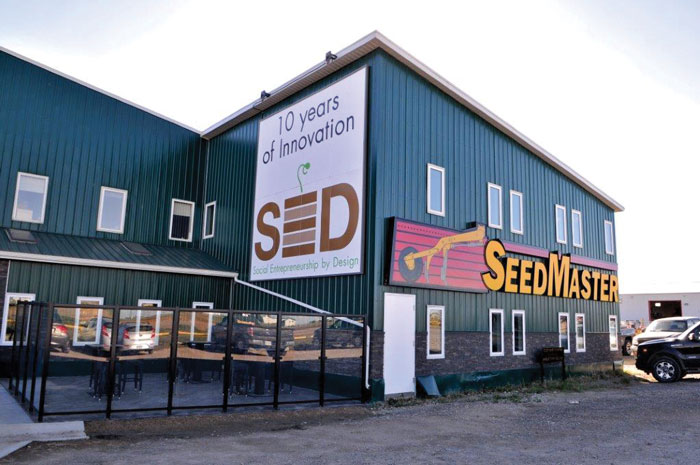
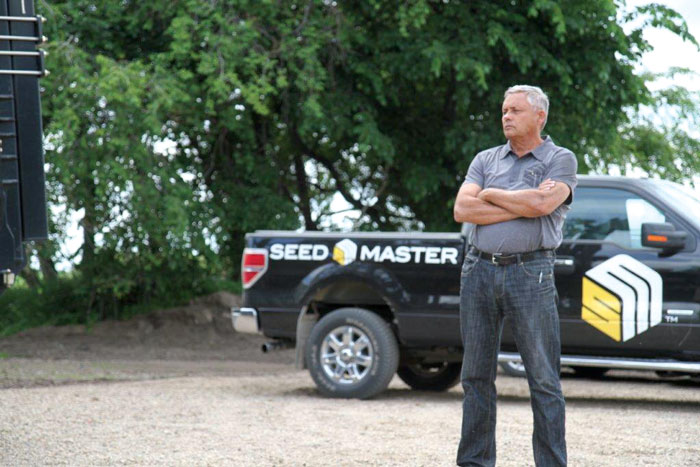
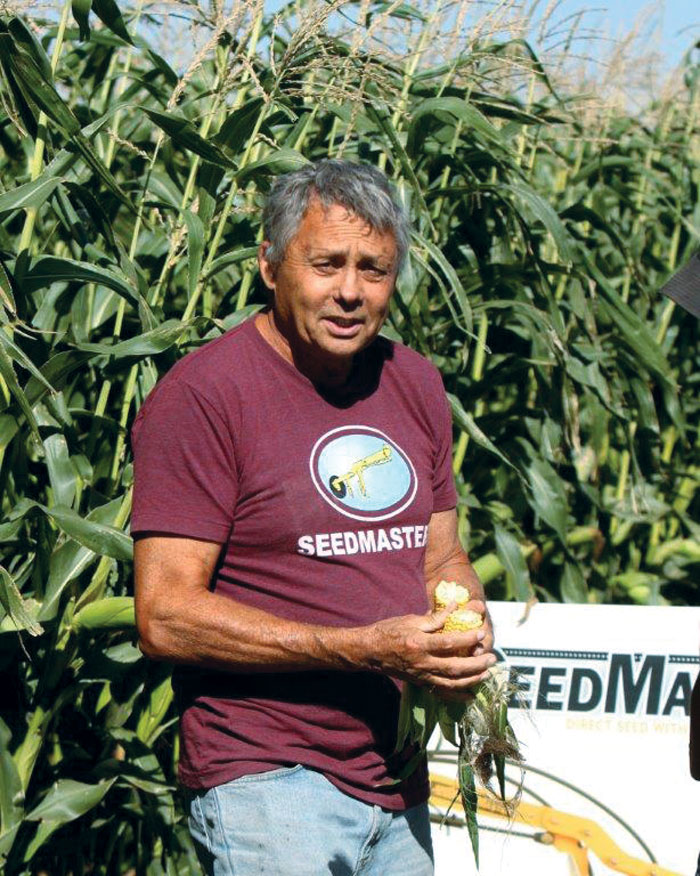
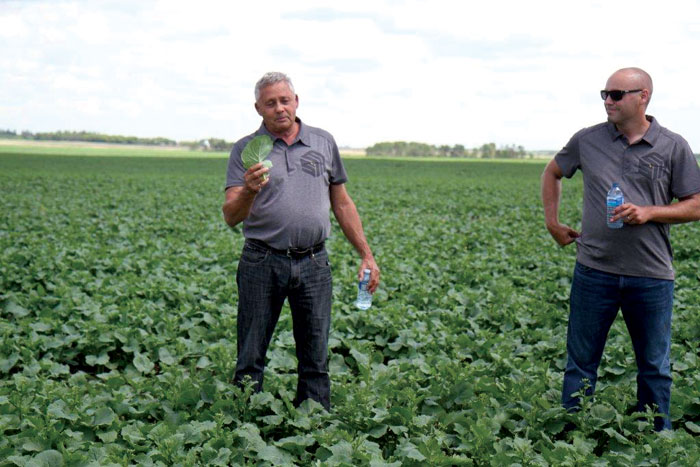
Beaujot sprang into action, pioneering the world’s first active hydraulic, ground-following, individual row opener, which minimized soil disturbance by seeding directly into the previous year’s stubble. It was the first of many breakthroughs to come over the next several decades.
“I’m a fairly cautious person. I never try to get in a position where we’re in financial danger, but there have been some surprises with the components we buy from suppliers. Several years ago, we had a terrible batch of hydraulic cylinders. It cost us a lot of money, but we did everything we could to switch them all out. Some of those hardships became part of the success story, too, because farmers and dealers realized that we went above and beyond what a larger company might’ve done…”
“We’ve spent the past 30-plus years perfecting the art of no-till seeding, whether it’s metering, putting it in the ground or the placement of fertilizer,” Beaujot says. “We’ve focused completely on seeding, and when you’re that focused, you’re either in the wrong business or you should become the best at it.”
The Early Days
Beaujot launched Seed Hawk with his brother, Patrick, in 1992, after building and testing the first active hydraulic opener prototype.
“I don’t think there was ever a doubt in my mind that I would make the opener commercially available,” Beaujot recalls. “We moved fast. Once I had workable paper drawings, I got a hold of my friend, Brian Kent, to help build it. Within a few months, we built the first one and planted the first 1,200 acres on our farm right out of the box.
“Prior to that, cultivator and disc type units had a very coarse adjustment for depth. We went to a very long arm with the gauge wheel at the back that acts as the packer wheel, and that long arm gave us very precise seed depth on an individual row basis. With the use of hydraulics, we were able to get the same force against the soil with each packer wheel.”
Patrick handled the marketing side of the business while Norbert focused on design and manufacturing. They sold directly to farmers in the early days, which meant a lot of time spent on the road at farm shows.
Impacting Seeding & ‘Smart Farming’ Worldwide
"As someone who has known Norbert for 26 years, I can attest to his significant contributions to no-till seeding, and many achievements towards smart farming.
"Throughout our association, I have observed Norbert’s integrity and innovation in various projects and products which have motivated and inspired others within the industry and around the world. His desire to provide precision and accuracy to seeding solutions is truly remarkable.
"In addition to his professional accomplishments, his dedication, work ethic, attention to details and ability to adapt to new challenges have consistently impressed me. Norbert’s willingness to continually learn and grow seeding solutions is genuinely inspiring.
"Norbert has provided a large, positive impact to seeding solutions, smarter farming and agriculture worldwide."
— Murray Soanes, Aftermarket Manager, SeedMaster
“The first one we went to was Canada’s Farm Show in Regina,” Beaujot recalls. “Some farmers stumbled upon us and liked what we were doing. Others walked by and said, ‘I’ll never farm that way.’ You have to accept the good and the bad.”
They sold 6 machines that first year in Saskatchewan and Alberta. Soon after that, they were selling over 70 machines per year. That’s when dealers came calling.
“At the beginning, the mainline dealers in particular came to us,” Beaujot says. “They recognized we were taking over the market. One dealer owner said to me, ‘If I wanted to stay in the seeding business, I either had to get out of the seeding business or take you on as a supplier.’ The dealers recognized the value of our product, and I think that’s the same story many other innovators could tell.”
From Seed Hawk to SeedMaster
The Beaujot brothers went their separate ways when Norbert launched SeedMaster in 2002. Beaujot was 55 years old with enough money to retire, but he had too much left in the tank to hang it up. He was just getting started.
“It’s kind of like building your second house; as soon as you’ve finished your first one, you’ve got plenty of ideas of how you want to build your second one,” Beaujot says. “I did a big update on the opener itself. Once you’re in a manufacturing facility, you kind of get into a rut and sometimes it’s nice to get a fresh start.”
Armed with his original patents, SeedMaster quickly became Beaujot’s second successful company. He gives a lot of credit to his family for making SeedMaster what it is today.
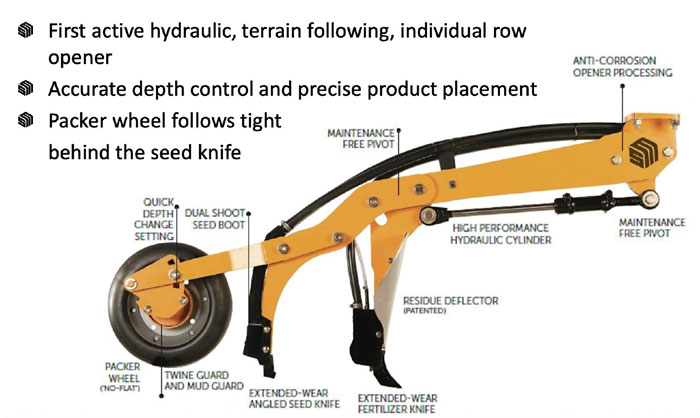
Norbert Beaujot's first big innovation came in 1991 when he developed an active hydraulic, ground-following opener, which minimized soil disturbance by seeding directly into the previous year’s stubble. Source: SeedMaster
“My children at the time were either between jobs or had just graduated from college,” Beaujot says. “They all joined the company. SeedMaster became completely family owned, and the family has been at the core of our decision making.”
Beaujot’s experience in the business was also a huge asset in the early days of SeedMaster. Younger people are sometimes worried about failure and how others perceive them, whereas a 55-year-old doesn’t stress about that as much, he says.
“Part of that experience is just not letting what other people think bother you,” Beaujot says. “Just like that first farm show when some farmers walked by our booth and said, ‘It’ll be a cold day in hell before I farm this way.’ Those farmers all farm this way now, so it must be a cold day in hell.”
Top 3 Innovations
Reflecting on 30-plus years in the industry, Beaujot says his top 3 innovations are the Seed Hawk/SeedMaster opener, individual and bulk metering systems and the creation of the autonomous DOT Power Platform in 2017.
“The opener is definitely what made us what we are today at SeedMaster,” Beaujot says. “With the opener design, if you look at most other no-till seeder manufacturers, they all use part of the technology that came out of our unit 25 years ago.”
DOT Technology Corp., Beaujot's third successful company, was eventually acquired by Raven in 2020. Beaujot made sure his engineers weren’t afraid to fail when they first started working on the autonomous Power Platform. That made all the difference in the world, he says.
Norbert Beaujot’s Hall of Fame Timeline of Innovation
1991: Created & patented the first active hydraulic, ground-following opener concept, which minimized soil disturbance by seeding directly into the previous year’s stubble.
1992: Established Seed Hawk with brother, Patrick, after building & testing the first active hydraulic prototype.
1999: Created the Smart Hitch as a tractor attachment to steer a drill between existing stubble rows.
2002: Established SeedMaster with new, redesigned bolt-together frame & redesigned opener with improved features from the original Seed Hawk opener. SeedMaster introduced its first generation of frame-mounted metering systems.
2004: Opened production facility in Emerald Park.
2006: Developed North America’s first 80-foot toolbar. Converted family farm to SeedMaster Research Farm.
2007: Developed Packing Force Sensor technology for SeedMaster drill.
2008: Developed North America’s first 90-foot toolbar. Also developed narrow fold technology for drill transport, individual row metering & rolled out liquid fertilizer cart systems.
2009: Developed Lift Kit technology & Auto-Adjust Packing Force Sensor.
2010: Developed UltraPro Canola Meter for accurate/uniform canola seeding rates.
2011: Developed 820-bushel Nova with auto-lids, 10 zones, high rates, isolated air dual shoot & weight-scale-enhanced metering technology.
2012: Developed North America’s first 100-foot seeding system.
2013: Developed new Ultra Pro Corn Meter, standardized SeedMaster Smart Cal auto calibration using weigh scales & established the Seed Foundation non-profit organization to cover costs associated with fundraising events.
2016: Introduced ISO electronics to SeedMaster equipment.
2017: Developed DOT Technology Corp. & DOT autonomous platform, acquired by Raven in 2020.
2020: Developed board of directors for SeedMaster’s future planning.
2022: Established manufacturing agreement with John Deere to build & supply its new P600 series drills.
“Back in 2017, when we decided to put our first DOT unit out for exhibit, I went to 3 engineers and said to them, ‘I want to develop a sprayer, a land roller and a grain cart for this unit. You don’t have to win at it, just give it your best shot and if it doesn’t work then we won’t show it.’ We gained a lot by those 3 engineers accepting the chance of failure. If you give something to an engineer and they’re desperate not to fail, that development might take 5 times longer than it would if you told them it’s OK to fail.”
Beaujot will tell his eventual successor to not shy away from failure, always put the customer first and be aware of the banker because at the end of the day a manufacturer must make money to survive. He’s bullish about the impact SeedMaster and fellow shortliners will continue to have on the industry.
“There will always be an opportunity to develop a new product,” he says. “Shortline manufacturers all have a good answer for their local market. They end up with something that’s better for the local market and eventually they recognize they can make it better for a bigger market.”
Learn More Online
- [Podcast] Conversations with Ag Equipment's Entrepreneurs: SeedMaster's Norbert Beaujot
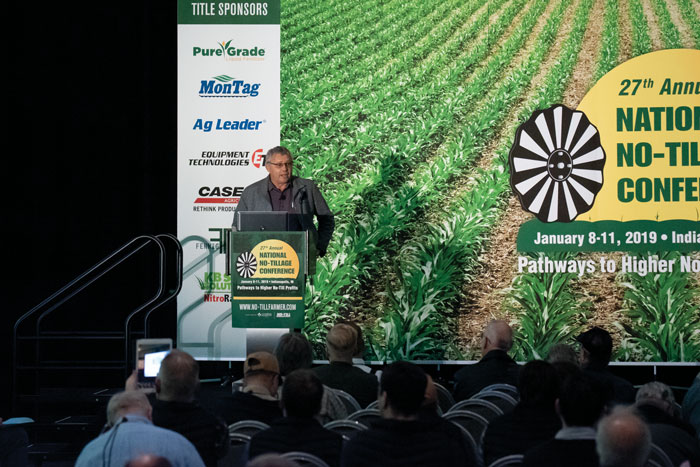
- [Video] Advancing Toward Autonomy: Norbert Beaujot's presentation at 2019 National No-Tillage Conference
- The Changing Shape of Farm Power: Inside Look at Development of DOT Power Platforms
- Farm-Equipment.com/ShortlineHOF25