As 2026 begins, many producers face negative farm profitability due to severely depressed commodity prices, high input costs, reduced export opportunities, labor shortages and uncertainty over key support programs like the Farm Bill. These pressures strain farm financial viability, challenge producers' mental health, and weigh heavily on the communities that depend on agriculture.
The Associated Equipment Distributors (AED) Summit, held Jan.19–21, 2026, in Dallas, Texas, brought equipment industry leaders together to address today's farming challenges. Dealers from across the U.S. and Canada, representing diverse brands, united around a shared mission to ensure policy conversations reflect what farmers experience every day.
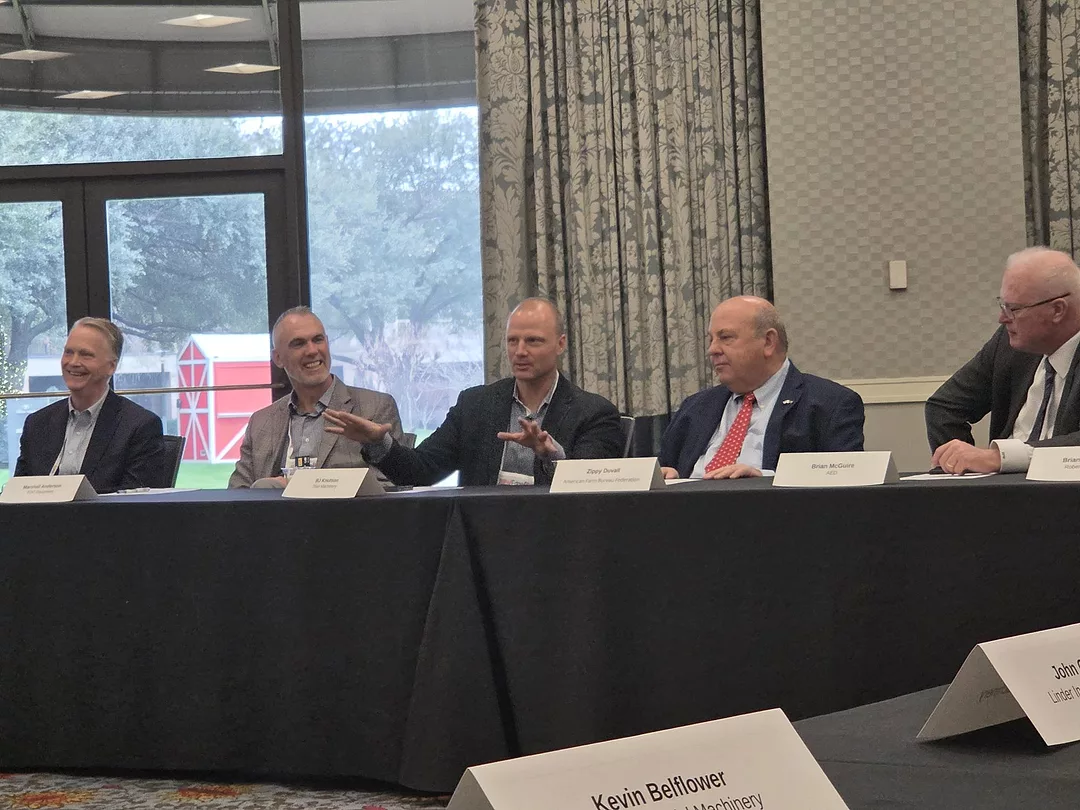
A key component of the Summit was a roundtable discussion, moderated by BJ Knutson, CEO of Titan Machinery, featuring Zippy Duvall, President of the American Farm Bureau Federation. The conversation focused on the economic pressures facing producers and how coordinated advocacy is needed now more than ever to influence policy outcomes impacting growers.
Knutson stated, “Every day, our teams work in close collaboration with farmers and ranchers, observing their commitment, recognizing the obstacles they face and assisting them in finding effective solutions. By sharing our real-world experience, equipment dealers can help shape policies that support agriculture and the families who depend on it.”
Knutson also emphasized the importance of industry unity. “No matter the brand, our aim is to support hardworking customers seeking fair prices for their work. Farmers need reliable equipment, stable markets and consistent policies. Delivering that requires dealers, manufacturers and advocates to be aligned and speaking with one voice so that our feedback is heard and acted upon in Washington and in state capitals across the country.”
Policy Priorities with Farm Impact
The roundtable highlighted several of the issues most impacting agriculture today.
- Year-round E15 Access – Expanding access to higher ethanol blends is needed to support steadier ethanol demand, strengthen rural economies and ensure cost effective fuel options. More predictable energy policy helps growers plan and invest with greater confidence.
- Sustainable Aviation Fuel (SAF) – Agriculture could provide essential feedstocks for SAF production, generating important new market opportunities. However, broader adoption relies on policies that deliver clear, actionable solutions, end-market certainty and greater investment in research and development.
- Market Expansion – Broader access to markets, both domestic and international, directly affects pricing, basis and long-term farm viability. Trade policy, export promotion and smart regulation are essential to strengthening demand and competitiveness for U.S. agriculture.
Ongoing Support vs. Long-term Solutions
In late 2025, the federal government announced the Farm Bridge Assistance (FBA) package aimed at helping farmers weather recent trade disruptions and rising production costs. Much of this support, roughly $11 billion in one-time payments through the FBA program, is designed to provide short-term cashflow relief as producers head into the spring planting season.
Farm leaders and economists have noted that while this aid provides meaningful short-term support, it does not begin to cover the scale of economic challenges producers continue to face in 2025 and beyond. Many growers have described it as a necessary bridge, but not a long-term solution to persistent losses tied to depressed commodity prices, high input costs, and ongoing market disruptions.
That context makes sustained engagement with policymakers even more important. While short-term relief addresses immediate cashflow needs, long-lasting support depends on thoughtful policy design, whether through the next Farm Bill, improved risk management tools and increased market development strategies, including additional research to expand end use opportunities for agricultural commodities.
Moving Industry Discussions into Policy Action
A key takeaway from the Summit is that progress requires ongoing advocacy. Dealer leaders, producer advocates and agricultural stakeholders left Dallas better aligned and more prepared to engage in productive discussions with lawmakers. When the industry brings consistent, grounded insights from the farm economy to Washington, broad challenges are more likely to translate into clear, actionable policy priorities.
For Titan Machinery, and the other dealers, advocating on behalf of customers and ensuring that the issues facing farmers are taken seriously at both the state and federal levels is core to their commitment to the industry. The Summit reinforced the importance of staying connected to policy discussions that directly impact customers and their communities.